image_pdfimage_print

All posts by robert

The Late Show Line Up: BBC UK Interview with Marcel Duchamp, June 5, 1968

Identità’ e dissoluzione, per un approccio erotico all’opera d’arte

Dalla filosofia dell’identità alla dissoluzione nel “puro esistente” [1] 


Col nome di “filosofia dell’identità”[2] viene chiamato il sistema filosofico di Schelling, il quale concepisce l’assoluto come fondamento dell’intera realtà. Un “assoluto” che e’ identità di reale e razionale, soggetto e oggetto, spirito e natura: più esattamente, è la radice comune che precede la successive separazione delle suddette coppie di opposti.

Il concetto dell’identità originaria di reale e razionale, soggetto e oggetto, permea in un certo senso l’intera filosofia idealista e apre la strada ad una interpretazione razionale della realtà che, fino agli albori del novecento, troverà nella ragione il più potente strumento non solo di conoscenza ma di auto-costruzione della realtà attraverso sistemi filosofici assoluti e collaudati. Non a caso proprio Schelling chiama l’assoluto stesso “ragione”.

In questa filosofia l’arte ha un posto di rilievo. E’ oggetto teorico privilegiato e assolutamente necessario, essendo lo strumento più adeguato per cogliere l’assoluto come sintesi di spirito e natura, sapere e produzione, infinito e finito. Come tale è la configurazione privilegiata del principio che in essa si dispiega, il principio dell’assoluto.

Infatti, l’arte e la filosofia secondo Schelling non differiscono rispetto a ciò che rappresentano, ma soltanto per il modo in cui lo fanno. L’arte, tramite la bellezza, coglie l’assoluto nella sua realtà (come suono, colore, forma e linguaggio), mentre la filosofia lo coglie nella sua identità: l’arte come la filosofia non può non continuare a rappresentare, nella sua eterna evoluzione, lo “spirito”-o “l’assoluto”- colto in immagine. È “l’unica rivelazione” perché, nelle speculazioni idealiste e metafisiche, veicola la concezione dell’assoluto come identità originaria di reale e razionale.

Ma una “filosofia dell’identità” così autosufficiente e assoluta vacilla quando si presenta la questione fondamentale del “puro esistente”. Come si può, partendo da un’identità che è indifferenza assoluta di finito e infinito, reale e razionale, affrontare il problema della costituzione del finito in sé stesso, il problema del “puro esistente”? Al punto in cui la “filosofia dell’identità” si è spinta, tale problema sembra impenetrabile.

Arrivato a questo punto Schelling propone una soluzione che comporta la revisione dell’intera problematica dell’assoluto come identità originaria. A tale proposito è opportuno ricordare la sua distinzione tra una “filosofia negativa” ed una “filosofia positiva”. Egli intende per “filosofia negativa” quella da lui professata fino allora, ossia la speculazione intorno al “che cosa universale”, vale a dire intorno all’essenza delle cose: per “filosofia positiva”, invece, la filosofia che concerne l’esistenza effettiva delle cose. La prima si occupa della possibilità logica delle cose, dell’idea di esse, la seconda della loro esistenza reale, concreta. Il passaggio dall’una all’altra implica per forza di cose “un salto e un rovesciamento”: un salto, perché si passa dall’ordine dei concetti all’ordine della realtà: un rovesciamento perché la ragione della filosofia positiva, avendo a che fare con la realtà, è capovolta rispetto alla ragione della filosofia negativa, chiusa in se stessa nella propria concettualità. Tra le due filosofie vi è una svolta decisiva che provoca una vera e propria crisi.Le immagini che si connettono strettamente col passaggio da una speculazione filosofica che vede nell’identità il principio assoluto di reale e razionale ad un’indagine sullo statuto autonomo della realtà sono quelle di “stupore della ragione” e di “estasi razionale”.

La ragione della filosofia negativa si rende conto che malgrado ogni suo sforzo non riesce da sé a raggiungere la realtà, poiché i suoi movimenti sono puramente concettuali: provando a pensare l’esistente riesce a coglierne solamente l’idea, che in sostanza la separa definitivamente dalla realtà. È dunque la ragione che, accertatasi che l’esistenza è realmente tale solo fuori del pensiero, appunto per trovarla esce da se stessa. Essa si pone “uori da sé”, nel “puro esistente”, e diventa estatica.

Il termine “estasi” va dunque preso nel suo significato etimologico, come“ek-stasis”, “uscita da sé”. E lo stupore è il trauma della ragione di fronte all’esistenza, ma insieme anche l’unico accesso all’esistenza di cui può disporre.

Impotenza, mutismo, sottomissione, sono i tre aspetti dell’estasi, o della ragione colta da stupore, di fronte a qualcosa di così inconsueto da essere inconcepibile. “L’uomo comprende solo ciò a cui può giungere con un movimento di pensiero”, che altro non è che la mediazione concettuale della ragione. Il puro esistente, quindi, come qualcosa di insolito, eccezionale, rimane opaco, chiuso.

Così al mito romantico e idealistico di una coincidenza di finito e infinito, di soggetto e oggetto, di realtà e razionalità, viene ora a sostituirsi una concezione tragica del reale. Della realtà vengono colti gli aspetti meno rassicuranti, tratti di ombre vengono ad annidarsi in tutto ciò che prima aveva un aspetto familiare, o quantomeno inquadrabile e definibile. Ciò è dovuto ad un mutamento di prospettiva, ad una riconversione dello sguardo: se il finito non è solo un momento parziale dell’assoluto, ma ha una costituzione autonoma che va considerate di per sé, di esso verranno in luce quei tratti mortiferi, irrazionali e caotici che in una concezione solare e contemplativa come quella metafisica andavano persi. La pretesa idealistica di rendere conto anche degli aspetti irrazionali del reale in una totalità che comprendesse tutto si è rivelata fallimentare. Essa ha operato una deformazione concettuale di aspetti dell’esistenza che non sono propriamente concettualizzabili, che anzi si sottraggono alla pretesa del concetto.

La tarda critica schellinghiana al sistema hegeliano, e insieme l’autocritica riguardante la sua prima fase di pensiero culminante nella “filosofia dell’identità”, giunge ad una sconfessione della pretesa della ragione, che ha incontrato ogni cosa come familiare proprio in quanto essa non si volgeva propriamente all’alterità, al puro esistente, ma si auto-svolgeva nel proprio percorso concettuale. Ora, l’altro, l’esistente, si erge in tutta la sua opacità e irriducibilità e la ragione deve denudarsi, ammutolire di fronte a questo dato primario.

Questo momento dell’annichilimento della ragione non è però solo un momento negativo: la defraudazione dell’onnipotenza del concetto viene ad accompagnarsi ad un risorgere della vita colta nella sua sovrabbondanza e ricchezza, oltre che nella sua estraneità, e delle tonalità emotive che accompagnano, rispecchiandola in sé stessa, l’ambivalenza di un passaggio che è un dissolvimento e al tempo stesso un emergere. L’uomo, non più sussumibile in un sistema, è ora un singolo. Egli è già da sempre gettato in un mondo, ignaro della sua provenienza e del suo destino ultimo, e immerse nelle relazioni concrete con gli altri e con le cose. Le traslazioni concettuali non sono più l’unica forma di conoscenza: esse sono statiche e non colgono un flusso cangiante dell’esperienza, che è invece sempre dinamica, e che si offre in questi suoi caratteri alla percezione immediata.

Si riconosce l’essenziale storicità dell’uomo, la libertà che la contraddistingue, libertà che si afferma in senso positivo ma che può annullarsi, sempre esercitando se stessa, e divenire radicalmente distruttiva e auto-distruttiva.

L’angoscia è la particolare tonalità emotive spesso ricorrente in autori fondamentali (Schelling, Kiekegaard, Heidegger, Freud). Essa implica una nullificazione del mondo e di sé, ed una successive, se non contemporanea, riconquista, riappropriazione. Consiste dunque in uno smarrimento esistenziale, in cui tutto si fa “estraneo”, e ogni cosa familiare diventa “insolita”, spogliandosi dei suoi caratteri di quotidianità: qualcosa si strappa, il tessuto relazionale s’interrompe, e l’uomo, solo dinnanzi al nulla, assiste meravigliato a questo collasso del mondo e di sé.

Questa paralisi, che è una vera e propria dissoluzione, conduce però al tempo stesso ad un momento di riappropriazione, un ridare senso consapevole del naufragio.

«Chi ha imparato in verità ad essere in angoscia, può andar per una sua strada quasi danzando»[3] . La nullificazione del mondo e di sé, l’angoscia in cui versa l’uomo gettato nel mondo diventano parti stesse del suo corpo, una sua ferita radicata e pulsante.

L’erotismo come un nuovo sguardo sul reale

« (…) Io penso in effetti, che il fatto di introdurre l’erotismo nella vita fosse l’unica scusa per fare qualsiasi cosa.L’erotismo é vicino alla vita, più vicino della filosofia o di altre cose del genere; è una cosa animale che ha molte sfaccettature e che è piacevole usare, come si può usare un tubo di colore, iniettarlo in quello che si produce. » [4]

L’erotismo, nel pensiero contemporaneo, diviene un modo di reagire dell’uomo verso la propria condizione esistenziale, disperata e sola. Ciò che viene messo in gioco in esso è sempre una dissoluzione delle forme costituite. Comincia appunto laddove il soggetto perde l’appiglio di quella ragione che l?aveva fino ad ora condotto e rasserenato. Esso è «l’approvazione della vita fin dentro la morte»[5] dove il respiro del passaggio all’assoluto sconfina nell’epilogo. In esso la fusione fra vita e morte anticipa il sapore dell’oltre, ma le misure terrene dell’uomo non lasciano tregua al sogno della libertà e allontanano le pulsioni dell’essenza nella gabbia della convenzione. I termini “eros”e “thanatos” si disgiungono in versanti opposti: talora l’istinto vitale, eterosessuale e benevolo s’offusca nella rabbia gridata dell’impluso naturale, profanato dal turbine del disagio.

L’azione decisiva con cui l’erotismo si esplica è quella del denudamento. L’atto del denudarsi sancisce nell’uomo l’amara consapevolezza e resa davanti alla sua misera finitezza. Nello stesso tempo ne ammette una disperata possibilità di salvezza poiché solo dalla nudità egli si diparte per una riappropriazione di sé, una ricostruzione interiore.

«La nudità si oppone allo stato di chiusura, allo stato dell’esistenza discontinua. È uno stato di comunicazione, che rivela la ricerca di una possible totalità dell’essere al di là del ripiegamento su se stesso». L’erotismo, oltre ad avere la funzione di liberare l’uomo dai tirannici divieti della vita sociale e comunitaria, lo riunisce alla sua vera dimensione consentendogli di vivere i propri desideri, di ritrovare l’identità in una forma fluida e dinamica. L’atto della riappropriazione del proprio corpo, il rientro in quel luogo ferito e lacerato dalla condizione di ammutolimento e disincanto dati dalla resa della ragione dinanzi alle proprie certezze è un atto violento, di rottura.

Secondo Bataille i termini intorno ai quail orbita l’attuarsi della dimensione erotica sono il divieto e la tragressione. Il divieto è ciò che regola l’uomo fin nell’intimo, è la gabbia di norme etiche che lo rendono uomo e non animale. È l’oggettivazione morale del timore nei confronti dell’assoluto e nei confronti di Dio.

La tragressione al contrario è ciò che lo rende libero e animale, è l’atto di rovesciare ciò che lui stesso ha creato, di sospendere il divieto senza eliminarlo. Eliminandolo, infatti, egli ritornerebbe allo stato puro di natura e tutti i suoi vacillamenti verso lo sconfinamento dei propri limiti, nell’eccessivo piacere o dolore, e nella rappresentazione drammatica di questi eccessi, vale a dire nella letteratura e nelle immagini dotate del potere di sconvolgere, l’essere nella sua concretezza diviene accessibile.

L’opera d’arte incarna le due anime dell’erotismo in modo quasi perpetuo. Essa è l’unione di “terra” e “mondo”[6] di materia nuda, pulsante, e anelito all’universale scavalcando i propri limiti.

Storicamente, l’elemento erotico, pur comparendo in tutti gli ambiti artistici dall’antichità ad oggi, approda alla sua piena autocoscienza a partire dale avanguardie. La rappresentazione dell’erotico serve anche ad urtare contro i confini del benpensare dissolvendo ipocrisie e volgarità celate. Allo stesso tempo, serve ad offrire la via ad una continua speculazione teorica intorno al ruolo dell’arte, alla sua funzione, alla sua mercificazione, al suo essere oggetto di osservazione. Si realizza come elemento di disturbo e rottura.

Per gli espressionisti è un grido di disperazione che libera le torbide pulsioni. Il dadaismo ne usa il linguaggio per provocare schock e per dare importanza al gioco, alla combinazione casuale di parole e oggetti, al non senso.

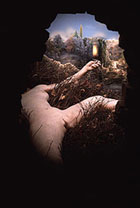
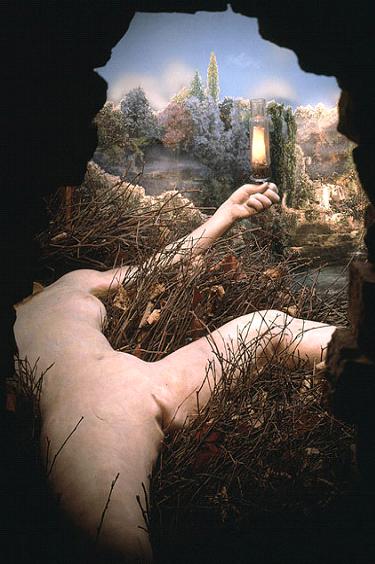
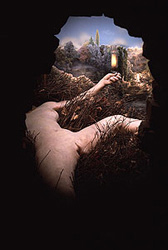
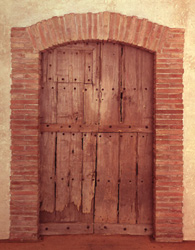
M.Duchamp ha evidenziato attraversandola in tutta la sua opera, l’apertura semantica prodotta dall’erotismo, elevando l’anormalità, intesa come rifiuto di qualsiasi norma ( e nell’erotismo ogni norma si dissolve) a pratica sia di arte sia di vita. Si pensi a Etant donne’s: 1. la chute d’eau, 2. le gaz d’eclairage, opera che consiste in una porta di legno consunta, dalle cui fessure, sbirciando oltre, si coglie una visione parziale di una ragazza distesa nuda con una lampada di gas in mano.

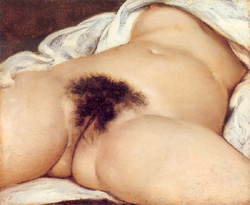
È la prima grande opera che raffigura consapevolmente il sesso femminile come ferita erotica, come metafora di un nuovo dolente sguardo sul reale. Presagendo quel definitivo crollo tra dentro e fuori, interno ed esterno, che tra la fine degli anni settanta e l’inizio degli anni ottanta incarnerà il concetto di abiezione. Secondo il quale la fuoriuscita di contenuti interni (come urina, sangue, sperma, escrementi) diventa il solo oggetto d’interesse sessuale, perché straripa dalla sua identità soggettiva, dal suo “foro interiore”[7]. Marcel Duchamp, nel corso della sua opera, ha così scelto la linea erotica come rappresentazione. Perché il rapporto originario con il mondo si costruisce attraverso il corpo, la cui dimensione fondamentale è data dall’esperienza vissuta della percezione. Il mondo è ciò che si percepisce.


click to enlarge

1º la chute d'eau / 2º le gas d'éclairage
Marcel Duchamp
Etant donnés: 1º la chute d’eau / 2º le gas d’éclairage, 1946-66

Dissoluzione del tempo lineare e pulsione erotica in Anèmic Cinéma


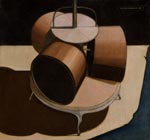
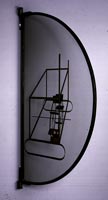
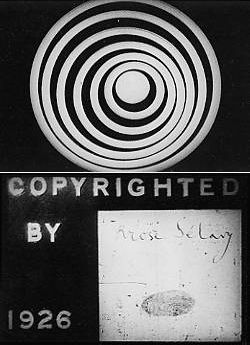
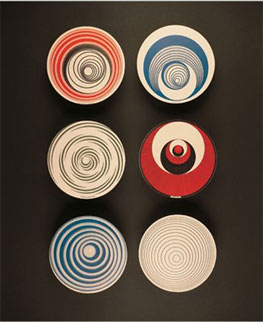
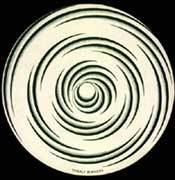
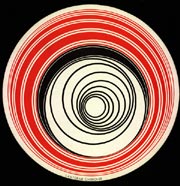
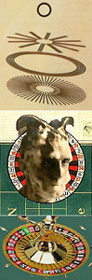
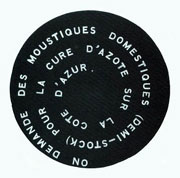
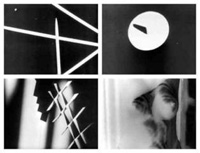
Nell’ Immagine-movimento e nell’Immagine-tempo[8] scritti entrambi negli anni ottanta, Deleuze riallaccia le sue riflessioni sul cinema alle concezioni di Henry Bergson sulla natura del movimento e del tempo. Il tempo proposto dalle scienze deterministiche è un susseguirsi ordinato e meccanico di eventi, cioé il tempo è rigidamente determinato nei suoi passaggi temporali dal passato, al presente, al futuro. Per la fisica, esso è un susseguirsi di fotogrammi, analogamente alla pellicola cinematografica.Sosteneva Zenone, constatando che la traiettoria di una freccia era come un insieme di istantanee ferme messe in fila una dopo l’altra, che non esisteva movimento alcuno, poiché il movimento non può generarsi dall’immobile. In effetti, sottolinea Bergson, la suddivisione dell’azione in istantanee è un processo che la mente umana attua a posteriori cercando di mettere in ordine una realtà che altrimenti sembrerebbe incomprensibile. La nozione attorno alla quale ruota la rivoluzione bergsoniana è quella quindi di durée, di durata. Il tempo percepito dallo spirito non coincide con quello misurato dai fisici. La coscienza percepisce il tempo come durata, vivendo nel presente le tracce del passato e del futuro: prolungando se stessa in parte nell’uno, in parte nell’altro. Impossibilitata a definire in un unico istante il presente, la durata della coscienza è dunque “il moto ondoso del presente che, tendendo sempre e comunque verso il futuro, trascina con sé qualche traccia del passato”. Deleuze esplora i due tipi di immagini connesse all’arte cinematografica, spiegando come sebbene il cinema proceda per fotogrammi, che sono porzioni immobili di tempo, esso ci restituisce un’immagine media sulla quale il movimento è perfettamente modellato (imagine-movimento). Rispetto al tempo, Deleuze lo concepisce quale direttamente rappresentabile poiché l’immagine-tempo ha la facoltà di esprimere la natura del tempo, il fuggevole, in una forma compiuta: ma la forma di ciò che cambia non cambia, non passa. «E’ il tempo, il tempo in persona (…) Un’immagine tempo diretta che da a ciò che cambia la forma immutabile nella quale si produce il cambiamento (…)»[9] .L’immagine filmica, come l’immagine poetica o artistica, non significa ma mostra. È quello che Wittgenstein ha definito come il cogliere di colpo. «Non si tratta di una scomposizione, un’analisi che arriva a cogliere l’essenza, qualcosa che sta ‘sotto’ o ‘dentro’, e che è comune a tutti i linguaggi, tutte le proposizioni nel senso che ne costituisce la verità nascosta e fondamentale. Si tratta invece di fare completa chiarezza di ciò che abbiamo sotto i nostri occhi, ciò che ci sta davanti, ciò che parliamo, il linguaggio che abbiamo e che siamo. Non c’è un nascosto che va portato alla luce, ma una chiarezza di ciò che effettivamente diciamo e di ciò che effettivamente è il fenomeno […]»[10] . Il cinema è il miglior trampolino dal quale il mondo moderno può tuffarsi nell acque magnetiche e brillantemente nere dell’inconscio[11]. «Già i dadaisti e i surrealisti avevano concepito un’arte fondata sul frammento, lo choc, la sorpresa: il cinema porta a compimento le loro intuizioni. Se le inquadrature colpiscono lo spettatore con la stessa rapidità di uno schoc, ciò ha conseguenze rilevanti sulla struttura psicihica[…]»[12].Realizzato in collaborazione con Man Ray e Marc Allégret, Anèmic Cinéma esprime i concetti appena discussi. Nel film, Duchamp sperimenta gli effetti ottici derivati dalla ripresa di alcuni dischi rotanti di sua ideazione, battezzati rotoreliefs. I rotoreliefs esplicano il loro senso nel movimento. Durante la rotazione la loro superficie perde la bidimensionalità costitutiva e diviene una sorta di motore pulsante che ingurgita l’occhio di chi guarda. Nel film, la regia si limita ad un piano fisso in cui si avvicendano diciannove diversi rotoreliefs, di cui dieci ottici, recanti stampe di pattern spiraloidi o illusionistici, e nove verbali, recanti alcune boutade “dada”:
Bains de gros thé pour grains de beauté sans trop de Bengué

L’enfant qui tête souffleur de chair chaude et n’aime pas le chou-fleur de serre chaude

Si je te donne un sou, me donneras tu un pairs de ciseaux?

On demande des moustiques domestiques (demi-stock) pour la cure d’azote sur la Cote d’Azur

Inceste ou passion del famille, à coups trop tires

Esquivons les ecchymoses des Esquimaux aux mots exquis

Avez vous déjà mis la moëlle de l’épée dans la poêle de l’aimée?

Parmi nos articles de quincaillerie paresseuse nous recommandons le robinet qui

s’arrête de couler quand on ne l’ecoute pas

L’apirant habite javel et moi j’avais l’habite en spirale

Il tipo di movimento che caratterizza ciascun disco cambia da fotogramma a fotogramma in modo da non consentire alcuna connessione logica tra l’uno e l’altro. Ma,anzi, a tratti interrompendo il vortice in cui l’occhio è di volta in volta rapito per gettarlo in una nuova nonsense interiore. L’ambiguità prodotta dall’illusione dell’oscillazione dei dischi, che invece non sono che superfici piane, riflette la doppiezza dei messaggi dei puns inscritti in essi: «Something else happens when we begin to allow the puns to have their play. The figurative meaning of “la moelle de l’epée”and “la poele de l’aimeé” over powers the literal (non) sense. The reference to sexual intercourse could hardly be more evident. Furthermore, once we recongnize its figurative character, our reading of the other disks begins to reveal sexual allusions […] »[13]. Il riferimento alla sfera sessuale si produce dunque dall’alternanza di testo e oscillazione a differenti velocità, convergenti nella nostra percezione come atto sessuale immaginario.L’oscillazione dei dischi mette in atto una forma di perturbante ovvero quella «sorta di spaventoso che risale a quanto ci è noto da lungo tempo, a ciò che ci è familiare»[14]. Perturbante è tutto quello che sarebbe dovuto rimanere segreto e invece è affiorato improvvisamente.Esso si coglie di colpo, senza realizzarne i processi attraverso i quali avviene la percezione di esso, perché noi siamo turbati nello stesso momento in cui siamo intenti ad osservare. L’osservazione dei dischi in rotazione mette in moto le nostre pulsionoi più remote e perverse. L’esperienza del vedere nasconde l’ambiguità del linguaggio. Una volta letti ad alta voce i giochi di parole perdono il loro significato, o almeno lo mutuano in un’altra sfera semantica lontana da quella percepita dall’occhio durante la visione. Dissolvendosi in infinite possibilità, nessuna delle quali definibile con certezza, essa diventa un campo aperto dove l’occhio inciampa e cade. Duchamp si serve del moto rotatorio per scandire un nuovo tipo di temporalità disegnata sulle pulsioni erotiche dell’essere umano. Rivalutando il sogno, l’irrazionalità, la follia, gli stati di allucinazione in una chiave già non più surrealista ma concettuale e ironica egli ricerca l’essenza intima della realtà oltre la realtà stessa, per succhiare il midollo della vita con sconvolgente sensibilità celebrando della vita stessa la tangibilità sottesa ad oggetti banali e quotidiani. L’automatismo psichico, connesso al movimento dei dischi, che mira ad esprimere il funzionamento del pensiero al di là di ogni controllo cosciente ammette la sfera dell’erotismo come sfera in cui si muove la piú intima tendenza dell’essere umano.

click images to enlarge


  • Anèmic Cinéma, Dischi inscritti con giochi di parole e disco ottico n.4
    M.Duchamp, Anèmic Cinéma, Dischi inscritti con giochi di parole e disco ottico n.4
  • Rotoreliefs
    M.Duchamp, Rotoreliefs n.1,2,3,4,5,6, 1935.
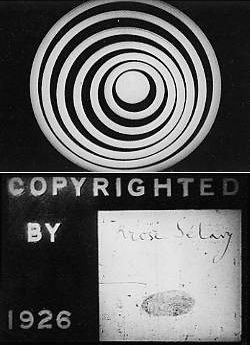
  • Anèmic Cinema, titolo di coda
    M.Duchamp. Anèmic Cinema, titolo di coda

click images to enlarge


  • Disco ottico n.6
    Disco ottico n.6
  • Disco con pun
    Disco con pun
  • Rotorelief n. 3
    Rotorelief n. 3 


Notes

Footnote Return 1. Cfr. Luigi Pareyson, Ontologia della libertà, Torino, Einaudi 2000.

Footnote Return 2. Cfr. Friedrich W. J. Schelling, Sistema dell’idealismo trascendentale, Bari, Laterza 1965.

Footnote Return 3. Cfr.S. Kierkegaard, Il concetto dell’angoscia, Milano, Fratello Bocca, 1950.

Footnote Return 4. Cfr.Marcel Duchamp in Arturo Schwarz, The complete works of Marcel Duchamp, New York-London 1969.

Footnote Return 5. Cfr. G. Bataille, L’erotismo, ES Edizioni, 2000 p.10.

Footnote Return 6. cfr. Martin Heidegger, L’origine dell’opera d’arte in Sentieri Interrotti, Firenze, La Nuova Italia 2002.

Footnote Return 7. cfr J. KRISTEVA, Poteri dell’orrore: Saggio sull’abiezione , Milano, Spirali 1981.

Footnote Return 8. cfr G.Deleuze, L’immagine-movimento/cinema 1, Milano, Ubulibri 1997; L’immagine-tempo/cinema 2, Milano, Ubulibri 1989.

Footnote Return 9. cfr G.Deleuze, in op.cit.,p. 154.

Footnote Return 10 cfr Leonardo V. Distaso NON PENSARE, GUARDA!”WITTGENSTEIN SULL’IMMAGINE, www.kainos.it

Footnote Return 11. A.Breton, 1896-1966.

Footnote Return 12. cfr R.Principe, L’immagine surrealista e il cinema, in www3.unibo.it..

Footnote Return 13. cfr Michael Betancourt, Precision Optics/ Optical Illusions, in Tout-fait, The Marcel Duchamp Studies Online Journal, 2003,www.toutfait.com

Footnote Return 14. cfr S.Freud, Saggio sul perturbante, s cura di C.Musatti, Theoria, 1984.
Glasswanderers

1. “Be your own university”— An introduction

It was last June when I decided to go for an interview in the Kunstmuseum (Museum of Art) in Vaduz in Liechtenstein. In my letter of application I mentioned the barriers between different arts as well as the resulting ‘pigeonholing’–to stress the fact that in my mind it is essential to see those barriers not in the sense of limits but rather as challenges. After all I applied for a position which is not exactly tailored to a future high school teacher of History and English. One could interpret this short ‘philosophical interval’ in my letter as a kind of justification–though this was definitely not my aim. Instead I refuse to be labelled as a Historian or English linguist when my interests are distributed among different areas.

“Art is not an escape from life, but rather an introduction to it.”(1)
-John Cage

In my short introductory remark I already mentioned barriers as a central term. I am interested in barriers between different arts and disciplines not in the sense of respecting them but in the sense of blurring. Both, Duchamp and Cage offered me a lot of input through their art, music, philosophy and their blurring of the distinction between art and life. They were in search for a way to escape from traditional painting respectively music. Cage was particularly interested in Zen Buddhism and accordingly invented a new notion of music by using chance as a compositional tool. He was trying to break the traditional barriers between not only theatre, music, dance and fine arts: “I am out to blur the distinctions between art and life, as I think Duchamp was. And between teacher and student. And between performer and audience, etcetera.”(2)

Both Cage and Duchamp revolutionized the common understanding of modern art. They withdrew themselves from commitments to what I call ‘entertaining’ artists who were interested in pleasing a large audience. Duchamp, during his whole lifetime refused to be labelled an artist. “My attitude towards art is that of an atheist towards religion. I’d rather be gunned, kill myself or somebody else than creating art again.”(3) Duchamp was certainly doing art while provocatively refusing it, but here the central message was that he did not want to be categorised in any way. In an interview, he similarly remarked that “a human is a human, as an artist is an artist; only if he is categorised under a certain ‘- Ism’ he can’t be human nor artist.”(4)As I continue my lines of thought at this point it only indicates the beginning of a long walk along these (sometimes invisible) barriers. My ‘philosophical walk’ will be that of an amateur wanderer, someone who got deeply inspired by three outstanding, challenging and at the same time, enigmatic characters.

John Cage first attracted my interest at a lecture in college where our English professor acquainted us with an apparently bright and free mind. When I learned about Cage’s ideals in education I realized that this was the opposite of what we mostly experienced as college students. Reproduction of knowledge is the most common and also most uncomplicated form of assessment, while the written and oral creative output of a student, even when studying languages, lies at a minimum. However, university, as I experienced it, greatly encouraged the meeting with others. It is a place where social exchange can usually take place on a spontaneous basis.

An appealing aspect while working with Cage was the fact that his influence was not just felt in music, but also in visual arts, dance and aesthetic thought in general. He believed that art was intimately connected with our lives and thus not to the museums. Cage stressed the concepts of diversification for unification, of multiversity for university–to express the idea of bringing joy and liveliness into education. He brought into question the term ‘university’ which, he believed, was not encouraging the meeting with oneself.(5) The first rethinking process has to take place in our own minds, thus my title ‘Be your own university.’
My walk will sometimes take place on thin ground, but this interest in border areas would be also in the sense of Cage and Duchamp. Both artists were in search for means to escape tradition. Cage, by inventing compositional tools other than harmony, Duchamp by “unlearning to draw.”(6)In the course of examining those two characters I found many common elements in relation to the mentioned blurring that my final interest focused on this topic. The fact that they shared a lifetime friendship as well as their likewise, but also contrasting ideas and artistic tools represented other interesting elements when studying both characters. Duchamp, more than Cage, created a real challenge for me as his often paradoxical and ironic statements made it hard to ‘complete the puzzle.’ I decided to partly leave the puzzle unfinished–with the slight intention to let my readers finish it.
During the last 50 years, there have been numerous publications on both Duchamp and Cage. I must admit that, for some reasons I intentionally have not read many of them. One reason is that, if I would have, this paper would have ended in a life-time project. Moreover, if the information load is too heavy, one would support unconscious reproduction of different information sources. And I wanted my mind to keep a sense of freedom and space. I gained a great understanding through primary sources as interviews, lectures, texts and letters. Now and then I grabbed books which had only indirectly to do with my topic, such as Rodin’s Art or Gertrude Stein’s Everybody’s Autobiography….in order to keep my mind a bit detached. Thanks to technology it is not much of a problem to get a lively impression of Cage fooling around with the interviewer in a live discussion about his Roaratorio. Those conversations transported the sense of humour and lightness in Cage. I also tried to get familiar with his music–with the rhythms I have heard so much about and still could not guess how they sounded in reality. Sometimes it was indeed an adventurous listening practice and I literally had to keep in mind Cage’s quotation that “disharmony is simply harmony we are unaccustomed to.”(7)
It is worth stating at this point that this project is not intended to be a scientific text in the common sense (as some may have noticed already) Many art historians, at least in German, tend to write in a manner which is apparently designated for a minority target group. It is not the fact that it is impossible for someone interested to understand such a text but that it seems to be an interminable play with words. It appears that they often claim a sense of totality if not universality and thus maintain a clear distinction between art specialists and public. Both Cage and Duchamp have not left behind the impression that their ideas are not accessible to the interested public. After having read some of Cage’s interviews and quotations I almost feel that it is needless to add anything. Many quotations I will cite in the course of this paper could indeed speak for themselves. I guess I just did not have the nerve to leave the space blank in between. Now honestly – I believe that one should first of all enjoy both artists without much scholarship. Cage, in particular, strived to make his work accessible and useful.
This project is best described as an attempt to find my personal way of approaching two artists. I doubt that Duchamp or Cage can be ‘understood’ in the common sense. Duchamp rather left the door open by saying that observers complete works of art themselves. In the end it is up to the audience if a sculpture or a painting is worth surviving. And still, there is something hermetic and mysterious about his work. I must admit that I feel no need to completely uncover its mystery as this would be in contrast to his intentions. The following text will not be scientific in the sense that I do not exclusively intend to give answers but rather challenge new questions. Cage once mentioned in an interview on Duchamp: “‘What did you have in mind when you did such and such?’ is not an interesting question, because then I have his mind rather than my own to deal with.”(8) The paper does not claim comprehensiveness as it, among other things reflects my own experience with both artists.
In order to give hints about what my chapters will be about, I used various quotations which I thought would quite well convey the central topic of the respective essay. However, I refrained from giving too much away and also deliberately missed writing summaries of my ‘essay results.’ The topic is too complex to be packed in a few words and I wanted to allow a space where some doors remain open.
The idea to partly use translucent paper originates from a quotation by John Cage. In his interview with Moira Roth he was asked if his idea of silence had anything in common with Duchamp’s. He answered:

“Looking at the Large Glass (*which is considered to be Marcel Duchamp’s masterpiece), the thing that I like so much is that I can focus my attention wherever I wish. It helps me to blur the distinction between art and life and produces a kind of silence in the work itself. There is nothing in it that requires me to look in one place or another or, in fact, requires me to look at all.”(9)

A glass indeed does not require the spectator to observe the artwork itself, but encourages him to see the environment behind it. In my mind the notion of ‘looking beyond’, that is not being dictated to focus on the work of art itself is a wonderful idea. Through the symbolic use of translucent paper for the initial chapter pages the environment becomes visibly through the pages. As the pages are closed, one can see traces of the next page’s writing. The paper’s contents are blurring in view of the next page’s font. In case my readers believe they are not learning anything new, I invite them to skip parts of the paper.
In History seminars we were taught about the crucial objectivity of a historian. Objectivity is certainly a necessity or at least something to accomplish in this particular area, while at the same time it is almost impossible. Our personal background will, at least subconsciously, make it difficult to maintain objectivity. In view to Cage’s and Duchamp’s overwhelming philosophical input I found it hard to perpetually keep scientific objectivity. I must admit that I did not manage to repress some creative outbreaks. Regarding objectivity, Cage’s introduction to his Autobiographical Statement seems to be quite apt to end my introduction:

“I once asked Arragon, the historian, how history was written. He said, ‘you have to invent it.’ When I wish as now to tell of critical incidents, persons and events that have influenced my life and work the true answer is all of the incidents were critical, all of the people influenced me, everything that happened and that is still happening influences me.”(10)

####PAGES####
2. “There is only one-ism and that is idiotism”(11)
attempt to de-categorise marcel

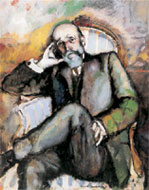
Paul Cézanne, frequently referred to as the father of Modern Art, once mentioned the line “The great artist is defined by the character he imparts everything he touches.”(12) These words almost ascribe a certain sacredness to the artist. Duchamp’s early oil paintings, in particular the Portrait of the artist’s father or The chess game were apparently influenced by Cézanne. However, as he later self-confidently recalled, those “were only the first attempts at swimming.”(13) At the age of about 25, Duchamp found his own way of self-expression. He more and more distanced himself from what he called “retinal painting” where colour and form of an artwork were overvalued. Oil painting, to his mind, could no longer claim perpetuity. Duchamp believed that true art could only be found in the conceptual space of human mind rather than on the surface of the canvas. This idea reminded me of Kandinsky, who, in his famous Essays on Art and Artists(14), similarly wrote that it is not so much the form of a work of art which is of significance, but the spirit behind it. Duchamp was one of the first artists who made every effort to desacrifice the common notion of art.


Footnote Return
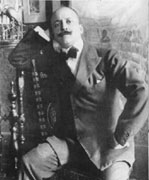
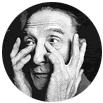
Figure 1
Marcel Duchamp

Who is this Marcel Duchamp?
“He neither talks nor looks, nor acts like an artist. It may be in the accepted sense of the word he is not an artist.”(15)
I think of Duchamp (Fig. 1) primarily as an intelligent deceiver. Most of the time he led us believe he was not doing art, as when he was playing chess. Cage commented on him: “All he did was go underground. He didn’t wish to be disturbed when he was working.”(16) In his ‘professional life’ Duchamp wanted to make his own way, accepting a certain isolation. It seems that he often enclosed himself in the solitude of his studio, not telling anybody of his artistic activities. In this way he made a real distinction between his life as artist and his social life. Duchamp wished to be an ‘invisible’ artist as he constantly pretended art did not play a crucial role in his life. He gave up art for chess, experimented with language, eluded us and well kept his mystery. Duchamp’s enigmatic silence led us to questioning and next to the analysis. His silence, among other things, caused curiosity and made him such an interesting character for the public. Joseph Beuys, however, interpreted his silence as ‘silence is absent’(17) and thus criticised Duchamp’s anti-art concept. He believed that Duchamp’s silence was overrated. Beuys’ statement probably also adverts to his giving up art for chess and writing. On the other hand, Beuys’ artistic goal had much in common with Duchamp’s–he also felt that the action of the artist was more important than the final product. Beuys, by using everyday materials such as fat and felt, also pivotally contributed to the blurring of the distinctions between art and life.
“It’s very important for me not to be engaged with any group. I want to be free, I want to be free from myself, almost.”(18)-Marcel Duchamp


Footnote Return
Figure 2
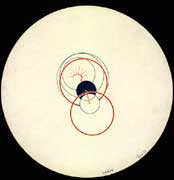
Marcel
Duchamp, Note of 1913

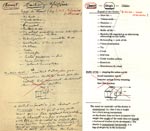
A note, written in 1913, (Fig. 2) reveals an interesting thought, which, in my mind turned out to be central in Duchamp’s artistic life: “Can one make works of art which are not works of art?”(19) As is known, he did make works of art which were up to that point not considered as such–however, he revolutionized the art concept at least for himself. Duchamp wanted art to be intelligent instead of aesthetic. It seems as if he wanted to escape art as practiced in his environment. Duchamp always distanced himself from mainstream artists or what he called “society painters.”(20) However, as we well know, his small, but controversial output exerted a strong influence on the development of the 20th century avant-garde art.
Duchamp was not only interested in art–but in many different areas such as literature, music, mathematics and physics which he tried to incorporate in his art. The fact that he was worrying about problems aside from art, in my mind made him a philosopher. And sometimes history teaches us that a philosopher is more successful than an artist who concentrates too much on art itself. Paradoxical as it may seem, Duchamp did not give up life for art but instead made his life a work of art by living and practicing anti-art. He was probably the first anti- respectively non-artist in history. In an interview he once remarked: “I am anti-artistic. I am anti-nothing. I am against making formulas.”(21) He denied himself as an artist. Some years later he interestingly revised his thoughts by saying that he

“became a non-artist, not an anti-artist…The anti-artist is like an atheist–he believes negatively. I don’t believe in art. Science is the important thing today. There are rockets to the moon, so naturally you go to the moon. You don’t sit home and dream about it. Art was a dream that became unnecessary.”(22)

Anti- or non-artist–in view of Duchamp’s often contradicting statements this question is beside the point. He questioned art as an institution. As Cage mentioned in his 26 Statements Re Duchamp, he “collected dust”(23) while other artists concentrated on being artists. Duchamp refused to lead a painter’s life as he refused to exhibit his works of art. In a letter to an artist fellow, he ironically responded (on the question if he wanted to take part in a public exhibition): “I have nothing to exhibit and, in any case the verb exposer (French word for exhibit) sounds too much like the verb épouser (to marry).”(24) Paradoxically, he did take part in numerous exhibitions of his time…duchamp the intelligent deceiver…Duchamp could obviously live comfor without creating artworks, but never ceased to be an artist of the mind.
Duchamp’s characteristic anti-position was not only expressed in art. Cage, in relation to this, commented: “Marcel was opposed to politics. He was opposed to private property. He was opposed to religion as is Zen. However, he was for sex and for humour.”(25) It seems that what Duchamp refused to do often carried as much significance as what he actually did.


“I am a réspirateur (breather). I enjoy it tremendously.”(26) -Marcel Duchamp

Duchamp had an ironic way of referring to himself in terms as lazy–as a réspirateur or breather–but in fact he was very efficient. In the interview with Cabanne he noted that he preferred breathing to working. When asked how artists manage to make their living, he answered “they don’t have to live. They simply breathe.”(27) According to Duchamp, every breath is itself an artwork without being visually recognizable. He did nothing against the rumour that he had stopped being an artist since the forties–while he was secretly working on Etant Donnés, his last masterpiece, for two decades. Apparently, Duchamp did not even induct his friends into his artistic secrets. Cage commented: “Of course, he was referring to the Etant Donnés, without my knowing that the work existed. He had two studios in New York, the one people knew about, and one next door to it, where he did his work, which no one knew about. That’s why people were able to visit his studio and see nothing going on.”(28) Duchamp managed well to deceive us.
At first sight, Duchamp seemed to be a confirmed anti-materialist. He rarely took a job as he viewed the bourgeois business of having a job and making money as a waste of time. In Paris he worked as a librarian for about two years only to escape from the artistic life there. When he came to America, he gave French lessons in order to bring in enough money to live on. Among his friends, Duchamp was well known for his economy regarding his garments. Cage, in this respect mentioned that Duchamp “was opposed to private property” and recalled the following story:

“Before he married Teeny, he went to visit her on Long Island. Bernard Monnier, her future son-in-law, went to meet Marcel at the station. He said. ‘Where is your luggage?’ Marcel reached into his overcoat pocket and took out his toothbrush and said. ‘This is my robe de chambre.’Then he showed Bernard that he was wearing three shirts, one on top of the other. He had come for a long weekend.”(29)

Art should not be mixed up with commerce(30), he said–although he could have easily made a fortune from Cubistic paintings. This attitude, however, did not prevent him from buying and selling works of art as a means to earn a living. After having read some of Duchamp’s letters in Affectionately Marcel, I got the impression that he was much more than just an art dealer because of existential reasons. His often dry diplomatic letters to Katherine Dreier and the Arensberg family do not sound much like Duchamp, the réspirateur and anti-materialist. “Budget. Enclose the figures on separate sheet: On one side what I received, on the other side the expenses (I have already paid many things or deposited advances). You will see that on account of the new price of the port-folios, I will be lacking 1221 francs in the end.”(31) Cage, in relation to this said that Duchamp was actually

“extremely interested in money. At the same time he never really used his art to make money. And yet he lived in a period when artists were making enormous amounts of money. He couldn’t understand how they did it. I think he thought of himself as a poor businessman (…) He couldn’t understand why, for instance Rauschenberg and Johns should make so much money and why he should not. But then he took an entirely different life role, so to speak. He never took a job.”(32)

Cage’s statement reveals interesting insights in view to Duchamp’s anti-materialistic attitude (which was of course not truly anti-materialistic) in view to art. Cage indirectly suggested Duchamp’s jealousy of other artists of his time. Without my aiming to give a pseudo-psychological comment, Duchamp apparently resigned making money from art as it did not work out for him. This (well pretended) notion of the anti-materialist fits perfectly into his role as the anti-artist and his withdrawal from painting and the art-world in general, and …it seems as if he once again managed well to deceive us. Duchamp’s self-contradiction must not confuse us, for it is as much one of his trademarks as deception.
Duchamp tried to break with the traditional aesthetic predominance through provocation and irony. He thought that painting as a manual activity increasingly covered the true nature of art by overvaluing retinal aspects. With the invention of his readymades, Duchamp completely changed the direction of modern art. By declaring banal, everyday objects as works of art, he did not only desacrifice art in general, but also the artist himself. “Good taste is repetitive and means nothing else than the rumination of traditional forms of taste.”(33)This certainly meant a provocation for artists who felt related to an art movement such as the Cubists or Abstract Expressionists. Duchamp chose his readymades “on the basis of a visual indifference, and at the same time, on the total absence of good or bad taste.”(34) They were no longer created by the artistic skill, but by the mind and decision of the artist.
Duchamp wanted to break with art as a movement or constitution by turning away from naturalistic modes of expression and inventing his own symbols. Duchamp did not yearn to reach a large audience. Moreover, Marcel was prepared to be misunderstood by the public. He wished to make his own way, accepting a certain isolation: “In 1912 it was a decision for being alone and not knowing where I was going. The artist should be alone…Everyone for himself, as in a shipwreck.”(35) Duchamp, much in contrast to Cage, was never fond of working in a team. He preferred to be an outsider. This outsider role in view to his ‘job’ as an artist, however, must not be confused with the role he took in social life. Duchamp was often described as sociable by his artist fellows, and interviewers “marvelled at how easy it was to talk with Duchamp.”(36)
After a three-months stay in Munich in 1912, Duchamp noted:

“I was finished with Cubism and with movement–at least movement mixed up with oil paint. The whole trend of painting was something I didn’t care to continue. After ten years of painting I was bored with it–in fact I was always bored with it when I did paint, except at the very beginning when there was that feeling of opening the eyes to something new. There was no essential satisfaction for me in painting ever…anyway, from 1912 on I decided to stop being a painter in the professional sense. I tried to look for another, personal way, and of course I couldn’t expect anyone to be interested in what I was doing.”(37)

Apparently, Duchamp tried somehow to escape the traditional notion of being an artist. When Duchamp speaks of trend in relation to art, it sounds unusual as it is frequently associated with fashion. The public art world must have become too superficial and materialistic for him. He was not interested in art in the social sense. Duchamp felt more attracted to the individual mind as such, as he believed most artists were simply repeating themselves. He worked conceptually, putting art “in the service of the mind”(38), as he would say.
Cabanne:
“You were a man predestined for America.”

Duchamp: “So to speak, yes.”(39)
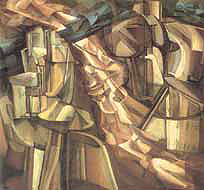
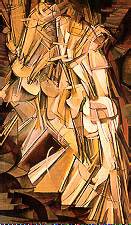
Things had to change. Duchamp, in a letter to his American friend Walter Pach expressed his dislike for the Parisian art milieu. “I absolutely wanted to leave. Where to? New York was my only choice, because I hope to be able to avoid an artistic life there, possibly with a job that would keep me very busy (…) I am afraid to end up being in need to sell canvases, in other words, to be a society painter.”(40) These lines express crucial reasons for his giving up life as an artist in the professional sense. Duchamp felt incompatible with the French art milieu and wished to escape the prison of tradition where the artist ended up in ‘producing’ paintings in order to earn his living. He felt a strong disapproval of meeting up with other artists. Paris bored him and represented everything he associated with tradition. Duchamp, at this point did not only break with the artistic ties but also with those of his home country. He fled to a country where “they didn’t give a damn about Shakespeare.”(41) His arrival in New York in 1915–Duchamp was 28 at that time–would prove the beginning of a new Duchampian era. By that time, he was already known in America, as his painting Nude descending a staircase caused a scandal at the famous New York Armory Show, an international exhibition of Modern art two years earlier. New York, in contrast to Paris, offered him a “feeling of freedom” and as he said he “loved the rhythm of this town.”(42)Duchamp and America turned out to be the perfect couple.
Duchamp obviously never felt part of an artistic group such as the Dadaists. Moreover, he constantly expressed his dislike for categorisation. From the very outset, he never aimed to describe objects or comment on painting. The more paradox I found the fact that, in most encyclopaedias, Duchamp is either associated with the Cubists or Dadaists. We must rethink the common notion of art in order to get involved with Duchamp. We must free ourselves from convention, categorisation and from -Isms. The following mesostic written by Cage expresses very well Duchamp’s ultimate artistic intention. He wrote it shortly after he had died.

The iMpossibility of TrAdition the loss of memoRy: To reaCh ThEse Two’s a goaL (43)

For those of you who nevertheless feel they have to look up Duchamp’s encyclopaedic biography–(I
am not keeping the secret) See next page.

To refer back to the title: “There is only one -ism and
that is idiotism: John Gillard, a friend, published postcards
with his thoughts–one of them read “There is only one
-ism and that’s a prism.” The idea to change it to ‘idiotism’
came after I was inspired by Kandinsky’s Essays on art and
artists
. Kandinsky, like Duchamp often was in the centre
of interest in art criticism. One German art critic called him
the founder of a new art movement called “idiotism.”
Duchamp, Marcel (1887-1968), French Dada artist,
whose small but controversial output exerted a strong influence on the development of 20th-century avant-garde art.
Born on July 28, 1887, in Blainville, brother of the artist Raymond Duchamp-Villon and half brother of the painter Jacques Villon, Duchamp began to paint in 1908. After producing several canvases in the current mode of Fauvism, he turned toward experimentation
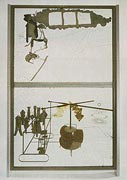
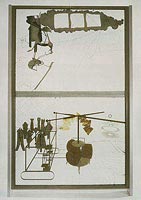
and the avant-garde, producing his most famous work, Nude Descending a Staircase, No. 2 (Philadelphia Museum of Art) in 1912; portraying continuous movement through a chain of overlapping cubistic figures, the painting caused a furor at New York City’s famous Armory Show in 1913. He painted very little after 1915, although he continued until 1923 to work on his masterpiece, The Bride Stripped Bare by Her Bachelors, Even (1923, Philadelphia Museum
of Art), an abstract work, also known as The Large Glass, composed in oil and wire on glass, that was enthusiastically received by the surrealists.
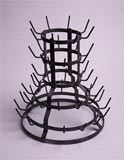
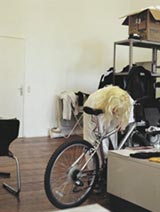
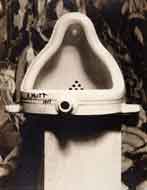
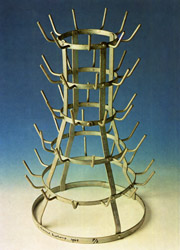
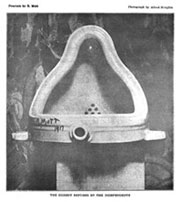
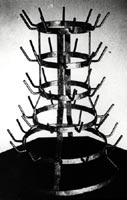
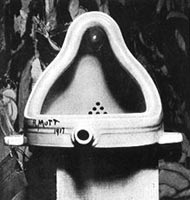
In sculpture, Duchamp pioneered two of the main innovations of the 20th century–kinetic art and ready-made art. His “ready-mades” consisted simply of everyday objects, such as a urinal and a bottle rack.
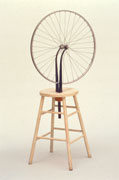
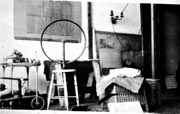
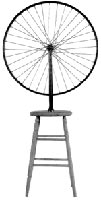
His Bicycle Wheel (1913, original lost; 3rd version, 1951, Museum of Modern Art, New York City), an early example of kinetic art, was mounted on a kitchen stool.
After his short creative period, Duchamp was content to let others develop the themes he had originated; his pervasive influence was crucial to the development of surrealism, Dada, and pop art. Duchamp became an American citizen in 1955. He died in Paris on October 1, 1968.(44)

####PAGES####
3. Silent biography Introduction to John Cage

I thought that the best introduction to John Cage would be an ‘incomplete’ or ‘imperfect’ mestostic. ‘Incomplete’ as I would like to leave enough space for thoughts. Cage described his mesostic technique as follows:

“Like acrostics, mesostics are written in the conventional way horizontally, but at the same time they follow a vertical rule, down the middle not down the edge as in an acrostic, a string spells a word or name, not necessarily connected with what is being written, though it may be. This vertical rule is lettristic and in my practice the letters are capitalized. Between two capitals in a perfect or 100% mesostic neither letter may appear in the lower case. In the writing of the wing words, the horizontal text, the letters of the vertical string help me out of sentimentality. I have something to do, a puzzle to solve. This way of responding makes me feel in this respect one with the Japanese people, who formerly, I once learned, turned their letter writing into the writing of poems (…)”(45)

My mesostics follow a vertical line while the horizontal words consist of different quotations by Cage. Quotations which, in the case of Cage, contain a stronger message than an encyclopaedic biography. Respecting Cage’s ideas such as experience, silence and non-teaching, I would like to leave the reader with the following mesostic. In order to make it easier to identify Cage’s thoughts, I used different type faces. To my astonishment, I found out later that Cage, as a consequence of dealing more and more with the media, also used various font types in various chapters of his book A Year from Monday. In the first chapter,Diary: How to improve the world (you will only make matters worse) 1965, Cage made use of twelve different type faces, letting chance operations determine which face would be used for which statement.


“As far as COnsistency Of I aM here and ThERe is iS NothING To say L SPACE FOR YOUR THOUGHTS SIMPLY GOES HARMONY WEARE PREFER EVERYTHING IS PERMITTED INCONSISTENCY UNCUSTOMED ZERO IS THE BASIC THOUGHT WE NEED NOT FEAR THESE SILENCES.”

Cage, John Milton, Jr. (1912-92), American composer, who had a profound influence on avant-garde music and dance. Born September 5, 1912, in Los Angeles, he studied with the American composers Henry Cowell and Adolph Weiss and the Austrian-born composer Arnold Schoenberg. In 1942 he settled in New York City. Influenced by Zen Buddhism, Cage often used silence as a musical element, with sounds as entities hanging in time, and he sought to achieve randomness in his music. In Music of Changes (1951), for piano, tone combinations occur in a sequence determined by casting lots. In 4’33” (1952), the performers sit silently at instruments; the unconnected sounds of the environment are the music. Like Theatre Piece (1960), in which musicians, dancers, and mimes perform randomly selected tasks, 4’33” dissolves the borders separating music, sound, and nonmusical phenomena. In Cage’s pieces for prepared piano, such as Amores (1943), foreign objects modify the sounds of the piano strings. Cage wrote dance works for the American choreographer Merce Cunningham. His books include Silence (1961), Empty Words (1979), and X (1983).(46)

To refer back to Cézanne’s quotation at the beginning of this chapter–Duchamp proposes the work of art as an independent creation, brought into being a joint effort by the artist, the spectator, and the unpredic actions of chance–a freer creation that its very nature, may be more complex, more interesting, more original, and truer to life than a work that is subject to the limitations of the artist’s personal control.

####PAGES####

4. Passionate encounters Johnand Marcel


click to enlarge
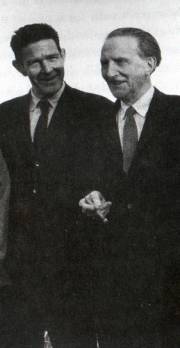
Duchamp and Cage
Figure 3
Photograph
of
Duchamp and Cage

John Cage’s and Marcel Duchamp’s (Fig. 3) ways first crossed in 1942. Duchamp, as many European artists, spent the war years in New York. They met in famous Hale House, home of Peggy Guggenheim and Max Ernst which was then well known as the meeting place for European artists in exile. 30 year-old Cage, originally from Los Angeles was invited by his artist-friend Max Ernst to stay in Hale House. When, after a short period, Peggy informed Cage and his wife Xenia who were penniless at the time, to move out of Hale House, Cage “retreated through the usual crowd of revellers until he came to a room that he thought was empty, where he broke down in tears. Someone else was there, though, sitting in a rocker and smoking a cigar. It was Duchamp.” Cage mentioned that “he was by himself, and somehow his presence made me feel calmer. Although I could not recall what Duchamp said to me, I thought it had something to do with not depending on the Peggy Guggenheims of this world.”(47)
Their first encounter reveals interesting aspects of their prospective friendship. Duchamp, the cool smoking type, sitting in a room all by himself, mumbling something amusingly at a desperate stranger. “He had calmness in the face of disaster”(48), Cage said later. Duchamp could not so easily be disconcerted. The odd encounter scene between Duchamp and Cage somehow conveys Duchamp’s inclination to indifference. Years after they had first met each other, Cage noted in his 26 Statements Re Duchamp: “There he is, rocking away in that chair, smoking his pipe, waiting for me to stop weeping.”(49) Cage obviously experienced Duchamp’s cool indifference first-hand.
Cage, in many interviews, mentioned his friend’s sense for wittiness. As he told Moira Roth, Duchamp was paradoxically “very serious about being amused and the atmosphere around him was always one of entertainment.” He further remarked that “we get to know Marcel not by asking him questions but by being with him.”(50) The reason why Cage did not want to disturb him with questions was that he then would have had Duchamp’s answer instead of his personal experience. Indeed, the concept of experience, deriving from Zen Buddhism, is central in Cage’s philosophy and should not merely be considered in context of his music. He believed that experience, in most respects, was more significant than understanding. It seems that Cage rather wanted to let things happen when spending time with Duchamp. This philosophy has much in common with Cage’s notion of ideal education, but also with his idea of silence and chance in music. Cage was amazed “at the liveliness of Duchamp’s mind, at the connections he made that others hadn’t (…).”(51) These words undoubtedly give evidence of a unbroken Duchamp admirer. When asked what artist had most profoundly influenced his own work, Cage regularly cited Marcel Duchamp.
Duchamp, on the other hand, fondly spoke of Cage as someone full of lightness. “He has a cheerful way of thinking. Not ingeniously (…) He is not acting like a professor or schoolmaster.”(52) I believe that Duchamp did not either want to appear like a schoolmaster, but the respect many people showed towards him, naturally made him less affable. Duchamp, as a consequence of his voluntary artistic isolation, stroke others as aloof.


“Had Marcel Duchamp not lived, it would have been necessary for someone exactly like him to live, to bring about, that is, the world as we begin to know and experience it.”(53) -John Cage

Cage’s respect for Duchamp had blossomed into a sporadic, yet close friendship. In his introduction to 26 Statements Re Duchamp, Cage noted that due to his view “he felt obliged to keep a worshipful distance.”(54) Duchamp’s often mentioned aloof character must have initially had an impact on their friendship. Following Cage’s remarks preceding his 26 Statements, his admiration must have led to dubitation concerning Duchamp. It seems as if he was inapproachable to Cage:


“Then, fortunately, during the winter holidays of ’65-’66, the Duchamps and I were often invited to the same parties. At one of these I marched up to Teeny Duchamp and asked her whether she thought Marcel would consider teaching me chess. She said she thought he would. Circumstances permitting, we have been together once or twice a week ever since, except for two weeks in Cadaqués when we were every day together.”(55)

Cage’s memories leave the impression as though he had long waited for an occasion to ask Duchamp teaching him chess. He later told Calvin Tomkins that Marcel’s quiet way often gave him the feeling that he did not want attention, “so I stayed away from him, out of admiration.”(56) In contrast, it is hard to imagine Duchamp in the role of the passionate admirer. Duchamp rarely spoke about artists that he thought influenced or inspired him. He soon disengaged himself from a model once he grasped it. However, in the case of Raymond Roussel, a writer whose piece Impressions d’Afrique “greatly helped him on one side of his expression”, Duchamp made an exception: “I felt that as a painter it was much better to be influenced by a writer than by another painter. And Roussel showed me the way.”(57)Duchamp found his models less in art than in literature. He was on the way to erase the borders between different arts.
Duchamp, more than Cage, was the type of artist who, due to his mixture of charm and extravagant aloofness, seduced his admirers into an uncritical adulation of his art. He had more of the cool, indifferent type of character who sometimes preferred not to be understood. Though Cage and Duchamp are often discussed in terms of the same artistic circle–along with Jasper Johns and Robert Rauschenberg, their characters appeared to be quite different. Duchamp’s indifference among other things served to keep others from getting to close. I can only to some extent agree with Tomkins who wrote in this respect that “his lack of passionate attachments seemed rather to make him more lighthearted, more alert to everything, and less competitive than others.”(58) Someone who is equally passionate about gathering mushrooms and writing ambitious philosophical texts is in my mind more lighthearted than a professional chess player.
 

click to enlarge
John Cage
Figure 4
John Cage

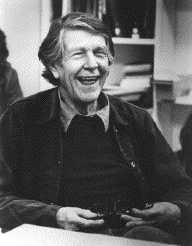
Cage’s sometimes amusing humbleness expressed in his interviews give evidence of his joyful character and his sense of humour (Fig. 4). As Anne d’Harnoncourt, one of Cage’s favourite scholars wrote, he was indeed a delight to observe observing. “Surveying the ground as he walked in a wet field, he found mushrooms; listening to a roomful of silence, he heard his blood circulate in his veins; concentrating on a game of chess, he enjoyed a nearby waterful.”(59) Cage’s interviews, I am thinking in particular of Musicage with Joan Retallack, are interspersed with laughter. Listening to Laughtears–a conversation on Roaratorio, it is not unduly to assert that both the interviewer and Cage laughed their heads off.(60) Though both Cage and Duchamp are frequently described as humorous, Cage’s optimistic and sometimes self-ironic personality probably made him more approachable:


“In connection with my current studies with Duchamp, it turns out I’m a poor chess player. My mind seems in some respect lacking, so that I make obviously stupid moves. I do not for a moment doubt that this lack of intelligence affects my music and thinking generally. However, I have a redeeming quality: I was gifted with a sunny disposition.”(61)

Isn’t it wonderfully amusing to find someone as Cage philosophising about his ‘lack of intelligence’? Duchamp appeared to be more amusing than humorous as a contemporary described him “(…) His blunders are laughable, but he laughs long before you do; as a matter of fact, you laugh at his amusement, not at him.”(62)After having read parts of Duchamp’s letters and interviews, I must add that I found him very amusing. However I would cagely say that his nature of humour was more subtle and black than Cage’s. Duchamp enshrouded himself in a cloud of mystery. After having finished this chapter you will understand what Cage wanted to express by the following mesostic in memory of Duchamp:

Don’t YoU ever want to win? (impatienCe.) How do you mAnage to live with Just one sense of huMor? She must have Persuaded him to smile.(63)


click to enlarge
 Rrose
Sélavy by Man Ray
Figure 5
Marcel
Duchamp, Rrose
Sélavy
by Man Ray,
1921

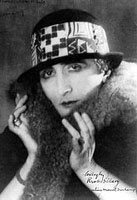
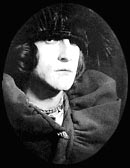
As already mentioned in the last chapter, Duchamp was a convinced anti-artist. This attitude was expressed by the adoption of various ‘roles’ such as ‘Duchamp, the dandy’ or ‘Duchamp, the chess player.’ As Roth already wrote in her essay Duchamp in America, Duchamp could be described as a dandy who, as Baudelaire once put it, was obsessed with a “cult of self who used elegance and aloofness of appearance and mind as a way of separating himself from both an inferior external world, and from overt pessimistic self-knowledge.“(64)His dandy appearance also found expression in his ‘roles’ …duchamp the intelligent deceiver… such as Rrose Sélavy (Fig. 5), a self-made, female image inhabiting the idea of an artist-substitute for Duchamp. There is nothing particular in taking on another name – many artists still do. However, he could not so easily take on another sex. Duchamp’s enacted deception was meant as a word play: “(…) Much better than to change religion would be to change sex …Rose was the corniest name for a girl at that time, in French anyway. And Sélavy was a pun on c’est la vie.(65) Duchamp, wearing a seductive fur dressed up as a female and posed for Man Ray’s camera. Rrose Sélavy clearly is the product of an artist who managed to deceive us more than once. After all, he left no indication he was a homo or transsexual.
The most famous role Duchamp however adopted was that of the chess player which again showed himself as the anti-artist. Both Cage and Duchamp devoted much of their energy to playing chess. Duchamp, however, was the more obsessive player. How addicted to chess must one be to neglect one’s bride by spending day and night playing chess during honeymoon? For Duchamp, chess apparently also served as a way to distract himself. Duchamp’s first wife, Lydie, was said to become such annoyed by her groom solving chess problems one night that she got up and glued the pieces to the board.(66) During his 9-months stay in Buenos Aires, Duchamp wrote to a friend: “I feel I am quite ready to become a chess maniac (…) Everything around me takes the shape of the Knight or the Queen and the exterior world has no other interest for me other than in its transformation to winning or losing positions”(67)
For Cage, the goal of winning was clearly beside the point. His motto could be compared to that of the Olympic athletes, “taking part means everything”, under the premise of Duchamp as the antagonist. He was interested in the Buddhist notion of letting things happen, especially when spending time with Duchamp. Cage could apparently confirm Duchamp’s chess addiction – in his interview with Roth he remembered one game of chess where Duchamp got quite angry with him and ‘accused’ him of not wanting to win:


“The only time he disturbed me was once when he got cross with me for not winning a game of chess. It was a game I might have won; then I made a foolish move and he was furious. Really angry. He said ‘Don’t you ever want to win?’ He was so cross that he walked out of the room, and I felt as though I had made a mistake in deciding to be with him–we were in a small Spanish town–if he was going to get so angry with me.”(68)

Duchamp was an excellent chess player, who, in the role of the tireless thinker even made it to the French national team. After his immigration to the United States, Duchamp was ranked among the top twenty-five chess players in the twenties and thirties. In 1932, he published a chess book titled Opposition and Sister Squares Are Reconciled which was devoted “to a very rare situation in the end game, when all the pieces have been captured except for the opposing kings and one or two pawns on each side.”(69) The book gives evidence of Duchamp’s mathematical gift. Cage, on the other hand, used his mathematical ambitions for chance operations in music.
Duchamp and Cage spent more and more evenings together playing chess. “I saw him every night, four nights in a row,“(70) Cage recalled. What did they do when they were not indulged in their passion? It is certain that they were not talking about each other’s work, according to Cage’s interview with Moira Roth.(71) Meanwhile, they were rather ‘experiencing’ each other simply by spending time together. Cage, rather humble in his statements, often admired his friends’ genius for chess:


“I rarely did (play chess), because he played so well and I played so poorly. So I played with Teeny, who also played much better than I. Marcel would glance at our game every now and then, and in between take a nap. He would say how stupid we both were. Every now and then he would get very impatient with me. He complained that I didn’t seem to want to win. Actually, I was so delighted to be with him that the notion of winning was beside the point. When we played, he would give me a knight in advance. He was extremely intelligent and he almost always won. None of the people around us was as good a player as he, though there was one man who, once in a blue moon would win. In trying to teach me how to play, Marcel said something which again is very oriental, ‘Don’t just play your side of the game, play both sides.’ I tried to, but I was more impressed with what he said than I was able to follow it.”(72)


click to enlarge
Reunion performance
Figure 6Photograph
of Reunion
performance, 1968

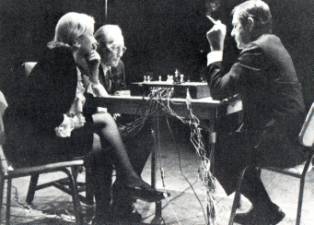
For Cage, chess apparently served as a pretext to spend time with Duchamp. In 1968, the year of Duchamp’s death, Marcel and his wife were invited to take part in a musical event entitled Réunion by John Cage (Fig. 6). Cage’s idea behind thishappening was that, in his mind, chess contained a finality in itself, as its goal was to win. Cage thus wanted to alienate the game from its ‘purpose’ by distributing sound sources each time movements took place on the chess board. He noted that “the chess board acted as a gate, open or closed to these sources, these streams of music (…). The game is used to distribute sound sources, to define a global sound system, it has no goal. It is a paradox, purposeful purposelessness.”(73) The event consisted of Cage and Duchamp (and later Cage and Teeny) playing chess on stage on a board that had been equipped with contact microphones. Whenever a piece was moved, it set off electronic noises and images on television screens visible to the audience. Cage’s alienation of the chess game from its original purpose is an interesting concept in view to both Duchamp’s and Cage’s understanding of art. Alienation indeed played a crucial role in both artists’ lives. I am thinking now in particular of Duchamp’s readymades and of Cage’s Prepared Piano. Duchamp later amusingly recounted the chess event: “It went very well, very well, it began about eight-thirty. John played against me first, then against Teeny. It was very amusing.” Asked whether there was any music, he replied “Oh yes, there was a tremendous noise.”(74)
Chess brought in no money for Duchamp, but provided richer satisfaction. After all, he was aréspirateur. But why chess? When I learned how to play chess at about 14, I was fascinated about it and eagerly taught it some of my friends. However, I never aimed to perfect it, to rack my brain endlessly about possible combinations. A friend of mine is a passionate chess player and I was quite curious what he found so fascinating about it. He spontaneously answered: “Chess is completely different from other games–it has nothing to do with chance or luck.” I found this statement quite interesting in respect to Duchamp’s use of artistic tools–chance was not only typically Cagean, but in fact used by Duchamp in his music pieceErratum Musical already in 1912, the year Cage was born.(75) For both artists, chance functioned as a means to escape from tradition, taste and conscious intentions. Thus it appears that chess stood in strong contrast to various methods and ideas both Cage and Duchamp used in art. An instinctive compensation? Cage, according to an interview, was interested in mushrooms and chess as a compensation for his concern with chance.(76) This was apparently also true for Duchamp–after all he was well aware of the contradiction between chess and art: “The beautiful combinations that chess players invent–you don’t see them coming, but afterward there is no mystery–it’s a pure logical conclusion. The attitude in art is completely different, of course; probably it pleased me to oppose one attitude to the other, as a form of completeness.”(77)On the other hand, Duchamp believed that art and chess were in fact closer to each other than they seemed. He thought that the game had a visual and imaginative beauty that was similar to the beauty of poetry. Duchamp ended his remarks by saying that “from my close contact with artists and chess players, I have come to the personal conclusion that while all artists are not chess players, all chess players are artists.”(78) When Cage asked Duchamp to write something in his book on the end game, he wrote: “Dear John, Look out! Another poisonous mushroom.”(79) Chess and mushrooms were obviously opposed to the chance operations both Cage and Duchamp used in their art.
What immediately came to my mind when I heard about luck in the course of the chess conversation with my friend, were some thoughts Duchamp wrote to his sister’s husband Jean–on the enquiry, what Duchamp thought about one of his works of art:


“Artists throughout the ages are like Monte Carlo gamblers and the blind lottery pulls some of them through and ruins others (…) It all takes place at the level of our old friend luck. Artists who, in their own lifetime, have managed to get people to value their junk are excellent salesmen, but there is no guarantee as to the immortality of their work. And even posterity is a terrible bitch who cheats some and reinstates others, and reserves the right to change her mind again every 50 years.”(80)

This statement carries a touch of resignation. Duchamp believed that artistic luck had nothing to do with real genius. According to him, “a good artist is just a lucky guy, that’s all.” It seems that Duchamp refused to take part in the ‘artistic lottery’, in the useless competition between artists. Chess, in contrast, justly rewarded those who had a real talent. His passion required him to ‘work hard’ in order to win. Duchamp apparently forgot about his self-made image of the réspirateur when sitting in front of a chess board.
I found it interesting to observe that both Cage and Duchamp had obsessions which cannot immediately be connected to art. Duchamp did not exclusively devote his life to art, as did Cage not concentrate merely on music. The former had a passion for chess, the latter for mushrooms and cooking. Cage was aware of the fact that many people criticised him for not devoting his life to music utterly. When he began his studies with Schönberg, he told his teacher that could not afford the price. Schönberg then asked him if he would devote his life to music and Cage’s answer was “yes.”(81) But–why devoting one’s life to art respectively music if all areas are interrelated? Cage, in this respect said that “I still think I’ve remained faithful. You can stay with music while you’re hunting mushrooms(…)”(82) Both Duchamp and Cage expanded the notion of art into areas which were up to that time clearly separated from art itself. Chess cannot be simply regarded as a pastime for Duchamp, as Cage’s mushrooms and cooking passion were not merely an amusement. They did not only function as a counterbalance to their work as artists. Instead, they were integrated within their thinking and philosophy. Both artists transposed the idea of blurring the distinctions between art and life simply by their way of life. A female friend of Cage interestingly reflected on him:


“The months that followed, which extended into years, afforded me close proximity to both the man and his work. What I came to see was that there was very little difference between the two. That is Cage cooking was Cage composing was Cage playing chess was Cage shopping was…You get the picture. All of his daily activities, from the most sublime to the most mundane, were equally infused with a kind of mindful detachment.”(83)

The way Cage devoted himself to an ‘ordinary business’ such as mushrooms and cooking, is certainly remarkable. Much of his experimental writing and also music was dedicated to his mushroom passion. It seems that whatever Cage experienced in his daily life became raw material for his art. Many of his elaborate remarks in A Year from Monday rather reminded me of an affectionate cook. As in the second part of his Diary: How to Improve the World, where he wrote: “After getting the information from a small French manual, I was glad to discover that Lactarius piperatus and L. vellereus, large white mushrooms growing plentifully wherever I hunt, are indeed excellent when grilled. Raw, these have a milk that burns the tongue and throat. Cooked, they’re delicious. Indigestion.”(84)
Similar to Beuys, who worked with felt, fat and cloth after these materials saved his life after an aircrash, Cage’s interest in mushrooms originated from necessity during the World Depression. He then solely lived on mushrooms for one week and after this experience decided to occupy with them intensely. According to Cage, much could be learnt from music by devoting oneself to the mushroom. “It’s a curious idea perhaps, but a mushroom grows for such a short time and if you happen to come across it when it’s fresh it’s like coming upon a sound which also lives a short time.”(85)Cage found many parallels between mushrooms and music. However, he was well aware of the fact that his mushroom passion, like chess, was in fact in conflict to his idea of chance in music. To leave it to chance whether to eat a mushroom or not could after all end fatal. Mushroom growth is not even determined by chance. They are rather choosy–grow on wet grounds only. Like Duchamp, Cage published a book on his passion in cooperation with two other mycologists. And – surprisingly, he did make money with his mushroom passion. Cage once appeared on an Italian show as mushroom expert and won 6000 US dollars by answering ‘mushroom questions’ correctly (86)
Mushrooms fired Cage’s imagination. His idea was that everything on earth should be audible because of vibration–including mushrooms. “I’ve had a long time the desire to hear the mushroom itself, and that would be done with a very fine technology, because they are dropping spores and those spores are hitting surfaces. There certainly is sound taking place.”(87)Proceeding on this assumption, he made explorations on which sounds further the growth of which mushrooms. Besides being one of the founders of the Mycological Societyin New York, Cage taught a course called ‘Mushroom Identification’ at the NY School for Social Research. One lecture he held dealt with the ‘sexuality’ of mushrooms:


“We had invited a specialist from Connecticut, who had cultivated a certain species of mushroom, a Coprinus, in very large quantities to study their sex. In his lecture, he taught us that the sexual nature of mushrooms wasn’t so very different from that of human beings, but that it was easier to study. He explained that there are around eighty types of female mushrooms and around one hundred and eighty types of males in one species alone. Some combinations result in reproduction, while others do not. Female type 42, let’s say, will never reproduce with male type 111, but will with certain others. That led me to the idea that our notion of male and female is an oversimplification of an actually complex human state.”(88)

Would you have thought of mushrooms in terms of female and male? I would not and besides enjoying myself immensely, I am continually amazed at Cage’s affectation of details. He had an extraordinary ability to exploit these new insights and incorporate them into his artistic thinking. And yet at the same I am asking myself how one can possibly have such a playful mind in order to connect sounds with mushrooms…I wonder if Cage was aware of his mushroom passion as something which many people would simply consider absurd if they did not study him thoroughly. To my astonishment I found the answer on the very last page of Cage’s first book Silence. Cage’s thoughts prove that he was hardly someone worldly innocent.


“In the space that remains, I would like to emphasize that I am not interested in the relationships between sounds and mushrooms any more than I am in those between sounds and other sounds. These would involve an introduction of logic that is not only out of place in the world, but time-consuming. We exist in a situation demanding greater earnestness, as I can testify, since recently I was hospitalised after having cooked and eaten experimentally some Spathyema foetida, commonly known as skunk cabbage. My blood pressure went down to fifty, stomach was pumped, etc. It behoves us therefore to see each thing directly as it is, be it the sound of a tin whistle or the elegant Lepiota procera.”(89)

“Isn’t cooking all about mixture and letting individual flavours hold our attention?”
-Anne d’ Harnoncourt

In the late 70s, Cage, after serious health problems, began a macrobiotic diet on the advice of John Lennon and Yoko Ono(90). The idea of the macrobiotic diet is to make a shift from animal fats to vege oils. What fundamentally distinguishes the macrobiotic diet from other health programs is that, rather than consisting of a fixed list of foods to be consumed or avoided, it provides a structure which applies to the whole range of available choices, an orientation which many adherents of the diet extend to a whole cosmology. For Cage, macrobiotics undoubtedly meant more than just cooking or eating. However, he did not take the diet too seriously–he used herbs and spices which he enjoyed. In the short introduction to his macrobiotic recipe collection in his Rolywholyover – A Circus Box, Cage wrote: “The macrobiotic diet has a great deal to do with yin and yang and from finding a balance between them. I have not studied this carefully. All I do is try to observe whether something suits me or not.”(91) Strictly following a recipe would not sound much like Cage–reading his recipes for chicken or beans indeed sound a bit like his notations in music–they allow enough room for the performer’s interpretation.
Cage’s discovery of macrobiotics is no coincidence–with its oriental origin and its application of yin and yang, the macrobiotic diet fits in very well with both Zen and with the temperament of Cage. He believed he had already been affected by the ideas of the diet before he actually started it: “I accepted the diet you might say aesthetically before I accepted it nutritionally.”(92) As Harnoncourt’s interesting quotation (“Isn’t cooking all about mixture and letting individual flavours hold our attention?”) suggests, cooking has a great deal to do with music where individual sounds hold our attention. After studying Cage, I cannot suppress the impression that he could have utilized all daily activities in his art. Cage’s kitchen probably was one big sound studio:


“In all the many years which followed up to the war, I never stopped touching things, making them sound and resound, to discover what sounds they could produce. Wherever I went, I always listened to objects. So I gathered together a group of friends, and we began to play some pieces I had written without instrumental indications, simply to explore instrumental possibilities not yet catalogued, the infinite number of sound sources from a trash heap or a junk yard, a living room or a kitchen…we tried all furniture we could think of.”(93)

Cage was astonished by the positive results of the macrobiotic diet. “Your energy asserts itself the moment you wake up at the beginning of the day. It remains constant. It doesn’t go up and down, it stays level, and I can work much more extensively. I always had a great deal of energy, but now it is extraordinary. At the same time,” he added, “I’m much more equable in feeling; I’m less agitated.”(94) His improvement so amazed him that he kept up the diet from that time onwards and frequently recommended it in interviews:


“Now, however, after, say, four years of following the macrobiotic diet, my health has so greatly improved that I would seriously advise almost anyone who would lend me an ear to make a shift in diet from animal fats to vege oils, to exclude dairy products and sugar, to ‘choose’ chicken only if it actually is a chicken, that is, free from injected hormones, agribusiness, etc., to eat fish, beans and whole grains, nuts and seeds, and vege s with the exception of theSolanaceae (potatoes, tomatoes, egg-plant, and peppers)”(95)

Macrobiotics also inspired Cage to a growing concern with nature and ecological matter. Big business and agribusiness, he stressed, damage our meat, vege and water supplies. Food which he mostly advised in special books of recipes include proper preparations for brown rice, zucchini, beans and chicken. In connection with the museum project calledRolywholyover Circus(96), John Cage published various macrobiotic recipes. Four of them I will include at the end of this chapter.
“I try to discover what one needs to do in art by observations from my daily life. I think daily life is excellent and that art introduces us to it and to its excellences the more it begins to be like it.”(97)John Cage
Cage’s devotion to macrobiotics and mushrooms are interesting insofar, as they once again witness his contribution to the blurring of the distinction between art and life. As already suggested, Cage’s passions cannot be simply regarded as pastimes or, as in the case of cooking, in the context of a human necessity–though Cage began his macrobiotic diet on medical grounds, thus out of a necessity. We certainly do not get past spending time to prepare our daily food–nevertheless it is a question of how we deal with those daily routines. Cooking was as much a part of Cage’s life as composing music and poetry. Once Cage managed the shift from ordinary cooking to macrobiotics, he consciously devoted more time to what can be called the ‘act of cooking.’ This is at least the impression he left behind in his elaborate recipe descriptions. As Kuhn wrote in her essay, it was hard to distinguish Cage from his work: “Cage cooking was Cage composing was Cage playing chess was Cage shopping was…”
Cage, in contrast to Duchamp, frequently made his friend the theme in his writings as well as music. Cage’s ‘homages to Duchamp’ give evidence of the importance of this friendship for him. In his book, A Year from Monday he dedicated 26 Statements on Re Duchamp to his artist friend. The Statements are among other things Cage’s reflections on Duchamp’s artistic methods: “The check. The string he dropped. The Mona Lisa. The musical notes taken out of a hat. The glass. The toy shot-gun painting. The things he found. Therefore, everything seen–every object, that is, plus the process of looking at it–is a Duchamp.”(98)Cage continued his reflections on Duchamp in the second and third part of his Diary: How to Improve the World. In the late 40s, Cage wrote the music for a Duchamp sequence in Hans Richter’s famous avant-garde film Dreams that Money Can Buy. The song is called Music for Marcel Duchamp. In his M–writings ’67-’72, Cage composed several mesostics in memory of Marcel. The following mesostic was written shortly after Duchamp’s unexpected death in 1968. Cage remarked, “it was a loss I didn’t want to have.”(99)


click to enlarge
The Bride Stripped Bare by Her Bachelors
Figure 7
Marcel Duchamp,
The Bride Stripped
Bare by Her Bachelors, Even
,
1915-23

Undoubtedly, Duchamp’s work and philosophy lived on in the work of John Cage – as in the case of his visual work titled Not Wanting to Say Anything about Marcel (1969). The work consists of a Plexiglas field on which one may find letters and fragments of words. Anne d’Harnoncourt wrote about it that “Cage characteristically sought to maintain both multiplicity and transparency by setting eight sheets of clear plastic printed with words in stands so that the viewer peered through them; and if he wasn’t careful, his gaze passed beyond them.”(101) The work is indeed very reminiscent of Marcel Duchamp’sLarge Glass (Fig. 7). As the title suggests, Cage did not want to say anything about his artist friend and thus subjected words to chance operations. He possibly wanted to leave the spectator with language fragments in order not to take him in completely. There is no point in attempting to ‘resolve’ Not Wanting to Say Anything about Marcel. I believe it is a homage to a very good friend.

Another interesting work which Duchamp apparently inspired him to, was the box which I already mentioned in connection with his macrobiotic recipes. Duchamp, in his artwork called Boite, gathered together small reproductions of his artworks unbound in boxed form rather than in an album or a book. So did Cage: Rolywholyover – A Circus is a reflecting box which was designed in consultation with Cage himself. The publication accompanied with a major exhibition at The Museum of Contemporary Art Los Angeles conceived of by Cage as a “composition for museum.” The box is an artwork fully in keeping with his philosophy. It contains a wide range of materials, printed in different formats–such as reprints of texts that Cage found useful and inspiring. The texts can be read in any order. The box also includes reproductions of works by Cage, musical scores, recipes, advice on healthy eating and photography. As Cage said in discussing the box,

“The world is vast, give the impression that the materials are endless.”(102) -John Cage

Despite Cage’s intense occupation with Duchamp, he always remained a somehow mysterious mind. In the foreword to his alphabet in X-writings ’79-’82, Cage reflected on Satie, Joyce and Duchamp–three artists who greatly inspired him. Cage is quite explicit about his ‘goals’ in respect to those three artists–namely that he is not interested in ‘understanding’ in the sense of giving ultimate answers. His humbleness nevertheless gives evidence of an exceptional bright and free mind. In relation to Joyce’s masterpieceFinnegan’s Wake he wrote:

“When I was in Ireland for a month last summer (…) many Irishmen told me they couldn’t understand Finnegan’s Wake and so didn’t read it. I asked them if they understood their own dreams. They confessed they didn’t. I have the feeling some of them may now be reading Joyce or at least dreaming they’re reading Joyce. Adaline Glasheen says: ‘I hold to my old opinion. Finnegan’s Wake is a model of a mysterious universe made mysterious by Joyce for the purpose of striking with polished irony at the hot vanity of divine and human wishes.’ And she says: “Joyce himself told Arthur Power, ‘What is clear and concise can’t deal with reality, for to be real is to be surrounded with mystery.’ Human kind, it is clear, can’t stand much reality. We so fiercely hate and fear our cloud of unknowing that we can’t believe sincere and unaffected, Joyce’s love of the clear dark–it has got to be a paradox….an eccentricity of genius.”(103)

I was impressed by Joyce’s quotation–for reality is indeed often mysterious and inexplicable. In Cage’s interview on his Roaratorio–An Irish Circus on Finnegan’s Wake, Cage remarked that “Joyce didn’t mean Finnegan’s Wake to be understood, he meant it to be a piece of music.”(104) We tend to question everything which is unfamiliar with. Asking questions is one thing but expecting precise answers is another. In relation to Duchamp, Cage thought that asking him questions was the wrong tactic. He had no special intentions when spending time with him. I believe that we can learn a lot from Cage when trying to study Duchamp. Asked on how Cage would circumscribe his friendship with Duchamp, he answered:


“If, for instance, you go to Paris and spend your time as a tourist going to the famous places, I’ve always had a feeling you would learn nothing about Paris. The best way to learn about Paris would be to have no intention of learning anything and simply to live there as though you were a Frenchman. And no Frenchman would dream of going to, say, Notre Dame.”(105)

Nevertheless, there remained a hermetic aspect of Duchamp’s work. Cage once spoke to Marcel’s wife, Teeny Duchamp about this: “I said, ‘You know I understand very little about Marcel’s work. Much of it remains very mysterious to me.’ She answered “It does to me, too.”(106) We must be satisfied with what we are offered by Duchamp–otherwise we will end in a never ending helix. John and Marcel simply enjoyed each other’s presence, without much talking about their work. In order to contribute something to your enjoyment – my suggestion is that you try Cage’s Roast chicken before you continue with the next chapter. In case you are not hungry you will enjoy reading them.
‘Passionate encounters’, this chapter’s motto, is dedicated to the personalities of both Cage and Duchamp as well as their friendship – a friendship which was very much formed by their passions. Though chess initially functioned as a pretext for Cage to spend time with Duchamp, it became an important and enjoyable common amity experience. While writing about chess, I found many parallels in Cage’s passions repertoire and thus tried to examine it also in view to the central notion of the essay–the blurring of the distinction between art and life. Moira Roth’s interview with John Cage has helped me a lot to get an insight into their nature of friendship. However, this only gives a one-side impression and as Duchamp’s documented statements on Cage were comparatively rather rare, it is far from completing the puzzle. I am writing this with the humble precaution of a historian who was taught to take all possible historical resources into account.
As I am writing these lines, my thoughts lead me to Duchamp, the perpetual intelligent deceiver. I am thinking of the Duchamp who was never willing to give away too much. While listening to the last beats of Cage’s Music for Marcel Duchamp I am constantly reminded of the Duchamp who managed well to surround himself with mystery. One should be a clairvoyant rather than a historian.

Recipes À LA JOHN CAGE

“Cage’s scores for music, scores for prints, recipes for chicken, all exist for realization by the artist in real time, and he invited his audience (or his dinner guests) to realize that listening, cooking, and eating are also creative acts.”(107) -Anne d’Harnoncourt
John Cage’s recipes are an interesting experience in view to his whole philosophy. His cooking advices are precise and clear, but far from elitist. They give evidence of his pedagogical gift not to impose his ideas on anybody. Cage, for example did not use the imperative form of “you do …(such and such)”, but instead used the self-referential “I” when explaining the cooking procedures. Interesting also, that his recipes are be inspired by various cultures. The following recipes should offer a possibility to ‘experience’ John Cage. I found it quite interesting what Cage said about experience:


“I think that there is a distinct difference between…. I think that the most pointed way to put this distinction is by using the word “understanding” as opposed to “experience.” Many people think that if they are able to understand something that they will be able to experience it, but I don’t think that that is true. I don’t think that understanding something leads to experience. I think, in fact, that it leads only to a certain use of the critical faculties. Because…say you understand how to boil an egg. How will that help you in cooking zucchini? I’m not sure. One could make the point more dramatically by saying, “How will that help you to ride horseback?” But that probably goes too far. I think that we must be prepared for experience not by understanding anything, but rather by becoming open-minded.”

Roast Chicken

Get a good chicken not spoiled by agribusiness. Place in Rohmertopf (clay baking dish with cover) with giblets. Put a smashed clove of garlic & a slice of fresh ginger between legs and wings and breasts. Squeeze the juice of two & three lemons over the bird. Then an equal amount of tamari. Cover, place in cold oven turned up to 220°. Leave for 1 hour. Then uncover for 15 minutes, heat on, to brown. Now I cook at 170°, 30 minutes to the pound. Or use hot mustard and cumin seeds instead of ginger. Keep lemon, tamari or Braggs and garlic. Instead of squeezing the lemon, it may be quartered then chopped fine in a Cuisinart with the garlic & ginger (or garlic, cumin & mustard). Add tamari. The chicken & sauce can be placed on a bed of carrots (or sliced 3/4-inch thick bitter melon obtainable in Chinatown)

Brown Rice

Twice as much water as rice. If you wish, substitute a very little wild rice for some of the brown rice. Wash or soak overnights then drain. Add a small amount of hijiki (seaweed) and some Braggs. Very often I add a small amount of wild rice. Bring to good boil. Cover with cloth and heavy lid and cook for twenty minutes over medium flame, reduce flame to very low and cook thirty minutes more. Uncover. If it is not sticking, cook it some more. If it is sticking to the bottom of the pan, stir it a little and then cover again and let it rest with the fire off. When you look at it again after ten minutes or so it will have loosened itself from the bottom of the pan. Another way to cook rice: using the same proportion of rice, bring to a boil and then simply cover with lid without the cloth, reducing the fire to low. After forty-five minutes, remove from fire but leave lid on for at least 20 minutes.

BEANS

Soak beans overnight after having washed them. In the morning change the water and add Kombu (seaweed). Also, if you wish, rosemary or cumin. Watch them so that they don’t cook too long, just until tender. Then pour off most of the liquid, saving it, and replace it with tamari (or Braggs). But taste first: you may prefer it without tamari or with very little. Taste to see if it’s too salty. If it is, add more bean liquid. Then, if you have the juice from a roasted chicken, put several teaspoons of this with the beans. If not, add some lemon juice. And the next time you have roast chicken, add some of the juice to the beans. Black turtle beans or small white beans can be cooked without soaking overnight. But large kidney beans or pinto beans can be cooked without soaking overnight. But large kidney beans or pinto beans, etc. are best soaked (So are the others.) Another way to cook beans which has become my favourite is with bay leaves, thyme, garlic, salt and pepper. You can cook it with some kombu from the beginning. I now use the “shocking method.” See Avelines Kushi’s book. And now I’ve changed again. A Guatemalan idea: Bury an entire plant of garlic in the beans without bothering to take the paper off. Cook for at least 3 hours.

Chick-Peas (Garbanzos)

Soak several hours. Then boil in new water. Until tender. They can then be used in many ways. 1. Salad. Make a dressing of lemon or lime with olive oil (a little more oil than lemon), sea salt and black pepper, fresh dill-parsley, and a generous amount of fine French mustard (e.g., Pommery). 2. Or use with couscous having cooked them with fresh ginger and a little saffron. 3. Or make hummous. Place, say, two cups of chick-peas with one cup of their liquid in Cuisinart. Add a teaspoon salt, lots of black pepper, a little oil and lemon juice to taste. Add garlic and tahini. Now I no longer add salt, but instead a prepared gazpacho.

####PAGES####

5.
“If that’s art, I’m a Hottentott”


“Everyone is doing something, and those who make things in a framed canvas, are called artists.” (109)Marcel Duchamp

Duchamp was apparently interested in a general conception of art. What do we call art? Or better what is not considered as art? Can we define works of art which are not works of art–as Duchamp already questioned. Moira Roth, in relation to this wrote that “if one is Duchamp the answer is probably no, although he did ‘make’ works which were not immediately works of art.”(110) Otherwise, these questions are not easy ones to answer–on the contrary, they provoke a number of new question marks. Where is the border between art and non-art? And then–how do we define non-art?

As a historian, I was first of all interested in a definition of art. And as it turned out I had to dig a bit into philosophy. Art originally derived from Sanskrit and meant ‘making’ or ‘creating something’. Plato took up the definition and went one step further by distinguishing artists into two categories: those who are productively creating objects such as architects or carpenters and those who are restricted to the already existing or imitation (what he calledMímesis)(111). Plato honoured the craftsman more than the artist as he believed that the former was oriented at the ideas of the mind, while the latter was simply creating an imitation of the already existing. According to Plato, the painter distanced himself from the truth–in order to attain it, one has to leave all appearances behind and should not duplicate it by a sort of reflection. In the Middle Ages, art (Ars) was generally interpreted as a production and design of everyday objects. It was a skilled trade which was thus never valued under just aesthetic aspects.(112) If we strictly stick to this definition, an artist is nothing else than a workman. And as Duchamp said in an interview, everyone of us is somehow a workman(113)–in different areas of course. Artworks have not always been valued under just aesthetic characteristics–as this short historical outline teaches us.

An important milestone in so-called ‘aesthetic’ art was the beginning of the 19th century. The Impressionists’ usual subjects were landscapes or social scenes like streets and cafés. While Impressionist paintings are commonly regarded as ‘beautiful’, it is also undeniable that they helped to create and to preserve–in their depiction of the pleasures of café life, the comfor ladies at bath–a class divided from the world in its comforts and signs of sophistication. Beauty, here, was a means of escaping from the issues and obligations of the day. Beauty separated those who appreciated it and wished to reside within its frontiers. Expressionism, on the other hand represented a move away from the Impressionist trends and was concerned with conveying the artist’s emotions as aroused by his subjects. Any painting technique that helped to express these feelings was considered a valid medium.(114)

I found it quite interesting to observe that all art movements or -Isms were somehow a response or artistic counteraction to the preceding movement. The Impressionists strongly rejected the Romantic idea that a painting should convey strong emotions. Expressionism, on the other hand, aimed at stressing the artist’s emotions, which was again in contrast to Impressionism. Duchamp lived in a time where he could choose from Abstract Expressionism, Cubism or Surrealism. However, none of the -Isms pleased him enough to get involved with it. He invented his own -Ism and it turned out to be a counteraction to all the previous art movements.
I was quite amazed by the fact that the common notion of ‘beautiful’ art had not always honoured. However, there was a long way to go between Plato and Duchamp. Duchamp’s idea of taste may be interpreted as a response to the governing taste concept since the 18thcentury where

“taste was centrally connected with the concept of pleasure, and pleasure itself was understood as a sensation subject to degrees of refinement. There were standards of taste, and a curriculum, in effect, of aesthetic education. Taste was not merely what this or that person preferred, all things being equal, but what any person whatever ought to prefer.”(115)

Duchamp’s taste revolution, however, cannot only be interpreted as a denial of all -Isms and taste concepts at the time, but also as a very personal decision in search for his own expression. Defining art as a concept seems like an endless enterprise–not only because every point in history offers us its own definition, but because every single artist provides us with hints of his own world.
“For us, art is that which we find under this name: something which simply is, and which doesn’t need to conform to laws in order to exist; a complicated social product.”(116) -Robert Musil
Let us imagine a scene in a Museum of Modern Art. A rather perplexed visitor and his child critically observe a Pollock. He turns to his son and whispers, “you could have done this with your left hand, don’t you?” A scene which is so familiar to us that it almost seems like a déjà-vu. Now, fine: “Every human being is an artist”, an impressive line Beuys once mentioned. In a broad sense–if we take together all definitions art history provided us–this statement can retain validity for we all ‘make’ or produce something. The father demonstrated with his statement that in his view art must have something to do with artistic skill. And–skill usually creates an aesthetic product, however the term aesthetic is defined. Van Gogh or Monet would be generally considered as ‘beautiful’ by the majority. Yet History has taught us that every masterpiece of modern art, whether Picasso, Cage or Duchamp, was first met with an outcry of indignation: “this is not art!” (or, maybe “If that’s art I’m a Hottentott”) Art is what we or what critics call art–as different the result may be. Robert Musil’s quotation on art hits the bull’s eye. Art is too complicated to be defined – as it is the product of human beings. It is impossible to find an objective explanation for something that is the most subjective expression of a human-being. The borders between art and non-art are blurring. In my view, art could be compared to a handmade mirror made by a reflecting individual at a particular point of history–whether we find it beautiful or not is beside the point.
It may be hard to understand why Duchamp invented his readymades or why Cage first rejected harmony and welcomed noise as an artistic tool. Both, Duchamp and Cage were interested in conceptual art which means that the idea behind a work of art, in the end, was more important than the finished work itself.
Duchamp believed that there was nothing inherently sacred about an art-object. This concept is realized in Duchamp’s readymades. He believed he could elevate common, store-bought items to the status of artworks by declaring them so. Cage wished to free himself from his likes and dislikes–by asking questions instead of making choices, by using chance as a compositional tool. Both artists rejected terms like tradition and categorization and were in constant search for an individual form of expression. There is no recipe for what is beautiful or musical–after all it is up to the audience if a work of art is worth preserving or not.


click to enlarge
Nude
Descending
Figure 8
Marcel Duchamp, Nude
Descending a Staircase ,No. 2
,
1912

Duchamp’s taste revolution started rather turbulently. After some years of Cézanne’s and Matisse’s influence, Duchamp soon found his own path. His famous painting Nude descending a staircase (Fig. 8)scandalised the New York art world in 1913. When he first submitted his picture for exhibition in Paris, it was rejected on the grounds that it had “too much of a literary title, in the bad sense–in a caricatural way. A nude never descends stairs–a nude reclines….”(117) Duchamp, at this point, apparently broke with all artistic conventions. He attempted to capture a figure in motion – a concept that apparently proved difficult for the audience of that time to understand. One critic wrote that this landmark painting resembled an explosion in a shingle factory.(118)When observing the Duchamp’s Nude, I was immediately struck by the cubistic elements–because of the darkish brown and grey colours as well as the characteristic angular forms. However, the painting was far from depicting the ideas of any -Ism. The Nude was rather made by a Duchamp who once again proved to be an intelligent deceiver. As Calvin Tomkins wrote, “nudes weren’t supposed to come down stairs and paintings weren’t supposed to have their titles written on the canvas, and any artist who broke the rules in such an irreverent manner must be kidding, right?”(119) I would not say that his intention was to make fun of the Cubists–Duchamp was too much the indifferent type as to make fun of an art movement by such direct means. He did not even make efforts to explain his works of art–and if he did, he did so by making some remarks years later–as in the case of his Nude:


My aim was a static representation of movement, a static composition of indications of various positions taken by a form in movement–with no attempt to give cinema effects through painting. The reduction of a head in movement to a bare line seemed to me defensible. A form passing through space would traverse a line; and as the form moved the line it traversed would be replaced by another line–and another and another. Therefore I felt justified in reducing a figure in movement to a line rather than to a skeleton. Reduce, reduce, reduce was my thought–but at the same time my aim was turning inward, rather than toward externals. And later, following this view, I came to feel that an artist might use anything–a dot, a line, the most conventional or unconventional symbol–to say what he wanted to say.”(120)

Interesting what Duchamp says about abstraction in terms of his painting. I do not believe, however, that the abstraction he mentioned carried much significance in his future career. Duchamp gave up painting altogether–as he said he tried to “unlearn to draw” in order to escape the prison of tradition.(121) Cage did not have to make efforts to forget music, as he admitted he never had a feeling for harmony. “I certainly had no feeling for harmony, and Schönberg thought that that would make it impossible for me to write music. He said, ‘You’ll come to a wall you won’t be able to get through.’ So I said, ‘I’ll beat my head against that wall.’”(122) Cage indeed disposed of a strong ability to assert himself. Although Duchamp and Cage apparently had different initial positions, they both landed on a similar artistic track.
“The first question I ask myself when something doesn’t seem to be beautiful is why do I think it’s not beautiful. And very shortly you discover that there is no reason.” -John Cage


click to enlarge
White Paintings
Figure 9
Robert
Rauschenberg, White Paintings


Let us begin from zero–silence, emptiness, nonsense. Rauschenberg’s White Paintings (Fig. 9). Empty space–no message, no dictatorship–we are free to bring in ourselves. Empty canvas–no need for interpretation; we need not say anything about it if we don’t feel like it. The blankness of the white paintings strongly reminded me of Cage’s silence. Rauschenberg, like Duchamp and Cage, was also interested in breaking down the barriers between art and life by using everyday artistic tools. Cage was indeed mesmerized by Rauschenberg’s empty walls. ”I responded immediately,” he said, “not as objects, but as ways of seeing. I’ve said before that they were airports for shadows and for dust, but you could also say that they were mirrors of the air.” What fascinated Cage about the White Paintings was Rauschenberg’s idea of emptiness: “A canvas is never empty”(123), Rauschenberg said; it acts as a landing-ground for dust, shadows, reflections. The White Paintings somehow gave Cage ‘permission’ to proceed with the composition of his silent pieces: “When I saw those, I said, ‘Oh yes, I must; otherwise I’m lagging, otherwise music is lagging.’”(124) “It’s out of that emptiness, and not being put off by ‘nothing’ happening–and when you see it, it really impresses you–that hearing it, hearing the emptiness becomes a possibility all over again.”(125) Rauschenberg’s white paintings greatly inspired Cage to silence in music. He was interested in a silence that was “not the absence of sound but the fact of having changed one’s mind to be interested in the sounds that there are, to hear them.”(126)
Silence turned out to be one of Cage’s central concept in his music and philosophy. He defined silence as simply the absence of intended sounds, or the turning off of our awareness. At the same time he made it clear that he believed there was no such thing as silence, defined as a total absence of sound–similar to Rauschenberg, who did not believe in emptiness in terms of an empty canvas. In 1951, he visited a sound-proof chamber at Harvard University in order to ‘hear’ silence. “I literally expected to hear nothing,” he said. Instead, he heard two sounds, one high and one low. He was told that the first was his nervous system and the other his blood circulating. This was a major revelation that was to affect his compositional philosophy from that time on.


“The history of art is simply a history of getting rid of the ugly by entering into it, and using it. After all, the notion of something outside of us being ugly is not outside of us but inside of us. And that’s why I keep reiterating that we’re working with our minds. What we’re trying to do is to get them open so that we don’t see things as being ugly, or beautiful, but we see them just as they are.”(127)-John Cage

Cage’s taste ®evolution started rather loud and clear. In 1940, he made the Prepared Piano. Before Cage left Cornish school, he was invited to compose the music for an African dance. The only instrument available was a piano. “I knew that wouldn’t work for Bacchanale which was rather primitive, almost barbaric,”(128) Cage recalled. He finally realized that he had to change the piano. Cage tried placing objects between the strings. “The piano was transformed into a percussion orchestra having the loudness, say, of a harpsichord.”(129) Noise as a compositional tool was born….interpenetration of life and art.
“You have to remember how straight-laced everything had always been in music…Just to change one little thing in music was a life’s work. But John changed everything…John was freer than the rest of us.”(130) – Morton Feldman
When Cage was writing percussion and prepared piano pieces, he became concerned with a new change. He noticed that although he had been taught that music was a matter of communication, when he wrote a sad piece people laughed, and when he wrote a funny one they started crying. From this he concluded that people did not understand each other’s music, that “music doesn’t really communicate to people. Or if it does, it does it in very, very different ways from one person to the next.”(131) Cage said that “no one was understanding anybody else. It was clearly pointless to continue that way, so I determined to stop writing music until I found a better reason than ‘self expression’ for doing it.”(132) Cage’s reaction to ‘common composition’ is very much reminiscent of Duchamp’s rejection of what he called ‘retinal painting’. Strictly speaking, Cage stopped being a composer in the traditional sense, similar to Duchamp who refused to lead an artistic life.


“The reason I am less and less interested in music is not only that I find environmental sounds and noises more useful aesthetically than he sounds produced by the world’s musical cultures, but that, when you get right down to it, a composer is simply someone who tells other people what to do. I find this an unattractive way of getting things done. I’d like our activities to be more social and anarchically so.”(133)

Cage wanted to create music that was free of melody, harmony and musical theory. In an interview he once gave on his project Roaratorio, an Irish Circus on Finnegan’s Wake, Cage said that “he wanted music not to be in the sense of music, but in the sense of Finnegan’s Wake” which means that he wanted to turn away from music itself–just like Joyce turned away from conventional writing. Cage, by writing Roaratorio, actually turned literature into a piece of music. He made a text from the original and catalogued the sounds and locations mentioned in Finnegan’s Wake. All sound effects were inspired from the text and many recorded in Ireland, with traditional instruments such as flutes, pipes, fiddles and bodhrans (a special drum type).
To link up with Cage’s conception of music as an unapt means of self-expression (“when he wrote a sad piece people laughed, and when he wrote a funny one they started crying.”) – Cage had determined that the purpose of music could not be communication or self-expression. What then, was its purpose? The answer came from Gira Sarabhai, an Indian singer and tabla player: “The purpose of music is to sober and quiet the mind, thus making it susceptible to divine influences.”(134)Cage was tremendously struck by this. For more than a year he immersed himself in the philosophy of East and West, and began studying Zen Buddhism with Daisetz T. Suzuki, a Japanese Zen teacher who taught at Columbia University. “I had the impression that I was changing–you might say growing up. I realized that my previous understanding was that of a child.”(135) Cage was determined to find out more about the “divine influences”, Gira Sarabhai had told him about. He came to the conclusion that they were the sounds and events that were free to everyone, that is, those of our nature and environment. Buddhism also teaches the transitoriness and fugacity of all creatures and objects. Its ultimate goal is the recovery of a higher purpose which is one independent of likes and dislikes–and thus of everything that is intentional.(136)
As soon as Cage gained those insights from oriental philosophy, he introduced it into his music. A quiet mind, he determined, was one free of dislikes; but, since dislikes require likes, it must be free of both likes and dislikes. “You can become narrow minded, literally, by only liking certain things and disliking others, but you can become open-minded, literally, by giving up your likes and dislikes and becoming interested in things.”(137) Thus, Cage more and more became interested in sounds and noises. He gave up harmony, which he believed, had nothing to do with noises. “Sounds should be honoured rather than enslaved. Every creature, whether sentient (such as animals) or non-sentient (such as stones and air), is the Buddha. Each being is at the centre of the universe.”(138) This oriental insight may also express Cage’s passion for mushrooms and his belief to hear the sounds of any plant or object: “I have recently learned that plants respond to the affection you show them! They can almost tell you exactly who cares for them. And they won’t grow if they’re not loved.”(139)
In Cage’s mind, the function of music was not to entertain or communicate, but to be a process of discovery, to become aware and sensitised to the environmental sounds that are all around us, and to be free from personal taste and manipulation. The following statement by Cage summarizes this point of view:


“Art may be practiced in one way or another, so that it reinforces the ego in its likes and dislikes, or so that it opens that mind to the world outside, and outside, inside. Since the forties and through the study with D. T. Suzuki of the philosophy of Zen Buddhism, I’ve thought of music as a means of changing the mind. I saw art not as something that consisted of a communication from the artist to an audience but rather as an activity of sounds in which the artist found a way to let the sounds be themselves. And, in being themselves, to open the minds of people who made them or listened to them to other possibilities than they had previously considered.”(140)

Thus, music lost its purpose of communication and expression. In contrast to the Western practice of making hierarchies–of separating, discriminating and dividing–Zen Buddhism suggested the opposite: no single centre (no best or least), only “an endless plurality of centres, each one world honoured.”(141)
Cage believed that emotions, like tastes and memory were too closely linked with the self and that the ego would not open the minds to noises and sounds. There was a way out–that is, Cage’s notion that art and life should no longer be separate but one and the same: “Art is not an escape from life, but rather an introduction to it.”(142) This idea led him to the concept of interpenetration. Previously, sounds that were outside the composer’s intentions were considered alien intrusions, unwelcome ‘noises’. Cage, for example, welcomed noises that were unintentionally produced by the audience–such as coughs or whispers. As a result of including sounds outside of the composer’s and performer’s intentions, Cage welcomed interpenetration.
Another important dictum which greatly inspired Cage to his new musical thought were the works of Ananda Coomaraswamy who wrote that “art is to imitate nature in her manner of operation.”(143) This idea should not be confused with imitating nature’s appearance. But how does nature operate? According to the naturalistic evolution theory and natural phenomena, they are not based upon a mechanical, deterministic model, but based on interdeterminacy and chance, such as in quantum mechanics and chaos theory. In the time of the Big Bang, there was a total chaos (a mixture of gases and other elements), and paradoxical as it may seem, this chaos was from time to time organised by chance.(144) In fact we are all existed by chance. As Cage’s works demonstrate, chaos is not really chaos, but unexpected order. I hope there are not too many critical mathematicians and physicists among you… Cage’s response to the chaos of our world was to welcome both its order and its disorder to the greatest extent possible. “Here we are. Let us say Yes to our presence together in Chaos.”(145) Cage met this chaos by using chance operations which encouraged him to shift his focus of attention away from the making of choices to the asking of questions. Likes and dislikes became irrelevant. Cage used his aesthetic of non-intention for making music, poetry and visual art. However, he assured that he did not use it when crossing the street, playing chess, hunting for mushrooms or making love. (146)


“What his music is ‘about’ is changing the mind–creating musical situations which, being analogous to life, have the effect of returning himself and his listeners to a level of consciousness freed from intrusive preconceptions, desires and intentions, and leading them toward an unfettered experience of what is before them in the present.”(147) – Laura Kuhn

I believe that knowing about Cage’s philosophy is crucial in order to comprehend his musical pieces as serious artworks. Only then we are able to understand that his silent piece or 4’33”was not a deliberate affront or insult to the audience or the act of a fool who made a child’s play. Cage repeatedly stated that he was not interested in shocking or insulting audiences. “I have never gratuitously done anything for shock.”(148) He had no intentions to shock, but the audience did not always perceive it that way. The first performance of John Cage’s 4’33”created a scandal. Written in 1952, it is Cage’s most notorious composition, his so-called “silent piece”. The piece consists of four minutes and thirty-three seconds in which the performer plays nothing. At the premiere some listeners were unaware that they had heard anything at all. It was first performed by the young pianist David Tudor in New York, for an audience supporting contemporary art.


“Tudor placed the hand-written score, which was in conventional notation with blank measures, on the piano and sat motionless as he used a stopwatch to measure the time of each movement. The score indicated three silent movements, each of a different length, but when added together totalled four minutes and thirty-three seconds. Tudor signalled its commencement by lowering the keyboard lid of the piano. The sound of the wind in the trees entered the first movement. After thirty seconds of no action, he raised the lid of the first movement. It was then lowered for the second movement, during which raindrops pattered on the roof. The score was in several pages, so he turned the pages as time passed, yet playing nothing at all. The keyboard lid was raised and lowered again for the final movement, during which the audience whispered and muttered.” (149)

Cage said later that “people began whispering to one another, and some people began to walk out. They didn’t laugh–they were just irritated when they realized nothing was going to happen and they haven’t forgotten it 30 years later; they’re still angry.”(150)
Maverick Concert Hall, the site of the first performance, was ideal in allowing the sounds of the environment to enter, because the back of the hall was open to the surrounding forest. One could hear raindrops patterning the roof –and Cage welcomed all those unexpected, natural sounds. When Tudor finished, raising the keyboard lid and himself from the piano, the audience burst into an uproar–“infuriated and dismayed”, according to the reports.(151) Even in the midst of an avant-garde concert attended by modern artists, 4’33” was considered “going too far.”(152)
As I am so eagerly writing about Cage’s discovery of Oriental philosophy, Zen Buddhism and the impact they had on his music and thinking in general, I am reminded of his mushroom passion, the macrobiotic recipes, his use of chance and I have the impression that I am writing in circles–that is, I am repeating Cage’s ideas which once again witness the unity in his philosophy as well as in all his daily activities. Cage’s interpenetration of art and life is thus also apparent in my writing–I somehow feel that my chapter mottos do not (exclusively) convey the contents of the respective chapters–everything is blurring in view to Cage’s entirety philosophy. Though a bit confusing, I believe that this is an interesting insight in view to the topic of this paper. It seems as if I am ‘experiencing’ what I am writing about.
The fact that Cage was interested in noise and sounds and consequently incorporated it into his music seemed somehow familiar to me. Yesterday I dug out the first compact disc I received from my parents around Christmas 1990. I was 14 years old by that time and a crazy Beatles fan. Up to that time I had listened to earwigs such as Let it be, Yellow submarine, Two of us or Dear Jude and eagerly tried to play them on the guitar. I can vividly remember my disappointment at first listening to Sgt. Pepper’s Lonely Heart Club Band. The songs seemed strange to me, they sounded completely different from the cheerful songs I had listened before. At least I was compensated with When I’m sixty four and With a Little Help from my Friends, but what about songs like Within you Without you? What was George doing with his voice and with all those weird instruments? Or the church like singing of She’s Leaving Home… The cover featuring the wax figures was so queer, not to mention about the odd costumes they wore. Nevertheless, I could not stop listening to the strangeness of the music. I was listening to the songs again and again and with the time I became fascinated about the Beatles’ different music aspect. I tried hard to figure out the contents of songs like Lucy in the Sky with Diamonds and was wondering what Lennon wanted to tell us by ‘marmalade skies’ or ‘plasticine porters with looking glass ties’. Those mysterious songs somehow transferred me into another, mysterious world, if only for a few minutes. Maybe one’s ears slowly have to familiarise with good music.


“The Beatles insisted that everything on Sgt. Pepper had to be different,” says Emerick, “so everything was either distorted, limited, heavily compressed or treated with excessive equalisation. We had microphones right down the bells of the brass instruments and headphones turned into microphones attached to violins. We plastered vast amounts of echo onto vocals, and sent them through the circuitry of the revolving Leslie speaker inside a Hammod organ. We used giant primitive oscillators to vary the speed of instruments and vocals and we had tapes chopped to pieces and stuck together upside down and the wrong way around.” (153)

The Beatles apparently wanted to turn all musical conventions upside down when recordingSgt. Pepper. The album is seen by many people to be the Beatles’ masterpiece. It is especially denoted by its asymmetrical musical phrases and rhythms and its integrated use of electronic music techniques and Indian sitar sound. The album is very experimental. Around the timeSgt. Pepper was released, all Beatles were more or less occupied with Indian philosophy. They attended a seminar by Maharishi Mahesh Yogi and learned about sublime consciousness and inner peace and these insights undoubtedly influenced their music. What struck me when I listened to songs like Sgt. Pepper’s Lonely Hearts Club Band was that you heard the orchestra rehearsing before the song actually started. In between you could perceive the audience laughing and applauding (although it was studio recorded). Interesting also, that some songs ‘interpenetrate’, which means that there are no pauses in between the songs. I found these impacts more than interesting after studying Cage’s understanding of music. I was struck….


“The very end of the album typifies the advanced studio trickery applied throughout Sgt. Pepper. After the last droplets of the crashing piano chord of ‘A Day in the Life’ have evaporated, come a few seconds of 15 kilocycle tone, put there –especially to annoy your dog–at the request of John Lennon (it contains a note that is so high-pitched that it is only audible to dogs) Then, as the coup de grace, there is a few seconds of nonsense Beatle chatter, taped, cut into several pieces and stuck back together at random so that, as George Martin says, purchasers of the vinyl album who did not have an auto return on their record player would say “What the hell’s that?” and find the curious noise going on and on ad infinitum in the concentric run-out groove.”(154)

The Beatles undoubtedly wanted to include some elements that caused some unexpected reactions by the audience. Besides applying different rhythms in one and the same song, they used everyday life sounds such as alarm ringing and someone gasping. They did not even frank us from chance–some of the recordings were stuck together by chance order. Interesting also, the topics of the songs on Sgt. Pepper which differ a great deal from the lighthearted love songs they wrote before. The Beatles were inspirited by different, daily life sources–Lennon wrote Good Morning Good Morning after he was inspired by a TV-spot on Cornflakes. McCartney sang about ”Fixing a hole where the rain gets in (…).” In A Day in the Life, John Lennon reads a newspaper report on a fatal car accident. Harrison’s Within You Without You was inspired by Indian philosophy and turned out to be a co-project with Indian musicians–it was recorded without Lennon, McCartney and Starr. The borders between the music of Sgt. Pepper and life are blurring.
It would be interesting to find out what Cage thought about this innovative Beatles album–I can imagine he would have loved the illogical barrage of noise at the end of A Day in the Life. However, I doubt that Cage would have wanted to listen Sgt. Pepper in any recorded version. He did not even listen to the radio. “If you’re in a room and a record is playing and the window is open and there’s some breeze and a curtain is blowing, that’s sufficient, it seems to me, to produce a theatrical experience.”(155) I suppose that Cage would have enjoyed experimenting with the Beatles on the different sound effects. Once asked about popular music in general, Cage responded that


“it’s very hard for me to listen to music nowadays with a regular beat; so that I have a hard time to begin with, with most popular music. On the other hand, some of it gets free of it. Rock seems to me to get free of it, because it calls so much attention to loudness that you forget the beat.”(156)

Sgt. Pepper is of course far from popular. It is a rather a unique music experience, full of surprising sounds and noises. It allows us to dip into a different world.


“He simply found that object, gave it his name. What then did he do? He found that object, gave it his name. Identification. What then shall we do? Shall we call it by his name or by its name. It’s not a question of names.”(157) -John Cage

The last pages, besides digressing briefly on the Beatles, were dedicated to Cage’s study of Zen Buddhism and accordingly his invention of dichotomies like silence, sounds and noises in music. Although Duchamp had no direct connections with oriental thoughts, he madereadymades to which said to be completely indifferent.(158) This notion has of course a lot to do with the Cage’s idea of freeing oneself from one’s likes and dislikes.


click to enlarge
Bicycle Wheel
Figure 10
Marcel Duchamp,
Bicycle Wheel
,
1913/1961
Broken
Arm
Figure 11
Marcel Duchamp, In
Advance of the Broken
Arm
, 1915

In 1913, Duchamp took a bicycle wheel, turned it upside down and mounted it on a kitchen stool. The Bicycle Wheel (Fig. 10) was originally not intended to be shown, it was just for Duchamp’s own use. One year later, this wheel was the first of what came to be known as readymades, ordinary objects delocated and decontextualised. According to Duchamp, his first readymadecan also be seen as a “homage to the useless aspect of something generally used to other ends”, as well as an “antidote to the habitual movement of the individual around the contemplated object.”(159) These lines clearly witness Duchamp’s anti-artistic attitude, his revolt against the tradition where museum visitors admire works of art. He stressed that his readymades were chosen on visual indifference–while, on the other hand he said that looking at the Bicycle Wheel gave him the same kind of pleasure than watching a log fire. Calvin Tomkins’ statement on Duchamp’s first readymade reveals the erotic aspect of his work: “He found it wonderfully restful to turn the wheel and watch the spokes blur, become invisible, then slowly reappear as it slowed down; something in him responded, as he said, to the image of a circle that turns on its own axis, endlessly onanistically.”(160)

If Duchamp now found pleasure in observing his Wheel, he is clearly contradicting himself in terms of his idea of indifference. But – is it possible to completely ignore taste when choosing objects? Human-beings are subjective characters and I believe it is basically impossible to separate oneself from likes or dislikes. Our subconsciousness will not play along. However, Duchamp got quite close to the artistic realization of visual indifference. An ordinary object could after all attain the status of areadymade merely by giving it a title and signature. Duchamp’s goal of desacrificing an artwork was attained – other people could buy it and it could easily be replaced. After buying his second readymade, a snow shovel which became known as In advance of the broken arm (Fig. 11), he wrote the following lines to his sister Suzanne in Paris. In this letter he first mentioned the term readymade.

“Now, if you went up to my place you saw in my studio a bicycle wheel and a bottle rack. I had purchased this as a sculpture already made. And I have an idea concerning this bottle rack: Listen. Here in N.Y., I bought some objects in the same vein and I treat them as ‘readymade.’ You know English well enough to understand the sense of ‘ready made’ that I give these objects. I sign them and give them an English inscription. I’ll give you some examples: I have for example a large snow shovel upon which I wrote at the bottom: In advance of the broken arm, translation in French, En avance du bras cassé. Don’t try too hard to understand it in the Romantic or Impressionist or Cubist sense–that has nothing to do with it. Another ‘readymade’ is called: Emergency in favour of twice, possible translation in French: Danger (Crise) en faveur de 2 fois. This whole preamble in order to actually say: You take for yourself this bottle rack. I will make it a ‘Readymade’ from a distance. You will have to write at the base and on the inside of the bottom ring in small letters painted with an oil-painting brush, in silver and white colour, the inscription that I will give you after this, and you will sign it in the same hand as follows: (from) Marcel Duchamp.”(161)


click to enlarge
Bottle
Dryer
Figure 12
Marcel Duchamp, Bottle
Dryer
, 1914

Duchamp had a clear notion about his readymades. Those objects he chose for readymades were easily to replace, under the premise that Duchamp signed them. Duchamp could make contracts with art dealers, authorizing them to make editions of his readymades: “10 $ for myBottle Dryer. If you’ve lost it, maybe buy another one at the Bazar de l’Hotel de Ville.”(162) Almost all original pieces actually got lost–among them the famous Bottle Rack (Fig. 12) and the Bicycle Wheel, which had been both thrown out by Duchamp’s sister. She must have decided they were useless junk.(163) A similar fate befell Joseph Beuys’ Fat Wedgewhich was conscientiously scrubbed by the cleaning ladies. The fusion of art and life became more and more visible.
Duchamp’s readymades were actually a denial of aesthetics and taste and had nothing to do with the artist, his consciousness or his autobiography. It was not anymore a question of visualization, but the simple fact that existed: “You don’t have to look at the readymade in order to respond to it. The readymade is practically invisible. It is a completely grey substance, anti-retinal, so to speak.”(164) Freeing oneself from likes and dislikes required an objective mind which was free from the ego. And yet, Duchamp emphasised his ego, by, for example saying that “everything in life is art. If I call it art, it’s art, or if I hang it in a museum, it’s art.”(165) It seems rather clear that Beuys, with his dictum that “Everyone is an artist” did not much sympathise with Duchamp. John Cage got closer to freeing himself from the ego by using chance operations. Moira Roth, in her essay “Marcel Duchamp in America” wrote in this respect that

“The readymades are acts of a dandy’s arrogance. He, and he alone, can point to an object and make it art. He can do what he likes. He makes his own rules. Some critics, and even some artists, might like to imagine it, but the message from Duchamp’s readymades is clear: anything and everything does not constitute art, not is anyone and everyone an artist. Duchamp makes readymades. Other people do not.” (166)

Roth’s interpretation of Duchamp’s readymades as products of a dandy’s arrogance seems to fit quite well into the whole context of Duchamp. Let us take the famous Fountain, for example. Duchamp took a porcelain urinal, turned it upside down and signed with the pseudonym – R. Mutt. The most banal of objects was made holy by a decision to place it in a museum–because HE chose it and HE signed it. Duchamp’s idea behind it was that “whether Mr. Mutt with his own hands made the fountain or not has no importance. He CHOSE it. He took an ordinary article of life, placed it so that its useful significance disappeared under the new title and point of view–created a new thought for that object.”(167) Duchamp’sreadymades were not an expression of artistic skill but the result of the artist’s choice. TheFountain was rejected on the grounds that it was immoral. Consequently, Arensberg, one of Duchamp’s collectors and friends, responded to the sponsors by saying that “this is what the whole exhibit is about; an opportunity to allow the artist to send in anything he chooses, for the artist is to decide what is art, not someone else.”(168)


click to enlarge
Fountain
Figure 13
Marcel Duchamp, Fountain
, 1917

Duchamp’s reaction on the Fountain’s (Fig. 13) rejection was expectedly one of amusement. His urinal was out of question a deliberate provocation perfectly enacted. Duchamp attained the goal of desacrificing his works of art–however, he was far from desacrificing himself as an artist. Whereas the Fountainplayed a supporting role, Duchamp was the main actor. “Some contended it was immoral, vulgar. Others it was plagiarism, a piece of plumbing. Now Mr. Mutt’s fountain is not immoral, that is absurd, not more than a bathtub is immoral. It is a fixture that you see every day in plumbers’ show windows.”(169) Strictly speaking, Duchamp’s statement was indeed justified, for he had simply taken an everyday object, decontexualised it and thus gave it a new meaning. What was vulgar about a common urinal? After all, it could even suggest something aesthetic–as one of Duchamp’s art collectors and friends had proved: “Arensberg had referred to a ‘lovely form’ and it does not take much stretching of the imagination to see in the upside-down urinal’s gently flowing curves the veiled head of a classic Renaissance Madonna or a seated Buddha (…).”(170) As a matter of fact, the Fountain as a symbol of sexuality that underlay most of Duchamp’s later work has been subject of endless speculations. The taste revolution undoubtedly reached its climax–and no one had been prepared to it already in 1917.
I am slowly trying to get back to the starting point of this chapter where I philosophised about questions like “where is the border between art and non-art?” In the course of a historical analysis concerning the definition of art as well as my personal approach, I came to the (possibly possible) conclusion that the borders between art and ‘non-art’ are blurring. Both Duchamp’s and Cage’s artworks can be regarded as mirrors of a time where radical changes in all possible areas took place. This more or less universal explanation, however, is only one side of the coin. It would be rather paradoxical to find one generally valid interpretation of Duchamp’s and Cage’s highly complex as well as personal taste revolution.
“I have never been able to do anything that was accepted straight off.” ¾Marcel Duchamp
I believe that Duchamp’s taste revolution was primarily the result of his very personal protest against almost everything connected with art as an institution. He wanted to revolutionize the common understanding of art by turning all possible artistic conventions upside down. The following interview extract is only one of Duchamp’s bitterly sarcastic statements about the (then) current state of art:


“The entire art scene is on so low a level, is so commercialised–art or anything to do with it is the lowest form of activity in this period. This century is one of the lowest points in the history of art, even lower than the 18th Century, when there was no great art, just frivolity. Twentieth century art is a mere light pastime, as though we were living in a merry period, despite all the wars we’ve had as part of the decoration. All artists since the time of Courbet had been ‘beasts’ and should be put in institutions for exaggerated egos. Why should artists’ egos be allowed to overflow and poison the atmosphere? Can’t you just smell the stench in the air?”(171)

These words speak volumes about Duchamp, the confirmed anti-artist. His cynical expression is of such intensity that the outcome is simply Duchampian–in other words, bitterly sarcastic and amusing. In order to fight the war against all retinal artists he used weapons such as sarcasm and provocation. He refused to establish any art school as he refused tradition as a doctrine. Duchamp wished to break the aesthetic predominance of the past as he believed that the distinction between beautiful and ugly simply had been acquired. For Duchamp it was important not to be stereotyped in any way. He wanted to be free of tradition and of categorisation. Duchamp’s taste revolution was the product of a thoroughly convinced protest artist. I will keep in memory Duchamp, the artistic nihilist who could not yet live without creating works of art.

Cage’s taste revolution, in contrast, was much more the product of an artist in constant search for self-expression. His life is an example of a multiplicity of interests. As a result of studying Zen Buddhism and Oriental philosophy, Cage’s work became an adventurous experience of dichotomies such as silence and sounds. Not only Zen inspired Cage to create artworks free from intention but an endless kaleidoscopic mixture of interior and exterior influences such as
…………………………………………………………………………………………………………………………………….
…………………………………………………………………………………………………………………………………….
…………………………………………………………………………………………………………………………………….
DAILYLIFE Mushrooms Marcel
Duchamp……. Cage’s sense of humour and openness………….Arnold Schönberg DadaismMacrobiotics, Language, Jasper Johns, chance, Zen, Merce Cunningham, Visual Arts, Eric Satie, James Joyce………………………
Cage’s convictionoriginalityflexibilitydevotionhonestyintegrityaffability(172)……………………..Robert Rauschenberg, Buckminster Fuller, Chess, Anarchy, Theatre, Henry David Thoreau, Dance, Pedagogy, Literature, Ludwig Wittgenstein…………………..Oscar Wilde, Andy Warhol, White paintings, HIS Audience, Avant-garde, Bauhaus, The Large Glass…………………. Architecture, the Eastern comedic view of Life, Emptiness, Emotions, I-Ching or The Book of Changes, the Magic Square, Ulysses, Finnegan’s Wake, Henry David, Chaos Theory, Cornish School, Meister Eckhart, Etant Donnés…………………….. Finnegan’s Wake, Michel Foucault, Sigmund Freud, Haikus, Hermann Hesse, Japanese culture, Marshall McLuhan, Mathematics, Number Systems, Realism, Nam June Paik, Ezra Pound, Pythagoras, Kurt Schwitters…………………………….. Spirituality, Gertrude Stein, Virgil Thomson, Mark Tobey, Media, Utopianism, Surrealism, Walt Whitman, Zukofsky Paul, to name but a few
…………………………………………………………………………………………………………………………………….
…………………………………………………………………………………………………………………………………….
…………………………………………………………………………………………………………………………………….
…………………………………………………………………………………………………………………………………….
…………………………………………………………………………………………………………………………………….
…………………………………………………………………………………………………………………………………….
I guess this list could be stretched to …..an infinite number of pages but I do Not Intend to Waste your time any Longer.
IN case you still have some time left ………….you are warmly welcome to philosophise about this Cage quotation……………….
“Which is more musical: A truck passing by a factory or a truck passing by a music school?”(173)

####PAGES####

6. A visit in the Virtual DuCage Museum An imaginative meeting with Works of Ducage

I am sitting somewhere in a stuffy room in a Museum of Modern Art. Tired of all the impressions, of the numerous paintings and sculptures I have already observed. The cosy bench in the middle of the exhibition room is apparently there for people who want to observe some paintings in elaborate detail. I guess I am not one of the pseudo art connoisseurs who sit on this bench to discuss with their partner about the revealing colour ‘distribution’ of Jackson Pollock’s Number 4. I find it more interesting to hear the wooden floor cracking as a middle-aged couple enters the room. My head feels in a dubious state; I feel like leaving the museum and yet wish to stay to watch people watching. The couple is walking through the room as soon as they have entered. The artworks apparently did not appeal to them. Which artworks? I have not yet paid attention to the objects that are all around me. Too tired to focus my attention on any painting or one of those small printed plates which contain loads of information on the artist and the work itself. I am turning my head a little so that I get an elusive overview of the works of art surrounding me.


click to enlarge
Fountain
Figure 14

Something unidentifiable has focused my attention and overthrown my tiredness. Looks like a huge window divided in two that has been deliberately cracked and then fixed again. (Fig. 14) On the glass there are weird technical drafts. Big question mark……My eyes are slowly wandering to the window behind and the life outside. The church bell is already ringing a loud and clear 5th time. I can perceive a young mother eagerly trying to catch her son who is running away from her. She is wearing high heels which make it almost impossible to catch up with the runaway. The boy and his mother disappear. My eyes are wandering back to the strange object. The second time I watch it, it seems already familiar. The upper half of the glass is somehow more artistic than the lower one which reminds me of a technical draft of whatever. I like the three ‘windows’ on the very top of the upper half. A frame on a frame….it is like featuring a TV on TV…have you seen the movie Pleasantville? The three ‘windows’ tempt me to watch beyond the glass a second time. This time, however, I am focusing my attention on the mysterious glass. Do not misunderstand me – I do not ‘like’ this art-object – after all I would not say it’s beautiful, though it’s not ugly either. It’s simply there. One could object now that everything in this museum is ‘there’. That’s right. But the other paintings hanging on the white walls are not sui for tired museum visitors like me. They call for attention. The glass is different. I am walking around a little and observe the glass from a different angle. It looks different from behind – I can see through it the painting on the opposite wall. Now I know – it’s the unobtrusiveness that makes the glass somehow special for me. The fact that it’s there and yet seems to dissolve in the background….it can be looked at and looked through at the same time….the glass encourages me to see the world behind. And the world somehow looks different through it. I have never had such an experience in a museum.

“Use ‘delay’ instead of picture or painting…It’s merely a way of succeeding in no longer thinking that the thing in question is a picture … to make a delay of it in the most general way possible, not so much in the different meanings in which delay can be taken, but rather in their indecisive reunion.”(174)
—Marcel Duchamp

This is how Duchamp referred to The Large Glass or better The Bride Stripped Bare by her Bachelors, Even in one of his working notes that he collected in The Green Box. He meant it to be a “delay” instead of a picture. Delay…does this make any sense? Delay: make or be slow or late (be delayed by traffic); put off until later (delay a journey)(175). Maybe Duchamp simply opened his dictionary and chose first term his eyes spotted – or delay was meant as one of Duchamp’s numerous wordplays: “One Duchampian has suggested that it be read as an anagram for ‘lad(e)y,’ so that “delay in glass” becomes glass lady.”(176) Whatever the case, he managed well to keep the secret. The Large Glass is probably Duchamp’s most complex and mysterious artwork and has been subjected to endless analysis. As with Duchamp’s most statements on his artworks, his notes published in The Green Box are very hard if not impossible to decode and leave much space for speculation. Duchamp wanted to leave the door open, for in his mind, the spectator ultimately finished the artwork by observing and interpreting it. Or he did not want us to understand The Glass at all. Duchamp would have probably commented on the numerous speculations on his masterpiece “there is no solution as there is no problem.”(177) I am sure that he would have been quite amused at the endless number of interpretation attempts.
“All in all, the creative act is not performed by the artist alone. The spectator brings the work in contact with the external world by deciphering and interpreting its inner qualifications and thus adds his contribution to the creative act.”(178) Marcel Duchamp
Unfortunately I have not yet seen the Large Glass in the Philadelphia Museum of Modern Art – unless in my imagination. When observing pictures of The Glass, I do not focus my attention on any of the objects resembling the bride or the bachelor – nor am I tempted to find out about the meanings of the individual elements…The central message for me is the medium of the artwork itself – that is the glass. The glass as a strong contrast to the traditional paintings drawn on canvasses. I like the idea of an artwork that can be looked at and looked through at the same time. The experience of looking at or beyond the glass is an endless one. Whatever is beyond the painting – it looks different when seen through the cracked glass. In fact, it is not only the environment which is in constant change, but also the artwork itself. The life outside the museum window becomes art – interpenetration of art and life. Thus, the experience of observing an artwork is an unexpected and unique one.
Cage, in his interview with Joan Retallack commented on the Large Glass: “The experience of being able to look through the glass and see the rest of the world is the experience of not knowing where the work ends. It doesn’t end. In fact it goes into life.”(179) The elements depicted on the glass are not beautiful nor ugly – but rather indifferent and thus do not much focus the viewer’s attention. Duchamp remarked that “every image in the glass is there for a purpose and nothing is put in to fill a blank space or to please the eye.”(180) His message is clear: Duchamp, as a consequence of ‘unlearning to draw’, wanted to create an artwork which was completely anti-retinal and free of artistic tradition. Besides using glass instead of a canvas, he worked with unconventional materials such as lead foil and wires. I found it quite interesting that Duchamp never actually ‘finished’ his masterpiece. He remarked that “it may be subconsciously I never intended to finish it because the word ‘finish’ implies an acceptance of traditional methods and all the paraphernalia that accompany them.”(181) It is up to us to ultimately ‘finish’ his Large Glass. Duchamp’s wish to escape the prison of tradition is not something we are unfamiliar with. He wanted to find a way of expressing himself without being a painter or a writer, without taking one of these labels and yet producing something that would be a product of himself.
As Duchamp meant it to be, The Glass is far from retinal as it represents a complex subject which cannot possibly be decoded by simply looking at the artwork. The process of thinking, according to Duchamp, is more significant than the artistic result. If that was the case – why wouldn’t he have wanted to make his ideas as clear as possible? We must at least read Duchamp’s notes or statements and even then we are confronted with the cryptic nature of this artwork. Who would guess an act of love behind the weird mechanical elements of theBride? One could never suspect the subject of sexual desire from simply looking at TheGlass. Duchamp left us behind some more or less abstruse indications in his Green Boxnotes:

“The Bride is basically a motor. This bride runs on love gasoline which is ignited in a two-stroke cycle. The first stroke, or explosion, is generated by the bachelors through an electrical stripping whose action Duchamp compares to the image of a motor car climbing a slope in low gear…while slowly accelerating, as if exhausted by hope, the motor of the car turns faster and faster, until it roars triumphantly.”(182)

It is not hard to guess from Duchamp’s formulation that the subject of the Bride is nothing else than the sexual intercourse. However, I do not intend to analyse Duchamp’s notes or statements nor am I interested in reflecting on the numerous interpretations written on Duchamp’s complex masterpiece. I have already commented on my personal interpretation of the artwork and thus believe that I cannot contribute anything more to the endless number of interpretation attempts. My readers, however, can…as every person responds in his own way. Listen to Duchamp’s ‘theory’ how in his mind works of art become works of art:


“A work of art exists only when the spectator has looked at it. Until then it is only something that has been done, that might disappear and nobody would know about it, but the spectator consecrates it by saying this is good, we will keep it, and the spectator in that case becomes posterity, and posterity keeps museums full of paintings today. My impression is that these museums – call it the Prado, call it the National Gallery, call it the Louvre – are only receptacles of things that have survived, probably mediocrity. Because they happen to have survived is no reason to make them so important and big and beautiful, and there is no justification for that label of beautiful. They have survived. Why have they survived? It is not because they are beautiful. It is because they have survived by the law of chance. We probably have lot many, many other artists of those same periods who are as beautiful or even more beautiful…”(183)

It is our responsibility if an artwork is worth preserving or not. According to Duchamp, a work of art is incomplete until it has been seen and thought about by one or more spectators.(184) We are no longer passive observers but part of the creative process – as the artist himself.
Cage’s idea of blurring the distinction between audience and performer was a different one than Duchamp’s. Cage, more than Duchamp was interested in actively incorporating the audience into his art – I am thinking now I particular of Cage’s Silent piece. Cage said that “the performance should make clear to the listener that the hearing of the piece is his own action – that the music, so to speak is his, rather than the composer’s.”(185)The performer’s responsibility thus shifted from self-expression to opening a window for the sounds of the environment. Cage wished to create a music that was performed by everyone. In Cage’s performance of 4’33”, it was actually the audience that was ‘performing’ by contributing sounds such as whispers and coughs. He wanted his music to be free of his own likes and dislikes and let the audience feel that ‘silent music’ was more interesting than the music they would hear if they went into a concert hall.(186) Cage, as a result of welcoming everything that was non-intentional and natural, aimed at creating a music that was a mixture of all sounds the environment and audience offered him.
Cage’s ideas of incorporating the audience into his live performances are vividly expressed in numerous interviews. I believe his statements do not need any further explanation – instead, they rather speak for themselves. His interviews are a real pleasure to read.


“I think perhaps my own best piece, at least the one I like the most, is the silent piece – 4’33”, 1952. It has three movements and in all of the movements there are no sounds. I wanted my work to be free of my own likes and dislikes, because I think music should be free of the feelings and ideas of the composer. I have felt and hoped to have led other people to feel that the sounds of their environment constitute a music which is more interesting than the music which they would hear if they went into a concert hall.”(187)
“More and more in my performances, I try to bring about a situation in which there is no difference between the audience and the performers. And I’m not speaking of audience participation in something designed by the composer, but rather I am speaking of the music that arises through the activity of both performers and the so-called audience.”(188)

“Well, music is not just composition, but it is performance, and it is listening. The Amplification of those cards, though it was high, almost at the level of Feedback – which we heard now and then – produced sounds that were still so Quiet that one could hear the audience as performers too. And I’m sure that they noticed that themselves. You noticed, for Instance, the man in The Back who was having trouble with his digestion. And I would hear many different kinds of coughing and I’m sure that people heard those themselves as sounds, rather than as interruptions. I hope, and I’ve hoped this now for thirty years, when I make music that it won’t interrupt the silence which already exists. And that silence includes coughs. I thought the Audience behaved/Performed beautifully, because they didn’t intend to cough – they were obliged to cough; the Cough had its own thought, interpenetrated – nothing obstructing anything Else.”(189)
“I just performed Muoyce which is a whispered version of my Writing for the Fifth Time Through Finnegan’s Wake, and it was done in Frankfurt. It lasts for two and a half hours. Klaus Schöning of Hörspiel WDR told the audience which was large, about four or five hundred Joyce scholars, that the doors were open; that once the performance began, they could leave as they wish, and that they could also come back if they wanted. After twenty minutes, they began to leave, and he told me later that only about half of the audience was there at the end. So I think that the work is still irritating. People think, perhaps, that they are no longer irritated, but they still have great difficulty paying attention to something they don’t understand. I think that the division is between understanding and experiencing, and many people think that art has to do with understanding, but it doesn’t. It has to do with experience; and if you understand something, then you walk out once you get the point because you don’t want the experience. You don’t want to be irritated. So they leave, and they say the avant-garde doesn’t exist. But the avant-garde continues, and it is experience.”(190)


…I am feeling a bit dizzy of all the writing right now and decide to turn on my CD-player. My friend has recently recorded some John Cage pieces for me. Among them Music for Marcel Duchamp, 4’33” and Imaginary Landscape I do not really know what to expect – yet I have some vague ideas what Cage could sound like. A frenzy huggermugger of sounds and noises is what first comes to my mind….I won’t speculate any longer, I’ll press the play button….The first piece sounds a bit silent; must be 4’33”… I am curious if I can perceive any background noises, but I don’t. At least I have been waiting in expectation for exactly 4 minutes and 33 seconds. Cage well managed to keep me curious for this period of time ;)…..The next piece reminds me a bit of a dramatic scene in a horror film. The music gets faster and faster….. My heart feels like bumping in the same rhythm as the music. It makes me feel nervous. At the point it reaches its climax, the piece unexpectedly ends…….The following track sounds, I would say, totally un-cagean…..harmony pure. This is what the beginnings of electronic music must have sounded like. The music permits me to slowly familiarise with it….Cage was apparently working with compositional tools such as repetition….and, believe it or not, the result sounds harmonious. Probably unintentional harmony. I would say that this is the first piece which permits me to think of something else than the music I am listening to. It does not completely take me in……Cage’s pieces are rather short in length…think I need a short break now in order to ‘digest’ this cagean music experience…..The next track starts with a sound I can hardly endure. Reminds me of an extremely boisterous aeroplane departure…. that suddenly turns into a vacuum cleaner noise. If we were able to receive all frequencies surrounding us, it would assumedly sound like this. The music is increasing in loudness and intensity that I have to skip to the following track………Relief…….The piece I am now listening to sounds like a conversation between two instruments. The one is a dominant cello, the other a timid bell. As different as they may be, they seem to be fond of each other. I begin to like the constant changes in rhythm…they bring about a sense of dramatic tension and yet a touch of playfulness. …I think I will now leave the Cagean music experience in order to reflect…

I would very much like to place myself in the position of being a spectator in Cage’s performance of 4’33”, but I think that it is impossible at least at the time. I have ‘listened’ to it on tape and unfortunately could not perceive any of the background noises. I don’t think, however, that the actual experience of having been ‘real’ part of the audience is what truly matters here. It is rather the idea behind the work which becomes part of our awareness once we have been acquainted with Cage’s philosophy. That is of course also the case with Duchamp.

Listening to Cage has been an exciting adventure. He offered me everything ranging from….complete silence, quiet harmony, refreshing sound……to unbearable noise. You never know what to expect when listening to Cage. My mind is wandering back to my virtual experience of Duchamp’s Large Glass……it permitted me to see the world beyond the artwork. Total blurring of the distinction between art and life.
Cage’s music left a different impression on me. Most of his music pieces, except of course his Silent piece, completely absorbed me. When listening to Cage’s pieces I was too involved in the musical experience in order to immerse in a different world. Too much intensity of sounds…..and thus little transparency. Cage wanted to incorporate environmental sounds into his music. The sounds we hear every day on the street do not have a distracting effect on us as we are used to them. However, we are not used to Cage’s intensification of these sounds. In my view, the blurring of the distinction between art and life did not work out in all of Cage’s music pieces – at least when listening to the recorded version. I can, of course, only speak about my subjective music experience – I suppose that it would be an entirely different experience if I were able to listen and watch his music in a concert hall. After all it should be considered that his pieces were originally not intended to be listened on CD or tape.

Duchamp, however, did not either constantly manage to realise his conception of breaking down the barriers between art and life. His last masterpiece, Etant donnés, is the exact reverse of the Large Glass. This disturbing and provocative work presents a startingly realistic nude made of leather and reclining on a bed of leaves in front of a mechanical waterfall. She is only visible through two peepholes in a massive wooden door.

“In 1943 Duchamp rented a studio on the top floor of a building in New York City. While everyone believed that Duchamp had given up “art,” he was secretly constructing this au, begun in 1946, which was not completed until 1966. The full title of the piece is:Given: 1 The Waterfall, 2. The Illuminating Gas. It consists of an old wooden door, bricks, velvet, twigs gathered by Duchamp on his walks in the park, leather stretched over a metal armature of a female form, glass, linoleum, an electric motor, etc. Duchamp prepared a “Manual of Instructions” in a 4-ring binder which explains and illustrates the process of assembling/disassembling the piece. It was not revealed to the public until July of 1969, (several months after Duchamp’s death), when it was permanently installed in the Philadelphia Museum of Art. No photographs of the interior of the piece or of the notebook of instructions were allowed to be published by the museum for at least 15 years. The viewer of the piece first steps onto a mat in front of the door, which activates the lights, motor, etc., and then peers through two “peepholes” to view the construction behind the door. The voyeurstrains, unsuccessfully, to see the “face” of the eerily realistic nude female form which lies supine on a bed of twigs, illuminated gas lamp in hand. In the distance, a sparkling waterfall shimmers, backlit by a flickering light, part of a realistically rendered landscape painting on glass.”(191)

It seems rather hard for me to imagine what feelings a real encounter with Etant Donnéswould evoke in me. After looking at the black and white reproductions, I had the impression that this artwork represented everything Duchamp so vehemently refused: it is far from anti-retinal – the nude lies there, fully exposed and opened by the position of her legs. In contrast to the Large Glass where the viewer can look at and through it from any angle, he is restricted to a particular position – we can only see the artwork through the peephole in the wooden door; the way Duchamp prescribed it. Duchamp’s Manual of Instructions for Etant Donnés again prescribes step for step how to take the artwork apart and put it back together. No room for interpretation for those who install it.
When I think of Etant Donnés, I see a big question mark. To me it seems that Duchamp, the confirmed anti-artist tried in vain to keep up his anti-(quite everything) attitude throughout his life. Etant Donnés is after all the best example for a very retinal artwork. His numerous self-contradicting statements give evidence of a character who was not thoroughly convinced of himself as an anti-artist. The following statement made by Duchamp reveals quite a lot in this respect: “I have forced to contradict myself in order to avoid confirmation to my own tastes.”(192)This line may also express Duchamp’s ‘gap’ in maintaining the blurring of the distinction between art and life. Who knows, maybe Etant Donnés was Duchamp’s only ‘honest’ artwork.

I believe, however that there is not only one possibility of realizing the blurring of art and life. Maybe Etant Donnés contributed as much to the blurring as the Large Glass. Duchamp probably wanted the spectator not immediately to see the ‘retinal’ aspects of his artwork, but rather what is ‘behind’ it. The ‘behind’ I am thinking of in particular, is the artists’ life, his biography. In Etant Donnés, Duchamp undoubtedly expressed suppressed emotions for a woman he had been in love with before he got married to his second wife. Maria Martins was a woman who would not give up her marriage for Duchamp. Maybe, in Etant Donnés he saw her in a figurative sense raped by her husband. In my view, the lamp she holds in her hand symbolizes a mute cry for help. She cries in vain, for she is locked up behind the heavy wooden door. There is no right or wrong when it comes to interpreting artworks – in the end there are only speculations. Cage quite interestingly commented on his friends’ last masterwork:

“I can only see what Duchamp permits me to see. The Large Glass changes with the light and he was aware of this. So does any painting. But Etant Donnés doesn’t change because it is all prescribed. So he’s telling us something that we perhaps haven’t yet learned, when we speak as we do so glibly of the blurring of the distinction between art and life. Or perhaps he’s bringing us back to Thoreau: yes and no are lies. Or keeping the distinction, he may be saying neither one is true. The only true answer is that which will let us have both of these.”(193)

Cage’s quotation once again brings us back to the title of this project – the blurring of the distinction between art and life. Both Duchamp and Cage pivotally contributed to this blurring by realizing unique ideas in this direction – however, it also turned out to be an endless enterprise. It is now up to us to continue their project……….

####PAGES####

7.“That is a very good question. I do not want to spoil it with an answer” (194)
Some Final Remarks

This quotation is taken from Cage’s afternote to his Lecture on Nothing which is part of his book Silence. After delivering his Lecture on Nothing, “he prepared six answers for the first six questions asked, regardless of what they were.”(195)“That is a very good question. I do not want to spoil it with an answer” is one of them. Cage’s amusing idea originated from the belief that a discussion is nothing more than an entertainment. Cage, as a result of using chance operations in his music, made his responsibility that of asking questions instead of giving answers and making choices. He was not much interested in giving answers as well as in receiving definite answers – as the nature of Cage’s friendship with Duchamp well demonstrated. Experience, in Cage’s mind, was much more important than understanding. Duchamp, on the other hand, made every effort to make his art mysterious. He was not either interested in giving ultimate answers as he believed that the creative act was a joint effort by the artist and the spectator.
I am introducing the final paragraphs of my paper with the analysis of a quotation that I believe is quite apt to ‘finish’ the never ending circle of the DuCage experience. Both Duchamp and Cage demonstrated with their artworks that there is much space for the spectator’s experience and curiosity. They do not offer ultimate answers but leave much space for our own imagination. Like Duchamp and Cage, I am not concerned here with an ultimate answer or ‘summary’ of my project. I see no point in writing a ‘summary’ after having studied those two artists. It would at least seem rather paradoxical to me. Instead, I would like to leave you with the voices of Duchamp and Cage as a ‘stepping stone’ for your own imagination:

“People took modern art very seriously when it first reached America because they believed we took ourselves very seriously (…) A great deal of modern art is meant to be amusing. If Americans would simply remember their own sense of humour instead of listening to the critics, modern art will come into its own.”(196) —Marcel Duchamp

“This is also for me the effect of modern painting on my eyes, so when I go around the city I look, I look at the walls….and I look at the pavement and so forth as though I’m in a museum or in a gallery. In other words, I don’t turn my aesthetic faculties off when I’m outside a museum or gallery.”(197) —John Cage
……………………………………………Why did I choose these two quotations?………………………
I believe that many people associate with modern art something that is worldly innocent, something that has nothing to do with their reality. After having had the possibility to immerse in the world of DuCage, I am not so sure if there is a difference between art and the life around us. Art, for them, was normality – it was a part of their life as was the street they were living in. Museums then, would symbolize nothing else than life – or we may also change this expression like a parable – namely that life is one big museum… Isn’t every single artwork simply an emotional expression of an individual? If that is so, isn’t then art all about the capability of interpreting the things that are going on around us? I believe it is enough if we try to comprehend a little of this mystery every day. This is what being a glass wanderer is all about.


Bibliography(198)

Baruchello, Gianfran co and Martin Henry. Warum Weshalb Wozu Duchamp. Klagenfurt: Ritter,1993.

Bischof, Ulrike et al. Kunst als Grenzbeschreitung – John Cage und die Moderne. Düsseldorf: Richter-Verlag, 1992.

Bianco, Paolo und Doswald Christoph. Andy Warhol – Joseph Beuys. Gegenspieler. Frankfurt/Main: Fischer Taschenbuch Verlag, 2000.

Cabanne, Pierre. Dialogues with Marcel Duchamp. London: Paperback, 1988.

Cabanne, Pierre. Duchamp & Co. Paris: Terrail, 1997.

Cage, John. Silence. Middletown/Connecticut: Wesleyan University Press, 1967.

Cage, John. M-Writings ’67-’72. Middletown: Wesleyan University Press, 1973.

Cage, John. A Year from Monday. Lectures and Writings. London: Marion Boyars, 1985.

Cage, John. X-Writings ’79-’82. Middletown: Wesleyan Paperback, 1986.

Cage, John. Composition in Retrospect. Cambridge/MA: Exact Change, 1993.

Cage, John. The Charles Eliot Norton Lectures. Cambridge/MA: Harvard University Press, 1990.

Charles Daniel. For the Birds – John Cage in Conversation with Daniel Charles. London : Marion Boyars, 1995.

Charles Daniel. John Cage oder Die Musik ist los. Berlin: Merve Verlag, 1979.

Daniels, Dieter. Duchamp und die Anderen. Köln : DuMont Buchverlag, 1992.

De Duve, Thierry. Kant after Duchamp. Cambridge/MA: MIT Press, 1996.

D’Harnoncourt, Anne and McShine Kynaston. Marcel Duchamp. New York : Prestel, 1989.

D’Harnoncourt, Anne et al. Joseph Cornell/Marcel Duchamp…in Resonance. Houston: Cantz, 1998.

Duchamp, Marcel. A l’Infinitif. The Typosophic Society. Over Wallop/UK: BAS printers, 1999.

Fetz, Wolfgang, Hrsg. Sommerprojekte Bregenz 1998. Kunst in der Stadt 2. Bregenz: Teutsch, 1998.

Fetz, Wolfgang, Hrsg. L’Art est Inutile. Avantgardekunst/Arte D’Avanguardia 1960 – 1980. Bregenz : Hecht Druck, 1993.

Geddes & Grosset. Dictionary of Art. New Lanark/Scotland: Brockhampton Press, 1995.

Gena, Peter and Brent Jonathan. A John Cage Reader. New York: C.F. Peters Higgins, 1998.

Glasmeier, Michael und Hartel, Gaby, Hrsg. Beckett, Samuel. Das Gleiche noch mal Anders. Texte zur Bildenden Kunst. Frankfurt/Main: Suhrkamp, 2000.

Gough-Cooper, Jennifer et al. Marcel Duchamp. London : Thames and Hudson, 1993.

Hauskeller, Michael. Was ist Kunst? Positionen der Ästhetik von Platon bis Danto. München: C.H. Beck, 1998.

Kandinsky, Wassily. Essays über Kunst und Künstler. Bern: Benteli Verlag, 1973.

Kostelanetz, Richard, ed. Conversing with Cage. New York: Limelight Editions, 1988.

Kostelanetz, Richard, ed. John Cage. London: Penguin, 1971.

Klotz, Heinrich. Kunst im 20. Jahrhundert. Moderne – Postmoderne – Zweite Moderne. München: C.H. Beck, 1999.

Kotte, Wouter. Marcel Duchamp als Zeitmaschine. Köln: Walther König, 1987.

Naumann, Francis and Obalk Hector, ed. Affectionately Marcel: The Selected Correspondence of Marcel Duchamp. Ghent: Ludion Press, 2000.
Perloff, Majorie et al. John Cage. Composed in America. Chicago: University Chicago Press, 1994.

Retallack, Joan, ed. Musicage – Cage muses on Words, Art, Music. John Cage in Conversation with Joan Retallack. Hanover/NH: Wesleyan University Press, 1996.

Revill, David. The Roaring Silence. John Cage: A Life. London: Bloomsbury, 1992.

Rodin, Auguste. Die Kunst. Gespräche des Meisters. Zürich: Diogenes, 1979.

Roth, Moira and Katz D. Jonathan. Difference/Indifference. Musings on Postmodernism, Marcel Duchamp and John Cage. Amsterdam: G + B Arts International, 1998.

Rotzler, Willi. Objektkunst. Von Duchamp bis zur Gegenwart. Köln: DuMont Buchverlag, 1981.

Ruhrberg, Karl. Kunst des 20. Jahrhunderts. Malerei, Skulpturen und Objekt, Neue Medien, Fotografie. Köln: Benedikt Taschen Verlag, 2000.

Stauffer, Serge, Hrsg. Marcel Duchamp. Interviews und Statements. Stuttgart : Cantz, 1991.

Stauffer, Serge, Hrsg. Marcel Duchamp. Die Schriften. Zürich: Regenbogen-Verlag, 1981.

Stein, Gertrude. Everybody’s Autobiography. New York: Random House, 1964.

Stein, Gertrude. Was sind Meisterwerke? Zürich: Die Arche, 1962.

Tomkins, Calvin. Duchamp. A Biography. New York: Henry Holt, 1996.

Tomkins, Calvin. The Bride & the Bachelors. New York: Penguin/Viking, 1965.

Wellershoff, Dieter. Die Auflösung des Kunstbegriffs. Frankfurt/Main: Suhrkamp, 1981.


More Resources

  • The Museum of Contemporary Art. Rolywholyover – A Circus. Los Angeles: 1993.
  • Microsoft Encarta ’95. The Complete Interactive Multimedia Encyclopedia. 1995 Edition.
  • Leo Truchlar – Lecture Script
  • Special thanks to ….Sweet Surprise Postcards © John Gavin Gillard

……….and finally……Thanks…… for more inspiration to:
my best friend Markus for not losing patience in endless discussions and his inspiring piano music my parents for distracting me now and then; Mr. Truchlar for granting me so much freedom and space; Christoph; Dido, Sinéad O’Connor, Era and The Beautiful South for their inspiring music.

####PAGES####


More Resources

Footnote Return1. Richard Kostelanetz, Conversing with Cage (New York: Limelight Editions, 1988) 211.

Footnote Return2. Moira Roth & William Roth, “John Cage on Marcel Duchamp”, in Difference/Indifference-Musings on Postmodernism, Marcel Duchamp and John Cage (Amsterdam: G+B Arts, 1998) 72.

Footnote Return3. Serge Stauffer, Marcel Duchamp (Stuttgart: Edition Cantz, 1992) 29.

Footnote Return4. Ibid. 14.

Footnote Return5. I am referring here to a lecture held by Prof. Truchlar, teaching Americanliterature at the University of Salzburg–however, Cage’s ideas concerning education can be read in Richard Kostelanetz’s Conversing with Cage.

Footnote Return6. Calvin Tomkins, Duchamp, A biography (New York: Henry Holt, 1996) 127.

Footnote Return7. Kostelanetz 91.

Footnote Return8. Roth, Difference/Indifference 73.

Footnote Return9. Roth 80.

Footnote Return10. John Cage, “An Autobiographical Statement”–first appeared in the Southwest Review, 1991. I found it reprinted in the Web: https://www.newalbion.com/artists/cagej/autobiog.html

Footnote Return11. SEE NOTE AT THE END OF THE ESSAY

Footnote Return12. I read Cézanne’s quotation on this year’s Harenberg tear-off calender (8th September). I found his thoughts quite interesting in contrast to Duchamp’s idea of desacrificing art.

Footnote Return13. Tomkins 42.

Footnote Return14. Original title: Wassily Kandinsky, Essays über Kunst und Künstler (Zürich: Benteli, 1955). Kandinsky’s book inspired me a great deal before I started my readings on Cage and Duchamp. He expressed many ideas which strongly reminded me of Cage’s and Duchamp’s philosophy. I can imagine that in view to the books’ popularity (it first appeared in 1911) both artists must have sooner or later come across it.

Footnote Return15. Roth, “Marcel Duchamp in America,” in Difference/Indifference 22.

Footnote Return16. Roth, “John Cage on Marcel Duchamp” 76.

Footnote Return17. Wouter Kotte, Marcel Duchamp als Zeitmaschine (Köln: Walther König, 1987) 36/37.

Footnote Return18. Wolfgang Fetz, Kunst in der Stadt 2 (Bregenz: Teutsch, 1998) x -no page reference.

Footnote Return19. Tomkins 116.

Footnote Return20. Ibid. 142.

Footnote Return21. Stauffer, Marcel Duchamp 45/46.

Footnote Return22. Tomkins 408.

Footnote Return23. Cage, A year from Monday 70. Cage obviously referred to a joint work by Duchamp and Man Ray calledDust Breeding–“A glass panel which had been lying flat on sawhorses collecting dust. The resulting image was like a lunar landscape (…) Duchamp later fixed the dust with varnish on the sieves.” (Tomkins p. 229) –another, probably even more relevant explanation could be Duchamp’s “story of his 2 studios.” Cage recalled, “He had 2 studios. One was the one he was working in and the other was the one where he had stopped working. So that if anyone came to visit him they went into the studio where he wasn’t working, and there everything was covered with dust. So the idea was spread around that he was no longer working. And you had proof of it! –dust collected where he worked (laughs).” (Joan Retallack, Musicage p. 111)

Footnote Return24. Tomkins 236.

Footnote Return25. Roth, “John Cage on Marcel Duchamp” 82.

Footnote Return26. Stauffer 85.

Footnote Return27. Pierre Cabanne, Dialogues with Marcel Duchamp (London: Paperback, 1988) 8.

Footnote Return28. Roth, “John Cage on Marcel Duchamp” 76.

Footnote Return29. Roth 82.

Footnote Return30. Tomkins 270.

Footnote Return31. Francis N. Naumann ed., Affectionately Marcel: The selected correspondence of Marcel Duchamp (Ghent: Ludion Press, 2000) 212.

Footnote Return32. Roth 77.

Footnote Return33. Cabanne, Dialogues with Marcel Duchamp 67.

Footnote Return34. Tomkins 157.

Footnote Return35. Ibid. 93.

Footnote Return36. Ibid. 15.

Footnote Return37. Tomkins 113.

Footnote Return38. Roth 23.

Footnote Return39. Ibid. 17.

Footnote Return40. Tomkins 141/142.

Footnote Return41. Tomkins 143.

Footnote Return42. Ibid. 152.

Footnote Return43. This ‘mesostic’ about Duchamp was published in Cage’s M–writings ’67-’72 (Middletown: Wesleyan University Press, 1973) 34.

Footnote Return44. “Duchamp, Marcel,” Microsoft (R) Encarta. Copyright (c) 1994 Microsoft Corporation. Copyright (c) 1994 Funk & Wagnall’s Corporation.

Footnote Return45. John Cage, Quotations found in the Web: https://www.english.upenn.edu/??afilreis/88/cage-quotes.html

Footnote Return46. “Cage, John Milton, Jr.,” Microsoft (R) Encarta. Copyright (c) 1994 Microsoft Corporation. Copyright (c) 1994 Funk & Wagnall’s Corporation.

Footnote Return47. Tomkins 330/331.

Footnote Return48. Kostelanetz, 11.

Footnote Return49. John Cage, A Year from Monday-Lectures and Writings (London: Calder & Boyars Ltd, 1968) 71.

Footnote Return50. Roth 74.

Footnote Return51. Ibid. 73.

Footnote Return52. Stauffer 201.

Footnote Return53. John Cage, A year from Monday 70.

Footnote Return54. Ibid. 31.

Footnote Return55. Ibid.

Footnote Return56. Tomkins 411.

Footnote Return57. Ibid. 91.

Footnote Return58. Tomkins 176.

Footnote Return59. Anne d’Harnoncourt, “Paying attention” in Rolywholyover-A Circus (Los Angeles: The Museum of Contemporary Art, 1993).

Footnote Return60. I would recommend this to anyone who is interested in enjoying a live interview with Cage. I found it in the Internet: https://www.2street.com/joyce/gallery/roaratorio.html

Footnote Return61. Cage, A year from Monday x (Foreword).

Footnote Return62. Tomkins, 151.

Footnote Return63. John Cage, M-Writings ’67-’72 (Middletown: Wesleyan, 1973) 27.

Footnote Return64. Roth, “Marcel Duchamp in America“ 19.

Footnote Return65. Tomkins 231.

Footnote Return66. Ibid. 282.

Footnote Return67. Ibid. 214.

Footnote Return68. Roth, “John Cage on Marcel Duchamp“ 78.

Footnote Return69. Tomkins 290.

Footnote Return70. David Revill, The Roaring Silence. John Cage: A Life (London: Bloomsbury, 1992) 214.

Footnote Return71. Roth 74.

Footnote Return72. Ibid.

Footnote Return73. Cage, For the birds 168.

Footnote Return74. Jennifer Gough-Cooper & Jaques Caumont, Ephemerides on and about Marcel Duchamp and Rrose Sélavy 1887-1968 (London: Thames and Hudson Ltd, 1993) no page references!

Footnote Return75. Erratum Musical is a musical composition which was Duchamp’s first implementation of chance–Duchamp jotted down the notes as he drew them out of a hat; he was supposed to sing the resulting score with his two sisters, Yvonne and Magdeleine.

Footnote Return76. Kostelanetz, 18.

Footnote Return77. Tomkins 253

Footnote Return78. Ibid. 211.

Footnote Return79. Roth 81.

Footnote Return80. Francis N. Naumann , Affectionately Marcel 321.

Footnote Return81. Kostelanetz 5.

Footnote Return82 Ibid.

Footnote Return83. Laura Kuhn, “John Cage in the Social Realm“ in Rolywholyover-A Circus.

Footnote Return84. Cage, A year from Monday 61.
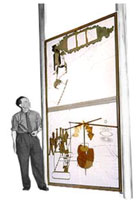
Footnote Return85. Kostelanetz 5.

Footnote Return86. Cage, Biography in Rolywholyover-A Circus.

Footnote Return87. Kostelanetz 89.

Footnote Return88. Cage, For the Birds 226.

Footnote Return89. John Cage, Silence (Middletown/Connecticut: Wesleyan, 1967) 276.

Footnote Return90. I must smile at this point–a good friend repeatedly told me in high school that no matter what I write about, I always include John Lennon. It seems as if I hold up to this tradition ;)) John Lennon and Yoko Ono were friends of Cage and sent him six cookbooks on macrobiotics.

Footnote Return91. John Cage, Macrobiotics Recipes , in Rolywholyover – A Circus (Los Angeles: The Museum of Contemporary Art, 1993).

Footnote Return92. Revill 259.

Footnote Return93. Daniel Charles, For the Birds-John Cage in conversation with Daniel Charles (London: Marion Boyars, 1995) 74.
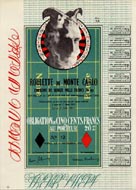
Footnote Return94. Kostelanetz 30.

Footnote Return95. Daniel Charles, For the Birds 233.

Footnote Return96. Cage, Macrobiotic Recipes in Rolywholyover-A Circus.

Footnote Return97. Anne d’Harnoncourt, “Paying Attention” in Rolywholyover-A Circus.

Footnote Return98 Cage, A year from Monday 70.

Footnote Return99. Revill 230.

Footnote Return100. Cage, M – Writings ’67 – ’72 34.

Footnote Return101. Anne d’Harnoncourt, “Paying Attention“ in Rolywholyover-A Circus.

Footnote Return102. Cage, Introductory Notes in Rolywholyover-A Circus.

Footnote Return103. Cage, X-writings ’79 – ’82 54.

Footnote Return104. Interview Roaratorio.

Footnote Return105. Roth, “John Cage on Marcel Duchamp” 74.

Footnote Return106. Roth 73.

Footnote Return107. D’Harnoncourt, “Paying Attention“ in Rolywholyover-A Circus

Footnote Return108. Quotation by Harry S. Truman

Footnote Return109. Cabanne 11.

Footnote Return110. Roth, “Marcel Duchamp in America“ 27

Footnote Return111. Michael Hauskeller, Was ist Kunst? Positionen der Ästhetik von Platon bis Danto (München: C.H. Beck, 1998) 11.

Footnote Return112. Ibid. 22.

Footnote Return113. Fetz, Kunst in der Stadt 2 x.

Footnote Return114. Those insights are a derived from a mixture of sources such as Brockhampton’s Reference Dictionary of Art (London: Brockhampton Press, 1995) and Microsoft Encarta ’95.

Footnote Return115. Arthur C. Danto, “Marcel Duchamp and the end of taste: A defence of contemporary art” (Tout-fait The Marcel Duchamp Studies Online Journal #3) https://www.toutfait.com/issues/issue_3/News/Danto/danto.html

Footnote Return116. Thierry De Duve, Kant after Duchamp (London: MIT Press, 1996) 3.

Footnote Return117. Gough-Cooper, Ephemerides (reference to be found under 18th March 1912).

Footnote Return118. Tomkins 117.

Footnote Return119. Tomkins 117.

Footnote Return120. Ibid. 79.

Footnote Return121. Ibid. 127.

Footnote Return122. Cage, Quotations

Footnote Return123. David Revill, The Roaring Silence (London: Bloomsbury, 1992) 164.

Footnote Return124. John Cage, The Charles Eliot Norton Lectures (Cambridge: Harvard University Press, 1990) 26.

Footnote Return125. Joan Retallack, Musicage (Hanover: Wesleyan University Press, 1996) 91.

Footnote Return126. Cage, A conversation on Roaratorio (1976/79): https://www.2street.com/joyce/gallery/roaratorio.html

Footnote Return127. Julie Lazar, “Nothingtoseeness“ in Rolywholyover – A Circus.

Footnote Return128. Revill 69.

Footnote Return129. Ibid. 70.

Footnote Return130. Roth 2.

Footnote Return131. Kostelanetz, 120.

Footnote Return132. Ibid. 215.

Footnote Return133. Cage, A Year from Monday ix.

Footnote Return134. Cage, An Autobiographical Statement 3.

Footnote Return135. Calvin Tomkins, The Bride & the Bachelors (New York: Penguin/Viking 1965) 100.

Footnote Return136. Ulrike Bischoff (Hrsg.), Kunst als Grenzbeschreitung John Cage und die Moderne (München: Richter Verlag, 1991) 89.

Footnote Return137. Kostelanetz 231.

Footnote Return138. Ibid. 232.

Footnote Return139. Charles, For the birds 227.

Footnote Return140. Charles 42.

Footnote Return141. Ibid. 91.

Footnote Return142. Kostelanetz 211.

Footnote Return143. Cage, A Year from Monday 31

Footnote Return144. Thanks to my friend who is very much into Stephen Hawking and physics. If you are interested in finding out more about the Chaos Theory, I would recommend Hawking’s well known The Illustrated Brief History of Time.

Footnote Return145. Cage, Silence 195.

Footnote Return146. Charles, For the Birds 43.

Footnote Return147. Laura Kuhn, “John Cage in the Social Realm“ part of Rolywholyover

Footnote Return148. Richard Kostelanetz ed. John Cage (London: Penguin 1971) 117.

Footnote Return149. Tomkins 1965, 119.

Footnote Return150. Kostelanetz, Conversing with Cage 66.

Footnote Return151. Revill 166.

Footnote Return152. Tomkins 1965, 119.

Footnote Return153. Quotation from page 1 of Sgt. Pepper’s Lonely Heart Clubs Band’s cover

Footnote Return154. Ibid.

Footnote Return155. Kostelanetz 1988 101.

Footnote Return156. Kostelanetz 1988 225.

Footnote Return157. Cage, A Year from Monday 71.

Footnote Return158. Tomkins, Duchamp, A Biography 157.

Footnote Return159. Naumann, Affectionately Marcel 346.

Footnote Return160. Tomkins 135.

Footnote Return161. Naumann 44.

Footnote Return162. Ibid. 359.

Footnote Return163. Tomkins 158.

Footnote Return164. Stauffer 230.

Footnote Return165. Tomkins 401.

Footnote Return166. Roth 27.

Footnote Return167. Tomkins 185.

Footnote Return168. Ibid. 182.

Footnote Return169. Ibid. 185.

Footnote Return170. Ibid. 185/186.

Footnote Return171. Tomkins 418/419.

Footnote Return172. Don’t pay attention to the anarchic writing

Footnote Return173. Cage, “Quotations”: https://www.english.upenn.edu/??afilreis/88/cage-quotes.html

Footnote Return174. Tomkins 1.

Footnote Return175. The Oxford English Reader’s Dictionary.

Footnote Return176. Tomkins 1.

Footnote Return177. Ibid. 464.

Footnote Return178. Ibid. 397.

Footnote Return179. Retallack, 110.

Footnote Return180. Tomkins 124.

Footnote Return181. Tomkins 250.

Footnote Return182. Tomkins 5.

Footnote Return183. Fetz, Kunst in der Stadt 2 x.

Footnote Return184. Tomkins 397.

Footnote Return185. Peter Gena and Jonathan Brent, A John Cage Reader (New York: C.F. Peters Higgins, 1998) 22.

Footnote Return186. Kostelanetz 65.

Footnote Return187. Ibid. 65.

Footnote Return188. Ibid. 111.

Footnote Return189. Ibid. 129.

Footnote Return190. Ibid. 115.

Footnote Return191. Info about Etant donnés found in the Internet: https://www.freshwidow.com/etant-donnes2.html

Footnote Return192. Tomkins 419.

Footnote Return193. Roth 80.

Footnote Return194. Cage, Silence (Afternote to his “Lecture on Nothing“) 126.

Footnote Return195. Ibid.

Footnote Return196. Tomkins 226.

Footnote Return197. Fetz, Kunst in der Stadt 2 x.

Footnote Return198. The bibliography contains some books I have not cited in the paper itself – it is a mixed collection of books that have been piling up in my shelves in the course of writing…most of whom were quite helpful

Voisins du Zero: Hermafroditismo y Velocidad

En una conocida revista española de medicina llamada MD solían aparecer artículos relacionando el arte con diversas anomalías: el alargamiento de las figuras del Greco se debía a una distorsión producida por estrabismo; las pinturas negras de Goya, a un envenenamiento progresivo con blanco de plomo; los flamígeros colores de Van-Gogh, a un caso particular de esquizofrenia. Tal vez por ésta, y otras razones, terminé asociando luego a Duchamp (MD) con un pintoresco tío mío, doctor en medicina, a quien le llegaban estas revistas en los años 60. Conexión que logró escenificar uno de mis sueños en donde Duchamp aparecía camuflado con el tío en cuestión como si fuera un miembro más de la familia.

El sueño consiste en una reunión familiar en medio de una habitación cuya atmósfera, por lo que alcanzaba a verse a través de una ventana francesa, podía corresponder a Paris o a Buenos Aires. En un cinematográfico blanco y negro, el efecto de luces y de sombras contrastadas reproducía un saturado ambiente masculino -entre Bogart y Gardel- característico de las primeras películas de detectives. Lo que sucedía, simplemente, era estar todos allí sin pronunciar palabra recortados en contraluz sobre el resplandor de la ventana mientras un río crecía torrencialmente allá abajo arrastrando escombros a lo largo de la calle. Al poco tiempo, en un efecto de acetato a punto de quemarse, la imagen adquiría una coloración rojiza disolviéndose gradualmente en el rostro de Marcel quien terminaba con el cabello teñido de un rojo oxidado, entre minio y ladrillo, tal y como uno de sus “solteros” o, porqué no, como un Adán cosmopolita en traje de dos piezas a punto de incendiarse.

1

Esta referencia a un universo netamente masculino recuerda también el tipo de utilería que encontramos en los almacenes de artículos para caballeros: cigarros, pipas, naipes, dados, licoreras, mesas de juego forradas en paño verde, ruletas, fichas, tableros de ajedrez… Algunos de los elementos utilizados ampliamente en la imaginería cubista -junto con instrumentos y partituras musicales- de modo recurrente y enigmático.


click to enlarge
Monte Carlo Bond
Figura 1
Marcel
Duchamp, Monte
Carlo Bond
, 1924.

Aparte del ajedrez, presencia obsesiva en la vida de Duchamp, la única obra suya relacionada con este tipo de juegos, más específicamente con la ruleta, es la que se conoce como el Monte Carlo Bond (Fig. 1), obra fechada en noviembre 1 de 1924 al año siguiente de dejar “definitivamente inacabado” el Gran Vidrio (1915-1923), su obra mayor. Año que marca también su legendario y supuesto retiro del arte hacia las regiones mas enrarecidas y abstractas del ajedrez.

El Monte Carlo Bond u Obligación para la Ruleta de Monte Carlo se define como un “readymade rectificado e imitado”, una litografía que reproduce un documento verdadero, un bono emitido en 30 ejemplares numerados con un valor de 500 francos cada uno. Los bonos, obligaciones comerciales para cancelar una cierta suma en una fecha definida y con un determinado interés, fueron rediseñados y emitidos por Duchamp con el propósito de conseguir fondos para experimentar un sistema matemático en el juego del Trente-et-Quarante; una martingala(1) que le permitiría ganar “lenta pero seguramente” con el propósito de “quebrar el banco de Monte Carlo” obligando a la ruleta, un juego de azar, a comportarse como un ajedrez.

Sobre la litografía, pegada directamente sobre la figura radiante y circular de una ruleta, vemos una curiosa fotografía de Duchamp con el cabello y el rostro cubiertos de espuma. En la parte inferior del documento sobre el diagrama de la mesa de la ruleta, dos firmas: bajo el rombo negro, como Presidente del Consejo de Administración, Rrose Sélavy (alter ego femenino de Duchamp); bajo el rombo rojo, como simple administrador, el mismo Marcel. Impresa sobre el fondo, repetida 150 veces en tinta verde, un juego de palabras de la cosecha caprichosa de Rrose Sélavy: moustiques domestiques demistock (mosquitos domésticos semi-stock).

Pero veamos primero cómo algunos autores describen la imagen:

David Joselit: “una litografía que incluye un retrato de Duchamp por Man Ray transformado por medio de espuma de afeitar en una figura quimérica semejante tal vez a un fauno o un demonio (…) Marcel, como Rrose, travestido en un hiper-masculino demonio o fauno.” (2)

Dalia Judovitz: “un auto-retrato de su cabeza cubierta de espuma de afeitar con su cabello estirado hacia arriba en forma de cuernos, desestabiliza aún más la autoridad de este documento financiero.”(3)

Calvin Tomkins: “Una fotografía de la cabeza de Duchamp por Man Ray –el rostro cubierto con espuma de afeitar y el cabello enjabonado en forma de dos diabólicos cuernos.”(4)

Peter Read: “una litografía coloreada representando la superficie de una mesa de ruleta con una fotografía de la cabeza de Duchamp cubierta con espuma de afeitar, y el cabello estirado como los cuernos de un fauno o un demonio, pegado a la rueda de una ruleta la cual forma un círculo, sin duda parecido al halo que a los ojos de Henri-Pierre Roché Duchamp siempre llevaba. Cortada (decapitada) de una fotografía más grande tomada por Man Ray, la cabeza de Duchamp se parece a aquella de Juan Bautista presentada en una bandeja con sus erectos cuernos de espuma listos para ser afeitados; el macho, a un mismo tiempo, víctima de Salomé y de Dalila –una poderosa recurrencia al simbolismo desgarrado.”(5)

Juan Antonio Ramírez: “El elemento visual más notable de los bonos impresos por Duchamp es su propia efigie, semejando a un fauno (ejecutado con espuma de afeitar) sobre el fondo de una rueda de ruleta. Una manera de agregar una historia humana a un mecanismo, un modo de añadirle sexualidad; aquí nuevamente el sátiro-soltero atrapado en su circularidad masturbatoria, pretende obtener las ganancias esperadas después de cada una de las ‘manipulaciones’ del croupier [A. Schwarz, citando a Freud: ‘La pasión por el juego es equivalente a la antigua compulsión por masturbarse.’] Pero tal vez haya aquí algo más, una alegoría del artista y sus afortunadas recompensas por azar.”(6)


click to enlarge
Giambologna, Mercurio
Figura 2
Giambologna,
Mercurio,1576.
Aviso publicitario
Figura 3
Aviso publicitario
Aviso publicitario de Patek Philippe
Figura 4
Aviso publicitario de Patek Philippe

En estas y en otras descripciones el consenso general supone que la cabeza enjabonada de Duchamp se asemeja a la de un fauno o una figura diabólica. Sin embargo, mirada más de cerca, la formas espumantes modeladas sobre la cabeza no corresponden realmente a los cuernos tradicionales de uno u otro; su forma, en cambio, evoca poderosamente uno de los atributos principales del dios mensajero de la antigüedad clásica, Mercurio (Fig. 2). Curvadas aerodinámicamente hacia atrás, estas formas coinciden con la forma de su casco alado conocido como petasus, tal y como puede verse en el bronce de Giambologna del siglo XVI, en lugar de los cuernos erectos y relativamente cortos que caracterizan generalmente a demonios y faunos.

¿No es curioso que en las diferentes lecturas el rostro de Duchamp se interprete repetidamente como un ser necesariamente provisto de cuernos? Atributo que, aparte de la ‘diabólica’ operación artístico-financiera que recuerda el Cheque Tzanck de 1919(7), estaría tal vez sugerido por una cierta contaminación mitológica ocasionada por la presencia simultánea de la barba, ya que de este modo aluden fácilmente a imágenes lúbricas a través de la historia del arte. Los cuernos, en suma, procederían de las barbas.(8)

Iconográficamente, el dios romano Mercurio -o Hermes como era conocido en la Grecia antigua- resulta pertinente con respecto al documento financiero emitido por Duchamp. Conocido por su astucia, recursividad y veloz eficacia, Mercurio era el dios romano de comerciantes, viajeros y pastores, así como el patrono de artistas, ladrones, impostores y toda clase de gentes deshonestas.(9) Derivado de la raiz latina para mercancia, a mercibus, el nombre de Mercurio está contenido en el término ‘mercantil’. Además de su casco alado, Mercurio estaba provisto de sandalias igualmente con alas llamadas talaria, un caduceo o vara con serpientes enroscadas y una bolsa como símbolo de sus poderes comerciales.(10) Atributos intensamente asociados, de un modo u otro, con la conducta de Duchamp resumida en su mismo anagrama: el marchand du sel, el mercader de sal. Conducta acentuada a partir de ésta época (1924), cuando junto a su renovada pasión por el ajedrez emprendió una serie de negocios y especulaciones artístico-financieras. Actitud que podría ilustrarse con el emblema comercial de la Rueda Voladora (Fig. 3); una rueda con alas, idéntica en esencia al collage sobre la ruleta. Síntesis popular, si se quiere, de una buena parte de la iconografía duchampiana.

Por consiguiente, la imagen de Duchamp no sólo conserva una afinidad iconográfica con respecto al dios antiguo sino que también se relaciona conceptualmente con las actividades que rodean la Obligación de Monte Carlo. Más aún, su investidura puede leerse a un nivel con profundas implicaciones personales (como se verá en este ensayo) puesto que lo que vemos en este montaje es un Mercurio o un Hermes con barba, como aparece dibujado en algunas ánforas griegas. Un Mercurio algo inusual puesto que la historia del arte posterior lo muestra generalmente imberbe, casi femenino.(11) Ambigüedad subrayada por el hecho de que las barbas son de espuma de afeitar (como un adolescente al espejo conjurando fantasías de virilidad) (Fig. 4) indicando simultáneamente la ausencia de barba después de la afeitada y la aparición de una barba falsa en lugar de una real.

Los experimentos y obsesiones capilares de Duchamp y las consecuentes negociaciones psicológicas entre varias identidades comienzan casualmente en 1919, en Buenos Aires, cuando se hace rasurar la cabeza como parte de un tratamiento para evitar la caída del cabello. Lo que le confiere un aspecto más bien marginal en el amplio sentido de la palabra, ya sea como iniciado en alguna secta -¿el ajedrez?(12)-, como convaleciente -sus amigos lo encuentran excesivamente delgado- o simplemente como un delincuente(13).

También, a su regreso a Paris a mediados de 1919, en un gesto que anticipa claramente la creación de su pseudónimo femenino Rrose Sélavy, realiza el conocido readymade de la Mona Lisa (L.H.O.O.Q.) agregándole un bigote y una mefistofélica chivera. Mientras que en 1921, después de los aromáticos despliegues transexuales de Rrose Sélavy presentándose como Belle Haleine, Eau de Voilette sobre la etiqueta alterada de un fúnebre frasco de perfume Rigaud(14)(Fig. 5), se hace afeitar sobre el cráneo una tonsura en forma de cometa con la cola proyectada hacia delante.(Fig. 6)

Tres años más tarde, inmediatamente después del autoretrato de Monte Carlo -en Ciné Sketch, un divertimento teatral de Picabia y René Clair- Duchamp reaparece haciendo de Adán en un cuadro vivo a partir de una pintura de Cranach, (Fig. 7)luciendo, en significativa contraparte a la equívoca barba de espuma, una evidente barba postiza, reloj y pubis afeitado. Ciertamente, no la última ‘afeitada’ en su obra.

click to enlarge

  • Rrose Sélavy,Foto Man Ray
    Figura 5
    Rrose Sélavy, 1921. Foto Man Ray
  • Marcel Duchamp
    Figura 6
    Marcel
    Duchamp, 1921.
  • Adán y Eva. Marcel Duchamp y Bronja Perlmutter
    Figura 7
    Adán y Eva. Marcel Duchamp y Bronja Perlmutter. Paris, 1924.


####PAGES####

2

En lugar de los diabólicos cuernos, lo cual inclina de algún modo las interpretaciones hacia la naturaleza de la operación monetaria, el peinado con alas sugiere una interpretación diferente sobre todo si tenemos en cuenta que el hermético Mercurio aparece con el cabello y la barba cubiertos de espuma. Material evanescente, índice de alguna actividad, la espuma es un compuesto de burbujas producidas por un movimiento insistente de batido incorporando aire a un líquido dotado de una cierta densidad (en este caso jabón). Sustancia cargada de múltiples evocaciones sexuales y poéticas. Tal y como lo revela su etimología, ya que espuma, en griego, es Aphros, de donde proviene Afrodita (o Venus) la diosa nacida de la “espuma del mar”.(15) Lo que nos suministra una clave importante para descifrar la identidad(16) del insólito retrato a partir de la siguiente ecuación: Hermes + Afrodita = Hermafrodita.(17)


click to enlarge
Ruleta europea
Figura 8
Ruleta europea
Roto-relieve
Figura 9
Marcel Duchamp, Roto-relieve, 1935
Durero, Adán y Eva
Figura 10
Durero, Adán y Eva, 1504
Hermanos Limbourg, Tentación y Caida
Figura 11
Hermanos
Limbourg, Tentación y Caida, antes de 1414
Testigos Oculistas
Figura 12
Testigos Oculistas,
detalle (el ojo derecho al centro) y
ruleta con cero verde

Esta mezcla andrógina vendría a ser entonces la ‘corrección’ mitológica obtenida por la conjunción entre la capacidad comunicativa mercurial ejemplificada en el movimiento de la ruleta,(Fig. 8) y la perfección del acierto potencial en la figura de la apuesta(18) representada indirectamente en los atributos de Venus (amor, belleza y pasión sexual), de dos entidades humanas en conflicto: Rrose Sélavy, la viuda que aparece firmando bajo el rombo negro(19), y Marcel Duchamp, el soltero inveterado que firma simplemente como “Administrador” bajo el rojo ancestral(20).
La estructura de esta Obligación nos muestra claramente la duplicidad involucrada en los nombres y los colores que corresponden a cada uno de los rombos, así como la eventual convergencia en la figura central del hermafrodita como tercer elemento. En cada giro de la rueda, el rojo y el negro pierden, por velocidad, su identidad específica fundiéndose en lo que – en términos de Duchamp – podríamos llamar un gris de verticalité: “…a medida que todos los ejes desaparecen en gris de verticalidad, el frente y la espalda, el reverso y el anverso adoptan una significación circular…”(21)

Análogamente, la ruleta no sólo continúa en otro formato, en otro nivel topológico, la especulación inter-dimensional atribuida a su Rueda de Bicicleta de 1913(22) y la experimentación perceptual de sus dispositivos ópticos relacionados con los Testigos Oculistas en la región inferior delGran Vidrio, sino que incorpora la indeterminación del azar característica del juego de ruleta como un elemento necesario. De este modo, relativiza la dualidad narcisista en la historia delVidrio con un tercer elemento: el andrógino. Opción a la pareja incompleta de una viuda fresca (Fresh Widow) y un soltero indomable.

Refiriéndose al principio general del efecto ilusorio de sus espirales giratorias, Duchamp escribió: “Sólo tengo que utilizar dos circunferencias -excéntricas- y hacerlas girar sobre un tercer centro.” (Fig. 9)

Para visualizar el efecto simbólico de esta curiosa disolvencia, basta imaginar un desplazamiento del punto de vista frontal sobre una imagen arquetípica, digamos la xilografía del Adán y Eva (Fig. 10) de Durero. Si en lugar de mirarla de frente nos ubicamos arriba como quien observa la escena a vuelo de pájaro, en perspectiva de ruleta, podemos darnos cuenta que el eje vertical, la bisagra natural representada por el árbol, así como Adán y Eva (Marcel/Rrose; rojo/negro) se han transformado en tres puntos alineados sobre un plano. Ahora, si imaginamos el Paraíso circular como en algunas representaciones antiguas(Fig. 11) y hacemos girar velozmente a nuestros primeros padres (re-péres: referencias) alrededor del punto central, habrá un momento en que la posición tradicional, Adán a la izquierda Eva a la derecha, desaparece. Ya no podemos llamarlos izquierda y derecha de algo puesto que se encuentran simultáneamente -como en la Diligencia Innumerable de Pawlowski(23) – en todos los lugares al tiempo. La diferencia, mientras dura la ubicuidad de la velocidad instantánea ha sido, por así decirlo, reconciliada. Velocidad y movimiento, factores estratégicos de primer orden en las situaciones de emergencia sicológica a lo largo de la vida de Duchamp(24) .

Su obsesión con la síntesis de los contrarios(25) se manifiesta también en el montaje de la cabeza con relación al círculo de la ruleta que, en el fondo, cuestión de perspectiva, no es otra cosa que una diana o un target.(Fig. 12)La coincidencia del ojo derecho con el centro de la rueda (“Físicamente – el ojo es el sentido de la perspectiva”(26)), anula, en principio, la distancia entre el observador y su objetivo, entre el self y el mundo, ya que estructuralmente el sistema de la perspectiva consiste en la identidad recíproca entre el punto de vista y el punto de fuga. Al superponer el ojo derecho con el centro de la ruleta, Duchamp convoca no sólo su intención de acertar en la predicción en que consiste la apuesta, sino que ilustra puntualmente el principio unitario de la conciliación(27).

Jarry, a propósito del insólito idioma de Bosse-de-Nage su personaje en Opiniones y Proezas del Doctor Faustroll que sólo decía “HA HA”, se refiere a la fórmula del principio de identidad: “A Thing is Itself”. “Pronunciadas suficientemente rápido, hasta que las letras se confundan, son la idea de unidad”, así como “pronunciadas lentamente, son la idea de la dualidad, del eco, de la distancia, de la simetría, del tamaño y de la duración, de los dos principios de lo bueno y lo malo.”(28)

Por otro lado, la diferencia, digamos relacional, entre el Gran Vidrio y el Bono de Monte Carlo, estaría en que en el primero la separación es externa (solteros buscando pareja) mientras que en el segundo es interna (la incorporación de Rrose Sélavy por ‘infusión’ hermafrodita) proyectando la diana, el objetivo, sobre sí mismo.

De ahí que la estrategia de la imagen enjabonada, la fotografía que identifica el Monte Carlo Bond, se inscriba en el juego preciso de las identidades ofrecidas como forma de escape, o compensación renovada, a un artista claramente agobiado por su intensa inmersión a lo largo de los últimos ocho años en las complejidades y contradicciones del drama en que consiste elGran Vidrio: La Novia arriba(29) , los Solteros abajo, y la dificultad de concertar esas dos dimensiones a partir de uno de los últimos dispositivos en proceso, el de los Testigos Oculistas. Aparato óptico cuyo propósito no es otro que ayudar a superar el umbral de un horizonte prácticamente insalvable entre Novia y Solteros, en cuanto deja en suspenso el acto de consumación(30). Por algo Duchamp dejó en ese punto “definitivamente inacabado” elGran Vidrio; como queda indicado en el adverbio final del nombre completo de su obra central: La Novia puesta al desnudo por sus Solteros, aún.

Literalmente, entonces, el Monte Carlo Bond sería el lazo de unión, el ‘bond’ entre entidades atávicas opuestas representadas por los colores tradicionales de la ruleta. Dualidad ejemplarmente fragmentada en 37 números diseminados en el vértigo oracular de la ruleta(31) anulando ópticamente, por “indiferencia”, la separación abismal en un paraíso andrógino instantáneo.

Por los años cincuenta, hablando de la relación entre el ajedrez y la ruleta, Duchamp le dice a Arturo Schwarz que ambos juegos involucran “una lucha entre dos seres humanos” los cuales intenta reconciliar “haciendo de la ruleta un juego más cerebral y del ajedrez más un juego de azar”. Y en 1968, último año de su vida, en una conversación con Lanier Graham, puntualiza: “El símbolo es universal. El Andrógino está por encima de la filosofía. Si uno se ha convertido en el Andrógino la filosofía ya no es necesaria.”(32)

####PAGES####

3

Pero detrás de las rápidas alas y la ingrávida espuma está siempre el mar. Un mar indicado en varios lugares: 1. La misma localidad de Monte Carlo, 2. en la naturaleza de la espuma de afeitar transformada en Aphros, “espuma de mar”, y 3. oculta en el insistente trabalenguas moustiques domestiques demi-stock repetido 150 veces en tinta verde(33) como un slogan de ‘seguridad’ sobre el fondo de la Obligación. Frase casi idéntica a Nous livrons à domicile /des moustiques domestiques /[demi-stock](34) . La cual aparece completa, tres años más tarde, en uno de los discos utilizados para Anemic Cinema(35) : ON DEMANDE DES MOUSTIQUES DOMESTIQUES [DEMI-STOCK] POUR LA CURE D’AZOTE SUR LA CÔTE D’AZUR.

Esa “cure d’azote sur la Côte d’Azur”, agregada posteriormente, la encontramos también camuflada en el dorso de la Obligación en uno de los estatutos:

Art. 1er. -La Société a pour object:
1º L’explotation de la roulette de Monte-Carlo dans les conditions ci-après.
2º L’explotation du Trente et Quarante et autres mines de la Côte d’Azur sur délibération du Conseil d’Administration.(36)


click to enlarge
Disco de Anemic Cinema
Figura 13
Duchamp.
Disco de Anemic Cinema, 1927.

El disco de Anemic Cinema (Fig. 13)vendría a ser un collage verbal entre el lema impreso sobre el fondo del Bono y la Côte d’Azur nombrada en los estatutos, transformada fonéticamente en la Cure d’Azote (traducido generalmente como “cura de nitrógeno”) introduciendo en este juego de palabras el términoAzoth cuyo significado trasciende la simple oxigenación estival, mediterránea.

Referencia que nos lleva necesariamente a la alquimia (fondo metafórico, junto con la ciencia moderna y la psicología, abundante en la exégesis Duchampiana) en donde se habla de tres substancias simbólicas básicas: mercurio, azufre, y sal; las cuales se complementan con una cuarta, el misterioso principio vital llamado Azoth. Este “fuego secreto” o primus agens, “algunos lo ven como electricidad; otros como magnetismo. Los trascendentalistas se refieren a él como la luz astral.” Isaac Myer lo llama “el aire primigenio”, “las Aguas o el Caótico Mar Cristalino”(37). Misterioso ingrediente cuya virtud principal consiste en mantener unida la totalidad de la materia física representada en estas tres substancias. Y es esta virtud unificante la que ha hecho que algunos la identifiquen con el “amor incondicional”. Especie de pegante genérico cuya poderosa y sutil naturaleza permanece por fuera de todo escrutinio.

Existen algunos documentos que permiten suponer que por la época de la Obligación de Monte Carlo Duchamp estaba pasando por un momento particularmente crítico. Y aunque su naturaleza reservada encubra estratégicamente, como siempre, los detalles, hacia el final de su vida, en los sesentas, escribe: “Desde 1923 me considero a mí mismo como un artista ‘défroqué’.”(38) “De ahí que, después de 1923, -según Jean Clair- vino un tiempo de desilusión y apatía. Duchamp défroqué. Duchamp desocupado. Duchamp el jugador de ajedrez.”(39)

Katherine Dreier, uno de sus mecenas, consideraba maternalmente que la atmósfera psicológica de un casino de juegos era nociva “para una persona tan sensible como Marcel”. Y Breton: “‘¿Cómo es posible que un hombre tan inteligente -el hombre más original del siglo según Breton- pueda dedicar su tiempo y energía a semejantes trivialidades?’ Buscando una explicación, Breton sólo pudo concluir que todo se debía a algún oculto malestar -lo que él había descrito a Jacques Doucet como el ‘desesperado’ estado mental de Duchamp”.(40)No obstante, en la primavera de 1924, antes de su experimento en Monte Carlo, Duchamp le escribe al mismo Doucet después de haber estado un mes en la Riviera durante un torneo de ajedrez: “El clima me sienta perfectamente, me encantaría vivir acá.”(41)

¿Terapia? ¿’Oxigenación’ en Monte Carlo? Tal vez el aire encapsulado en la espuma sea de la misma naturaleza que el Air de Paris; su readymade de comienzos de 1920. Originalmente una ampolleta de vidrio llena de suero fisiológico que Marcel hace vaciar en una farmacia parisina sellándola luego para ofrecerla de regalo a los Arensberg a su regreso a New York, traduciendo así los 50cc de aire de Paris en “suero psicológico”. Todo esto, el mismo año en que ‘nace’ Rrose Sélavy.


click to enlarge
Rrose Sélavy, Belle Haleine
Figura 14
Rrose
Sélavy, Belle Haleine, Eau de Voilette, 1921.
Cellini,Perseoy and Medusa
Figura 15
Cellini,
Perseoy and Medusa
, 1545-54

Después de su primera manifestación detentando el copyright deFresh Widow (French Window), una ventana francesa condenada en su visibilidad por vidrios cubiertos de brillante cuero negro, Rrose Sélavy se presenta en imagen sobre el nombre y la etiqueta de Un Air Embaumé (Fig. 14)-originalmente un perfume de Rigaud– rebautizándolo como Belle Haleine, Eau de Voilette. Otro suero psicológico, si se quiere, aunque un tanto lúgubre a juzgar por el estuche: un pequeño féretro en el cual se desliza la imagen del riguroso y concentrado travesti.

Identidad problemática que presagia el retrato espumante, anticipadamente triunfal, de Monte Carlo y que nos permite suponer de qué se trata en el fondo esta “explotación del Treinta y Cuarenta y otras minas de la Costa Azul bajo deliberación del Consejo de Administración”. Es decir, bajo deliberación de sus dos únicos miembros. Lo que Duchamp llamó en otras ocasiones “un pequeño juego entre Je et Moi“.

Y a propósito de dualidades, el retrato mercurial, como toda medalla, debe poseer otra cara. La imagen opuesta -a mi modo de ver- no es la bella y radiante cabeza decapitada de Juan el Bautista o la del narcotizado Holofernes, como algunos sugieren, sino la que reposa aterrada por su mismo reflejo sobre el escudo de Perseo: La Medusa, “potencia de la noche y de la muerte” que petrifica a aquel que la mira. Un verdadero mal de ojo; un mal de ‘Voilette’.

¿Porqué la Medusa? Por Perseo: “Mercurial, aéreo, Perseo es único en poder conjurar la gravedad de las cosas, la opacidad del caos, el entumecimiento del mundo pesado de Saturno… ahí donde el espíritu, demasiado atado a la tierra, se fija en el espanto de su petrificación.”(42) Porque Perseo, como Mercurio, lleva en su casco y en los tobillos las mismas veloces y etéreas alas (43) . Y también, porque en el eje del árbol aquel la serpiente se enrosca como en un Caduceo, símbolo de la medicina [MD] y del poder transformador. Indispensable atributo de Mercurio en donde los dos animales opuestos, el ave y la serpiente, determinan el sentido y la polaridad del proceso: la serpiente como energía material asociada a la espiral ascendente y el ave como forma espiritual, liberada. Relación ilustrada didácticamente en el momento preciso en que Perseo, la cabeza cubierta con el casco alado, exhibe la cabeza cercenada de Medusa sosteniéndola simétrica, espéjicamente, de su enredada cabellera de serpientes.(44)(Fig.15)

Por eso no resulta demasiado atrevido suponer que el reverso del autoretrato circular de Monte Carlo – su correspondiente imagen negativa – sea la efectiva imagen de la Medusa pintada por Caravaggio sobre un escudo real a finales del XVI (45) . Pintura para la cual, según dicen, utilizó su propio rostro gesticulando espantosamente ante un espejo. Lo que nos permite proponer, en este punto, la siguiente relación iconográfica: (Figs. 16, 17 & 18)

click to enlarge

  • Caravaggio,Medusa
    Figura 16
    Caravaggio,
    Medusa
    , c.1597
  • el Azoth. Unión de los 3 elementos: mercurio, azufre y sal
    Figura 17
    el Azoth. Unión de los
    3 elementos: mercurio, azufre y sal
  • Air de Paris
    Figura 18
    Marcel Duchamp, Air de Paris, 1920


En esta secuencia, la ‘petrificación’, la detención o apatía resentida por Duchamp en el período que sigue al Gran Vidrio necesitaría una cierta corriente de aire (courant d’air) que redima anímicamente sus facultades como ‘respirador’: “Me gusta vivir, respirar, más que trabajar (…) si usted quiere, mi arte podría consistir en vivir: cada segundo, cada respiración es una obra que no se inscribe en ningún lugar, la cual no es ni visual ni cerebral. Una especie de euforia constante.”(46) En esta particular circunstancia, la naturaleza y el secreto del elemento eufórico constante no podría encontrarse en la habitual ‘nutrición’ cultural, es decir, en su re-inscripción a la actividad artística y social, sino en las propiedades atemporales de un escenario simbólico esencial: El mar, y el azar. Las cristalinas, caóticas aguas -efectivamente, una cure d’azote sur la Côte d’Azur. Lugar de inmersión y bautizo en donde el agregado femenino (Afrodita/Rrose) establezca su complicidad mítica natural. Elemento ante el cual la razón y la lógica con toda su ardua intencionalidad se ve obligado a negociar entre los respectivos dominios metafóricos del masculino y combativo ajedrez y la caprichosa indeterminación del azar en la ruleta.

El suero, la burbuja de vidrio con su etéreo aire de Paris no vendría a ser entonces otra cosa que un ‘azoth’ necesario, un orden sensible encarnado libremente en ese alter-ego con nombre de rosa, de flor imbuida en la energía de eros. De ahí que podamos imaginar gráficamente cómo la asfixiante Medusa de Caravaggio incorpora la refulgente virtud del azoth como pócima totalizante. Resultado que puede apreciarse plenamente en el ‘camafeo’ de Monte Carlo con la cabeza espumante incrustada en el aura solar de la ruleta.


click to enlarge
Nacimiento de Venus con Hermes/Mercurio y Poseidón
Figura 19
Nacimiento de
Venus con Hermes/Mercurio
(con un caduceo) y Poseidón.

¿La Obligación de un posible?, de un nuevo nacimiento de un Je y un Moi unificados como perla en su concha a partir del Chaotic ‘gambling’ Sea de Monte Carlo. En todo caso, una martingala secreta, inconsciente, arrojando su apuesta sobre el target moroso de una auto-regeneración imperiosa. Curioso sistema de juego en el cual Duchamp, sin embargo, “nunca gana ni pierde”(47) , en natural condescendencia con aquel punto central, indiferente, del “et-qui-libre”(48)hermafrodita.

Por otra parte, la figura sintética del Bond, el instrumento subyacente a todo el proceso terapéutico, no sería otro que el Caduceo (MD!), (Fig. 19) la vara alada con sus dos serpientes retorcidas simétricamente. Objeto asociado – vía Tiresias – con la alternancia sexual masculino/femenino y con el don oracular de la profecía. Su historia, como se verá, resulta a todas luces pertinente:

Conocido profeta de Tebas, dicen que Tiresias encontró en su juventud un par de serpientes copulando, y que al golpearlas con una vara intentando separarlas se encontró repentinamente transformado en mujer. Siete años más tarde volvió a encontrar dos serpientes en lo mismo recuperando su sexo original al golpearlas de nuevo. Mientras fue mujer, Tiresias estuvo casado, de ahí que en versión de algunos poetas antíguos, Júpiter y Juno decidieran resolver su disputa acerca de cuál de los sexos obtenía más placer, consultando a Tiresias, quien dijo que el placer de la mujer era diez veces superior al del hombre. Juno, quien sostenía lo contrario, resolvió castigar a Tiresias privándolo de la vista mientras que Júpiter, en compensación benevolente, le otorgó el don de la profecía así como el de vivir siete veces más que el resto de los hombres.(49)

Vedi Tiresia che mutò sembiante
Quando di maschio femmina divienne,
Cangiandosi le membra tutte quante;
E prima, poi, ribatter li convenne
Il due serpenti avvolti, con la verga,
Che riavesse le maschili penne.”
(Dante, La Divina Comedia. Inferno, Canto 20:40)

(…)

En tiempos más recientes, en 1944, Poulenc adaptó musicalmente la pieza de ApollinaireLes Mamelles de Tiresias (Las Tetas de Tiresias) escrita en 1903. Ambas versiones se apartan del original de manera significativa y burlesca transponiendo en términos domésticos la alternancia hermafrodita del enceguecido vidente. A saber, el problema de un descenso en la tasa de natalidad del pueblo francés gracias a la emancipación feminista de Thérèse/Tirésias, carencia compensada por su esposo quien parió 40.000 niños en un solo día… En todo caso, Poulenc decidió transladar la acción de la pieza de Apollinaire de Zanzibar, una isla sobre la costa este de Africa, a Zanzibar, supuesta población sobre la Riviera francesa en algún lugar entre Niza y Monte Carlo. Todo porque adoraba Monte Carlo y porque “fue allí donde Apollinaire pasó los primeros 15 años de su vida”, agregando además que era un lugar “suficientemente tropical para un parisino como yo.”(50)

Finalmente, Duchamp no logró convertirse en un adicto del juego de ruleta sumergiéndose en cambio, por el resto de sus días, en el sofisticado laberinto infra-leve de las posibilidades estratégicas del ajedrez. Con relación a Monte Carlo, sintetiza su aventura diciendo: “Los artistas a través de la historia son como jugadores en Monte Carlo, en la ciega lotería algunos resultan escogidos mientras que otros terminan arruinados… todo sucede de acuerdo al azar. Los artistas que logran hacerse notar durante su vida son excelentes vendedores lo cual no garantiza para nada la inmortalidad de su obra.” Es más, la posteridad es una terrible ramera que engaña a algunos mientras reintegra a otros, reservándose el derecho de cambiar de opinión cada 50 años.”

Pero tal vez la clave para trascender históricamente sin tener que someterse al mero azar tenga que ver con lo que dice el slogan comercial de una página web: “con Caduceo usted no es un número, usted es un individuo!”. (51) En otras palabras, uno tiene que pronunciarZanzibar! Zanzibar! lo suficientemente rápido, “hasta que las letras terminen confundidas”.


Notes

Footnote Return 1. “La Martingala es un sistema muy simple y antiguo para recuperar pérdidas incrementando progresivamente las apuestas. Se basa en la probabilidad de perder infinidad de veces de seguido y se aplica usualmente a apuestas de igual cantidad.” <http://ildado.com/roulette_rules.html>

Footnote Return 2. David Joselit, Infinite Regress: Marcel Duchamp, 1910-1941. Cambridge, Mass: MIT Press, 1998.

Footnote Return 3. Dalia Judovitz, Unpacking Duchamp: art in transit. Berkeley: University of California Press, 1995.

Footnote Return 4. Calvin Tomkins, Duchamp: a biography. New York: H. Holt, 1996.

Footnote Return 5. Peter Read, “The Tzank Check and Related Works by Marcel Duchamp”, Marcel Duchamp Artist of the Century, edited by Rudolph Kuenzli and Francis M. Naumann. Cambridge, Mass: MIT Press, 1989.

Footnote Return 6. Juan Antonio Ramírez, Duchamp, Love and Death, Even. London: Reaktion Books Ltd, 1993.

Footnote Return 7. Cheque elaborado en su totalidad por Duchamp imitando un cheque real girado sobre The Teeth’s Loan & Trust Company, Consolidated, un banco inventado, con el cual pagó a su dentista Daniel Tzanck la suma de $115 dólares.

Footnote Return 8. La atribución de cuernos a un autoretrato de Duchamp deja suponer una improbable dimensión dionisíaca derivada, tal vez, del juego de palabras involucrado en su seudónimo Rrose Sélavy (Eros, c’est la vie), dado que el erotismo que impregna su obra es más elaborado y mental que vitalista, como sucedería con Picasso cuya capacidad creativa se identifica fácilmente con la figura del minotauro o el sátiro.

Footnote Return 9. Para “todo sobre Mercurio” ver: http://www.hermograph.com/science/mercury.htm Consultar el vínculo acerca del dios Mercurio para su historia, simbolismo y leyendas; en particular su “Work History”. Para sus actividades como ladrón, ver la entrada Mercurius, en John Lemprière, Classical Dictionary. (1788) London: Routledge & Kegan Paul, 1984, p. 373-374.

Footnote Return 10. Para antiguas representaciones de Mercurio con sus diversos atributos ver Gregory R. Crane (ed.) The Perseus Project, http://www.perseus.tufts.edu August, 2002. Referencias a Mercurio en Greek and Roman Materials: 109. Boston 98.1135 en donde puede verse en una moneda de plata exhibiendo su petasus alado y sucaduceo; 122. Boston 98.676 donde aparece Mercurio con su bolsa.

Footnote Return 11. Para imágenes de Mercurio con barbas, ver Gregory R. Crane (ed.) The Perseus Project (lugar citado). Referencias a Hermes en Greek and Roman Materials: 28. Louvre G192; 68. Toledo 1956.70.http://www.perseus.tufts.edu

Footnote Return 12. Desde Buenos Aires escribe a Walter Arensberg: “Juego ajedrez todo el tiempo. Me he inscrito a un club local en el que hay muy buenos jugadores agrupados de acuerdo a su rango. Todavía no he sido honrado con un grado. (…) Juego día y noche y nada en el mundo me interesa más que encontrar la jugada correcta… Cada vez estoy menos interesado en pintura. Todo a mi alrededor adopta la forma del Rey o la Reina y el mundo exterior sólo me interesa en cuanto se traduce en posiciones de ganancia o pérdida.”

Footnote Return 13. En 1923, en Wanted, obra inmediatamente anterior a las Obligaciones de Monte Carlo, se personifica como tal en un afiche de recompensa.

Footnote Return 14. Originalmente, Un Air Embaumé. Un bálsamo, un perfume; un aire ‘embalsamado’, también.

15. Según Hesíodo, Afrodita nació cuando Urano (padre de los dioses) fue castrado por Cronos, su hijo. En su caída al océano los genitales produjeron espuma. De aphros, la “espuma de mar”, surgió entonces Afrodita, siendo luego arrastrada por el mar hasta la isla de Chipre o Cythera, la paradisíaca isla de la conocida pintura de Watteau.

Footnote Return 16. Esta interpretación, más que un intento de recuperación del sentido (consciente o inconsciente) en el autor, es un acto de reconstrucción en el intérprete; una proyección de analogías sobre un juego propuesto en donde “el público, el intérprete, hace la obra”.

Footnote Return 17. No en cuanto hijo de Hermes y Afrodita (como aparece registrado mitológicamente, siendo originalmente un hombre que luego se transforma en hermafrodita al fundirse en mágico abrazo con la ninfa Salmacis), sino como la mezcla simbólica de ambos. Para la historia de Hermaphroditus, ver Lamprière, p.227.

Footnote Return 18. Duchamp a Picabia, en carta de 1924: “Es más, el problema consiste en encontrar la figura negra y roja para oponerle a la ruleta (…) Y yo creo haber encontrado una buena figura. Como ves, no he dejado de ser pintor, ahora dibujo sobre el azar.” DDS p. 269.

Footnote Return 19. Tal y como apareció por primera vez en 1920, detentando el copyright de Fresh Widow: una ventana francesa pintada de verde ‘mentolado’ cuyos vidrios han sido suplantados por cuero negro, los que debían brillarse cotidianamente ‘como si fueran zapatos’, según instrucciones de Duchamp.

Footnote Return 20. “Adán: ser rojo. Algunos escritores (…) asignan a la palabra adam la doble significación de ‘tierra roja’, agregándole a la noción del orígen material del hombre una connotación del color de la tierra de la cual fue formado.” www.newadvent.org/cathen/01129a.htm

Footnote Return 21. “…à mesure que tous les axes disparaissent en gris de verticalité la face et le dos, le revers et l’avers prennent une signification circulaire. “Comparación Algebraica (de la Caja Verde de 1914). DDS, pg. 45. Tercera nota perteneciente al Prefacio y a la Advertencia, notas seminales en los escritos de Duchamp.

Footnote Return 22. En, Ulf Linde. Cycle, La roue de bicyclette. Marcel Duchamp, Abécédaire. Paris: Centre Georges Pompidou, 1977.
Y también, inscribiéndose en la secuencia de su cronología giratoria: Molino de Café, Molino de Chocolate, Hélice (la declaración a Léger y a Brancusi a finales de 1912 en el 4º Salón de la Locomoción Aérea: ‘La pintura se acabó. Quién lo haría mejor que esta hélice?’), Rueda de Bicicleta, Rotative Plaque Verre, Discos con Espirales, ruleta de la Obligación de Monte Carlo, Puerta doble del 11 de la rue Larrey (resumida de algún modo en la puerta de la GaleríaGradiva de 1937), Roto-relieves, etc.

Footnote Return 23. Capitulo del Viaje al País de la Cuarta Dimensión, novela científica de Gastón de Pawlowski publicada por primera vez en 1910, la cual, según declaraciones de Duchamp, tuvo mucho que ver con ciertas nociones especulativas aplicadas sobre todo al Gran Vidrio. El libro de Jean Clair, Marcel Duchamp ou le Grand Fictif. Paris: Editions Galilée, 1975, desarrolla in extenso esta referencia.

Footnote Return 24. Baste citar el período más veloz, y tal vez el más significativo, del desarrollo de Duchamp (1912) comenzando por el Desnudo bajando una escalera y El Rey y la Reina atravesados por desnudos veloces (con sus variantes) hasta Aeroplano, en donde el factor velocidad es fundamental para enfrentar el estatismo ‘petrificado’ de ciertos referentes atávicos.

Footnote Return 25. En The Spirit Mercurius Jung dice: “Verdaderamente, Mercurio consiste en los extremos más opuestos; por una parte es indudablemente afin a la divinidad, por el otro, se encuentra en las cloacas.” Y en Psychologie et Alchimie, Hermes/Mercurio “es el ser hermafrodita primordial que se divide para formar la pareja clásica hermano-hermana, uniéndose luego en la conjunctio para reaparecer finalmente bajo la forma radiante de la Lumen Novum, del Lapis.” El hermafrodita es también “el Adán filosófico, aún con su costilla…”

Footnote Return 26. “Physiquement -L’œil est le sens de la perspective. DDS, p. 123.

Footnote Return 27. “Le jeu du tonneau est une très belle scuplture d’adresse.” DDS, p.37. “El juego de rana es una bella escultura de destreza.” Juego bastante popular en donde se trata de embocar aros metálicos en figuras de ranas -o sapos- dispuestos sobre una caja con agujeros numerados.

Footnote Return 28. Alfred Jarry, Selected Works of Alfred Jarry, editado por Roger Shattuck & Simon Watson Taylor, London: Jonathan Cape, 1965, p. 228-229.

Footnote Return 29. Lo que hace pensar en la Novia como un avatar de Afrodita; originalmente una antígua diosa asiática similar a la Ishtar mesopotámica y la diosa Sirio-Palestina Astarté. Y obviamente, la Virgen; según sus palabras refiriéndose al Gran Vidrio, una “apoteosis de la virginidad”.

Footnote Return 30. Lo que vino a cumplirse casualmente más tarde, cuando Novia y Solteros -al estilo estruendoso de Jarry- rompían literalmente el vidrio en medio de una accidental copulación mientras se transladaban, un panel encima del otro, en camión, desde el museo de Brooklyn donde fue exhibido intacto por primera y última vez, hasta Connecticut.

Footnote Return 31. 18 negros y 18 rojos, más un cero verde en la ruleta europea, ya que en la americana se utiliza el doble cero.

Footnote Return 32. Lennier Graham. Duchamp & Androginy: The Concept and its Context. Tout-Fait, vol.2, Issue 4 (January 2002) Articles <http://www.toutfait.com/issues/volume2/issue_4/articles/graham/graham1.html>.

Footnote Return 33. El color del cero. Único oasis -junto con el paño de la mesa- flanqueado por un 26 negro y un 32 rojo [VOISINS DU ZERO!, vecinos del cero, en argot de ruleta] en una versión numérica de aquella escena indeleble en el imaginario de Occidente.

Footnote Return 34. Duchamp, Marcel. Notas (póstumas) #s 227, 234, 249 y 279.

Footnote Return 35. Película de 7′ realizada en 1926 con la ayuda de Man Ray y Marc Allégret, en donde discos con juegos de palabras de Rrose Sélavy escritos en espiral, alternan con patrones abstractos de Discos Portando Espirales(realizados años atrás) girando hipnóticamente de adentro a afuera.

Footnote Return 36. DDS. Sur l’Obligation Monte-Carlo, p.268.

Footnote Return 37. www.volcano.net/~azoth/newpage1.htm y http://azothgallery.com/index.htm

Footnote Return 38. El sacerdote que cuelga sus hábitos. Por un lado, en el sentido de Laforgue: “La idea de libertad debería ser la de vivir sin ningún hábito (…) toda una existencia sin ningún acto generado o influenciado por hábito alguno. Cada acto un acto en sí mismo.” Revue Anarchiste, 1893. Pero también, porqué no, como una incapacidad específica: “L’impossibilité du faire (du fer).” Juego de palabras con el que Duchamp definió alguna vez el ‘genio’. Algo entre la imposibilidad de hacer (la incapacidad de continuar una actividad preestablecida) y la dureza o rigidez del hierro; lo que en español ofrece una precisión complementaria, la imposibilidad del yerro, del error. Es decir, una cierta infalibilidad intuitiva.

Footnote Return 39. En Jean Clair. Duchamp at the Turn of the Century. Tout-Fait, vol. 1, Issue 3 (December 2000) News <http://www.toutfait.com/issues/issue_3/News/clair/clair.html>. leemos: “En dos apreciaciones, al menos, aparte de este manuscrito, Duchamp explicará su estado como ‘défroqué.’ La primera, en 1959, a G. H. Hamilton, ‘Es cierto que tengo mucho de Cartesiano défroqué –porque me he contentado con el así llamado placer de utilizar el cartesianismo como forma lógica de pensar, muy cercana al pensamiento matemático.” (Entrevista con la BBC, en Londres, septiembre 14-22, 1959.) (…) Por segunda vez, en 1966, le confiaba al crítico Pierre Cabanne: ‘Hace ya cuarenta años que no toco un pincel o un lápiz, verdaderamente he estado défroqué en el sentido religioso del término…’ (Entrevista con Pierre Cabanne, “Je suis un défroqué” in Arts-Loisirs, Paris, no. 35, May 25 -31, 1966, p. 16-17.)

Footnote Return 40. Ambas referencias en Tomkins, p.261.

Footnote Return 41. Tomkins, p. 259.

Footnote Return 42. Clair, Jean. Méduse. Paris: Éditions Gallimard, 1989. p.93.

Footnote Return 43. Para la historia de Perseo ver Lemprière, p.464-466. Es interesante anotar que fue precisamente Mercurio quien le dió a Perseo las sandalias aladas antes de que éste se embarcara en su aventura en pos de la Medusa. El casco alado, que garantiza invisibilidad, fue ofrecido en cambio por Plutón.

Footnote Return 44. “El Perseo es un emblema de triunfo. Perseo levanta la cabeza decapitada de la Medusa, la horrenda gorgona cuya mirada convierte a quienes mira en piedra, agarrándola de su cabellera de serpientes. El ingenio del héroe –evitando su mirada petrificante al utilizar su escudo metálico para reflejar su mirada- le permitió vencer lo que parece haber sido una amenaza invencible para la civilización.” En Sarah Blake McHam, “Public Sculpture in Renaissance Florence”, Looking at Italian Renaissance Sculpture, ed. Sarah Blake McHam. Cambridge, U.K.: Cambridge University Press, 1998, p.169.

Footnote Return 45. Para un resumen de la historia y la interpretación de esta pintura ver la entrada en el catálogo de la exposición escrito por Flavio Caroli, L’Anima e il volto. Ritratto e fisiognomica da Leonardo a Bacon. Milan: Electa, 1988, p.182-183.

Footnote Return 46. Cabanne, Pierre. Dialogues with Marcel Duchamp. The Documents of 20th-Century Art. New York: Viking Press, 1976. p.72.

Footnote Return 47. Duchamp escribe a Picabia desde Monte Carlo: “es de una monotonía deliciosa sin la menor emoción.” Y a Doucet: “Estoy comenzando a jugar y la lentitud del progreso ya sea para más o para menos es un test de paciencia. Me mantengo en la igualdad, marcando el paso de una manera inquietante por la dicha paciencia. Pero en fin, hacer eso u otra cosa… No estoy arruinado ni tampoco soy millonario y no seré nunca lo uno ni lo otro.” DDS, p.269-270.

Y como resume Lebel: “El considera su martingala infalible en este respecto, pero también admite que si uno persevera lo suficiente podría esperar ganar una suma igual a la que ganaría un empleado que trabajase en su oficina tantas horas como el jugador en el casino.” Lebel, Robert. Marcel Duchamp. Paris: Le Dossiers Belfond, 1985, p.102.

Footnote Return 48. Juego de palabras de Duchamp entre equilibre y et qui libre? (quién es libre?).

Footnote Return 49. Lemprière, p.635.

Footnote Return 50. Max Harrison, Poulenc, Les Mamelles de Tiresias. Le Bal Masqué.(CD brochure) Saito Kinen Orchestra, Seiji Osawa (456 504-2 Philips).

Footnote Return 51. www.caduceus.co.uk

Fig. 1, 5-7 ©2003 Succession Marcel Duchamp, ARS, N.Y./ADAGP, Paris. All rights reserved.

Voisins du Zero:
Hermaphroditism and Velocity

In a well-known Spanish medical publication called MD, diverse articles relating to anomalies in art were often published: the elongation of El Greco´s figures was the result of a distortion produced by squint; Goya´s black paintings were due to progressive lead poisoning; Van Gogh´s flaming colors, a particular case of schizophrenia. Perhaps because of this and other reasons, I ended up associating Duchamp (MD) with a picturesque uncle of mine, a doctor and subscriber to this magazine in the sixties. A connection that surely underlay one of my dreams where Duchamp appeared camouflaged with my uncle, as if he were another member of the family.

The dream consists of a family reunion, which takes place in a room whose atmosphere, from what could be seen through a french window, was redolent of Paris or Buenos Aires. In a cinematographic black and white, the effect of contrasted lights and shadows reproduced a saturated masculine ambiance –somewhere between Bogart and Gardel- characteristic of the first detective movies. No one speaking, we were all there, our silhouettes cutout against the window’s resplendence while a river grew torrentially outside, sweeping debris along the street. Shortly after, much like the effect of an acetate about to burn, the image acquired a reddish tone, gradually dissolving into the face of Marcel, who ended up with his hair tinged of a red oxide, a color between minium and brick, as one of his “bachelors” or, why not, like a cosmopolitan Adam in a two-piece suit about to ignite.
This reference to a distinctly masculine universe makes me think of gentlemans’ purveyers and of the goods themselves : cigars, pipes, cards, dice, liquor cases, gaming tables lined with green cloth, roulettes, domino pieces, chess boards… some of the elements extensively and enigmatically used in cubist imagery, along with instruments and music scores.


Monte Carlo Bond
Figure 1
Marcel
Duchamp, Monte
Carlo Bond
, 1924.

Except for chess, which was an obsessive presence in Duchamp´s life, the only one of his works related to these types of games, more specifically to Roulette, is that known as the Monte Carlo Bond (Fig. 1), dated November 1, 1924, the year after leaving his masterpiece The Bride Stripped Bare by her Bachelors, Even (1915-1923) ‘definitely unfinished’. This is also the year that marks his legendary and supposed retirement from art, and his move towards the more rarified and abstract world of chess.

The Monte Carlo Bond or Obligation pour la Roulette de Monte Carlo is a ‘rectified and imitated readymade’, a lithograph for a real document, a bond issued in 30 numbered exemplars each with a value of 500 francs. The original bonds, commercial obligations used to release a certain sum on a defined date with a determined rate of interest, were redesigned and released by Duchamp with the purpose of collecting funds in order to experiment with a mathematical system in the game of Trente-et-Quarante, using a Martingale(1) that would allow him to win ‘slowly but surely’ over the Monte Carlo bank, thus making roulette to behave like a chess game.

Placed directly over the ‘radiant’ image of a roulette wheel in the lithograph, is a curious photograph of Duchamp with his hair and face covered in foam. In the lower part of the document, inscribed on the roulette table there are two signatures : Rrose Sélavy’s (Duchamp´s feminine alter ego, here starring as President of the Administrative Council,) beneath the black diamond; beneath the red one, as simple administrator, is Marcel’s. Printed in the background and repeated 150 times in green ink, is a game of words of the capricious harvest of Rrose Sélavy: moustiques domestiques demistock (domestic mosquitoes half-stock). 

But let us first see how some authors have described this image: 

David Joselit: “a lithograph including a portrait by Man Ray of Duchamp transformed through shaving cream into a chimerical figure perhaps resembling a faun or devil (…) Marcel, like Rrose, is masquerading as a hyper-masculine devil or faun.” (2)

Dalia Judovitz:“a self-portrait of his head covered with shaving foam and his hair pulled up into horns, further destabilizes the authority of this financial document.”

(3)

Calvin Tomkins: ”A Man Ray photograph of Duchamp’s head -the face lathered with shaving soap and the hair soaped into two devilish-looking horns”. (4)

Peter Read: “a colored lithograph representing the surface of a roulette table with a photograph of Duchamp’s head covered with shaving foam, his hair pulled up into the horns of a faun or devil, stuck onto the roulette wheel which forms a surrounding circle, similar no doubt to the halo which, in Henri-Pierre Roché’s eyes, Duchamp always wore. Cut out (decapitated) from a larger photo by Man Ray, Duchamp’s head resembles that of John the Baptist presented on a plate with his erect horns of hair ready to be shaved off, the male falls victim to both Salomé and Dalila –a powerful recurrence of serrated symbolism.”(5)

Juan Antonio Ramírez: “The most striking visual element of the raffle tickets printed by Duchamp is his own effigy, resembling a faun (achieved with shaving soap), against the background of a roulette wheel. This is one way of giving a human story-line to a mechanism, a means of bestowing sexuality on it; here again is the satyr-bachelor trapped in his masturbatory circularity, hoping to acquire the lounged-for winnings after each of the croupier’s ‘manipulations’[“This was admitted by A. Schwarz, who quoted Freud: ‘A passion for gambling is equivalent to the ancient compulsion to masturbate.”] But perhaps there is something more, an allegory of the artist and his chance reward.” (6)


click to enlarge
Mercury
Figura 2
Giambologna, Mercury, 1576.
advertising Notice
Figura 3
advertising Notice
Ad from Patek Philippe
Figura 4
ad from Patek Philippe

General consensus seems to be that Duchamp’s lathered head is like that of a faun or devilish figure. On a closer look however, the foamy shapes above Duchamp’s head do not correspond to the traditional horns of devils or fauns; instead, their shape is strongly evocative of one of the principal attributes of classical antiquity’s messenger god Mercury (Fig. 2). Curved back in their own particular manner, these forms match Mercury’s winged traveler’s cap known as petasus, as can be clearly seen in Giambologna’s sixteenth-century bronze statue, rather than the short erect horns normally belonging to fauns and devils.


Is it not curious that in the different readings Duchamp´s face is repeatedly interpreted as a faun, a demon or a satyr, as a masculine being necessarily supplied with horns? This interpretation is fostered not only when thought of in connection with the ‘diabolic’ artistic-financial operation of the Tzanck Check of 1919,(7) but also by images of the aforementioned creatures in classical mythology in which beard and horns appear simultaneously to characterize them. The horns, as history of art dictates, would proceed from the beard.(8)

Iconographically, the Roman god Mercury –or Hermes as he was known in ancient Greece— is suggestively pertinent to Duchamp’s financial document. Renowned for his speedy effectiveness, resourcefulness, and shrewdness, Mercury was the Roman god of trade, profit, merchants, travelers, and shepherds, as well as patron to artists, impostors, and all dishonest folk.(9) In addition to the winged cap, Mercury was endowed with wings for his feet called talaria, a caduceus or rod entwined with serpents, and a purse as symbol of his commercial powers.(10) Even his name resonates with these associations; deriving from the Latin root for merchandise, a mercibus, the name Mercury underlies the term ‘mercantile’. Indeed, these are all attributes intensely associated with Duchamp’s conduct, which may be summarized in his anagram: marchand du sel, or salt merchant.

Beginning at about this time (1924), this kind of behavior was accentuated when, along with his renewed passion for chess, Duchamp embarked in a series of negotiations and artistic-financial speculations. Such an attitude is well synthesized in the advertisement of the Flying Wheel (Fig. 3), a wheel with wings, identical in essence to the collage over the roulette: a popular synthesis, if you like, of a good part of Duchampian iconography.

Thus, Duchamp’s Mercurial image not only bears an iconographic resemblance to the ancient god but is also conceptually tied to the activities surrounding the Monte Carlo Bond. Moreover, Duchamp’s disguise may be read on yet another level, one with deep personal implications, as shall be developed throughout this essay. For what we see in the photomontage is a bearded Mercury, as he appeared in some archaic Greek vases, but which is rather unusual in later imagery, where he is generally shown beardless, almost feminine.(11) Duchamp’s use of foam for creating a beard (as an adolescent in front of a mirror conjuring up virile fantasies) (Fig. 4) exalts this ambiguity, for it simultaneously indicates the absence of a beard after shaving and the appearance of a false beard in place of a real one.

Duchamp’s obsessive capillary experiments, and the consequential psychological negotiations between various identities begins casually in 1919, in Buenos Aires, when he shaves his head as a part of a treatment to reduce hair loss. This confers him a rather marginal aspect in the widest sense of the word, whether as an initiate in some sort of sect – chess?(12)-, as a convalescent man –his friends find him excessively thin- or simply delinquent (13).

On his return to Paris in the midst of 1919, in a gesture that clearly anticipates the creation of his feminine pseudonym Rrose Sélavy, he creates the well-known readymade of the Mona Lisa (L.H.O.O.Q.) adding a mustache and Mephistophelean small beard to the image. At the end of 1921, after the aromatic transsexual display of Rrose Sélavy presented as Belle Haleine, Eau de Voilette on the altered label of a lugubrious flask of Rigaud perfume,(14) (Fig. 5) he creates a tonsure on his head in the form of a comet with its tail projected towards his forehead. (Fig. 6)

Three years later, immediately after the self-portrait in the Monte Carlo Bond –in Cinésketch, a theatrical diversion of Picabia and René Clair- Duchamp reappears as Adam in a tableau vivant based on a sixteenth-century painting by Cranach, (Fig. 7) displaying an evidently artificial beard (a significant counterpart to the ambiguous beard of foam), a watch, and a shaved pubis. Certainly not the last ‘shaving’ in his work.

click to enlarge

  •  Rrose Sélavy
    Figura 5
    Figure 5 Rrose Sélavy, 1921. Photo Man Ray
  • Marcel Duchamp
    Figura 6
    Marcel Duchamp, 1921.
  •  Marcel Duchamp and Bronja Perlmutter
    Figura 7
    Adam and Eve. Marcel Duchamp and Bronja Perlmutter. Paris, 1924.

###PAGES###

2

In contrast to the horn theory, which focusses interpretative attempts on the nature of the monetary operation, the hairdo with wings might lead to a different interpretation, especially when we consider that the hermetic Mercury appears with his hair and beard covered in foam. An evanescent material indicative of some activity, foam is a composite of bubbles produced by an insistent battering movement where air is incorporated into a liquid of some density (in this case, soap). A substance fraught with multiple sexual and poetic evocations as revealed by its etymology: Foam, in Greek, is Aphros, the origin of Aphrodite (or Venus), the goddess born from the sea’s foam.(15) This element offers an important clue for deciphering the identity(16) of the unusual portrait, by setting out with the following equation: Hermes + Aphrodite = Hermaphrodite.(17)

Figure 8 ,Roulette

This androgynous combination could be interpreted as some kind of mythological correction made by joining Mercury’s communicative capacity (exemplified in the movement of the roulette) (Fig. 8) with the perfection of potential success in the ‘figure’ of gambling(18)which is indirectly represented through Aphrodite’s attributes (love, beauty, sexual passion) of two human entities in conflict: Rrose Sélavy, the ‘widow’ whose signature appears beneath the black diamond(19) , and Marcel Duchamp, the confirmed ‘bachelor’ who signs as “administrator” under the ancestral red one(20).


Figure 9
Marcel Duchamp,
Rotorelief disk, 1935

The structure of this Obligation reveals the duplicity involved in the names and colors corresponding to each one of the diamonds, as well as the eventual convergence in the central image of the hermaphrodite as third element. With each turn of the wheel, the red and black loose their identity through the increasing speed of the movement, and end by fusing their specific identities into what in Duchamp’s terms may be called a gris de verticalité… “as all axes disappear in the gris de verticalité, the front and back, the reverse and obverse adopt a circular significance…”(21)
In analogous manner, the roulette not only continues (in another format and on a different topological level) the inter-dimensional speculation attributed to his Bicycle Wheel of 1913(22) and the perceptual experimentation of optical devices related to the Témoines Oculistes (Oculist Witnesses) in the lower part of the Bride Stripped Bare, but also incorporates chance (a characteristic element of the game of roulette) as a necessary element. In this way, the legendary duality of the Bride Stripped Bare is subverted by a third element: the androgyne, an option for the incomplete couple of a fresh widow and an untamed bachelor.


Figure 10
Durer, Adam and Eve, 1504.


Referring to the general principle of the illusory effect of his twirling spirals, Duchamp wrote: “I only have to use two –eccentric- circumferences and make them turn over a third center.” (Fig. 9)
To visualize the symbolic effect of this curious ‘dissolution’, one has only to imagine a displacement of the frontal point of view of an archetypal image, as for example Durer’s Adam and Eve (Fig. 10). If instead of looking at the image from a frontal position, we place ourselves over the image and look at it from a bird’s eye view, from a roulette type of perspective, we notice that the vertical axis (the natural hinge represented by the tree), as well as Adam and Eve (Marcel/Rrose; red/black) have been transformed into three points aligned on a plane.


Figure 11

Limbourg Brothers,Temptation &
Fall,before 1414

If we now imagine a circular Paradise, as in some early representations (Fig. 11), and we make our first parents (re-péres: references) circulate rapidly around the central point, there will be a moment where the traditional position (Adam at the left; Eve at the right) disappears. We can no longer speak of right and left, for these occur simultaneously –as in Pawloski’s La Diligence Innombrable (23) – in all locations at the same time. All differences are reconciled as long as the ubiquitous and instantaneous velocity lasts. Speed and motion, a strategic resource used by Duchamp throughout his life as a hypothetical solution to psychological emergencies.(24)
Duchamp’s obsession with the synthesis of opposites(25) also manifests itself in the arrangement of the head in relation to the roulette’s circular form which, deep down, is nothing other than a bull’s eye or target. (Fig. 12) The coincidence of the right eye with the center of the wheel nullifies, in principle, the distance between the observer and his objective, between the self and the world, for structurally the perspectival system consists of a reciprocal identity between the point of view and the horizon point.(26)By superposing the right eye with the center of the roulette, Duchamp conjures up not only his intention of succeeding in the prediction of the bet,(27)but also perfectly illustrates the unitary principle of conciliation.


Figure 12

emoins Oculistes, detail
(the right eye in the center)
and roulette with green zero

Jarry, in relation to the unusual language of Bosse-de-Nage, his character in Exploits and Opinions of Doctor Faustroll who only said “HA HA”, refers to the formula of the principle of identity: “A Thing is Itself.” “Pronounced quickly enough, until the letters become confounded, it is the idea of unity. Pronounced slowly, it is the idea of duality, of echo, of distance, of symmetry, of greatness and duration, of the two principles of good and evil.”(28)

On the other hand, the difference (in relationship) between The Bride Stripped Bare and the Monte Carlo Bond lies in that in the former the separation is external (bachelors looking for their couple) while in the latter it is internal (the incorporation of Rrose Sélavy by hermaphrodite ‘infusion’) projecting the target, the objective, onto itself.
The strategy of the lathered image inscribes itself in the precise game of identities offered as a form of escape, or renovated compensation, for an artist who is clearly over burdened by his intense immersion during the past eight years in the complexities and contradictions of the drama underlying The Bride Stripped Bare: the Bride above(29), the Bachelors below, and the difficulty of connecting these two dimensions through one of the last devices in process, that of the Témoines Oculistes, an optical apparatus whose purpose is to help overcome the threshold of an almost forsaken horizon standing between the Bride and the Bachelors.(30) Significantly, Duchamp left the work ‘definitely unfinished’…as is indicated in the final adverb of the complete name of the work: The Bride Stripped Bare by her Bachelors, Even.

Literally, the Monte Carlo Bond is then a unifying tie, the ‘bond’ between two ancient and opposite entities, represented by the traditional colors of the roulette. This duality is fragmented in an exemplary manner into 37 numbers disseminated in the oracle-like vertigo of the roulette(31) , optically nullifying (through the ‘indifference’ produced by speed) the abysmal separation into an androgynous instantaneous paradise.

In the fifties, speaking of the relationship between chess and the roulette, Duchamp tells Arturo Schwarz that both games involve “a struggle between two human beings”, which he tries to reconcile by “turning the roulette into a more cerebral game, and chess into a game of chance”. And in 1968, the last year of his life, in a conversation with Lanier Graham, he specifies: “The symbol is universal. The Androgyny stands over philosophy. If one has turned into the Androgyny then philosophy is no longer necessary.

(32) (32)

###PAGES###

3

But behind the rapid wings and the weightless foam, stands always the sea, a sea that is indicated in various locations: 1. the location of Monte Carlo itself; 2. in the nature of the shaving foam transformed into Aphros, ‘sea-foam’; 3. hidden behind the insistent tongue twister moustiques domestiques demi-stock that is repeated 150 times in green ink(33) much like a ‘security slogan’ in the background of the Obligation. The phrase is nearly identical to Nous livrons à domicile /des moustiques domestiques /[demi-stock](34) , the same phrase that appears completed, three years later, on one of the discs of Anemic Cinema(35): “ON DEMANDE DES MOUSTIQUES DOMESTIQUES [DEMI-STOCK] POUR LA CURE D’AZOTE SUR LA CÔTE D’ÁZUR.”
That “cure d’azote sur la Côte d’Azur”, can also be found camouflaged in the back of the Obligation’s statutes:
Art. 1er. –La Société a pour object:
1º L’explotation de la roulette de Monte-Carlo dans les conditions ci-après.
2º L’explotation du Trente et Quarante et autres mines de la Côte d’Azur sur délibération du Conseil d’Administration.(36) .


Figure 13
Anemic Cinema disc

The Anemic Cinema disc (Fig. 13) would then be a verbal collage somewhere between the lemma printed in the Bond’s background and the Côte d’Azur named in the statutes, which is phonetically transformed into Cure d’Azote (generally translated as ‘nitrogen cure’). The Anemic Cinema disc indirectly introduces the term Azoth, a word whose significance transcends the simple summer Mediterranean oxygenation.
Azoth necessarily refers us to alchemy (a metaphoric background which, together with modern science and psychology, abounds in Duchampian exegesis) where the three basic symbolic substances (mercury, sulphur, and salt) are complemented with a fourth one, the mysterious vital principle known as Azoth. This primus agens is seen by some as “the invisible, eternal fire; others as electricity; still others as magnetism.


Transcendentalists refer to it as the astral light.” Also described as “primitive air” and as “the Waters or Crystalline Chaotic Sea”(37) , the key virtue of this mysterious ingredient consists in bonding together the physical matter represented in the three basic substances. And it is this unifying virtue that causes some to identify it as “unconditional love”. A sort of generic glue whose powerful and subtle nature cannot be wholly scrutinized.
Existing documents allow us to suppose that around the time of the Monte Carlo Bond, Duchamp was going through a particularly critical moment. And although (as usual) his reserved nature strategically covers the details, in the sixties, towards the end of his life, he writes: “Since 1923 I consider myself as an artist ‘défroqué’ [unfrocked].”(38) “Thus, after 1923, -according to Jean Clair- came a time of disillusion and apathy. Duchamp défroqué. Duchamp idle. Duchamp the chess player.”(39)
In a maternal approach, Katherine Dreier, one of his patrons, considered that the psychological atmosphere of a casino was detrimental “for a person as sensitive as Marcel”. And Breton: “How could a man so intelligent –the most profoundly original man in the century, according to Breton- devote his time and energy to such trivialities? Searching for an explanation, Breton could only conclude that some hidden malaise must be at work –what he had described to Jacques Doucet as Duchamp’s ‘desperate’ state of mind.”(40) Nevertheless, in the spring of 1924, before the Monte Carlo Bond, Duchamp writes to Jacques Doucet after one month at the Riviera during a chess tournament: “The climate suits me perfectly, I would love to live here.”(41)
Therapy? ‘Oxygenation’ in Monte Carlo? Perhaps the encapsulated air in the foam is of the same nature as the Air de Paris, his readymade from the early 1920s. Originally a glass phial filled with physiological serum -bought and emptied by Duchamp in a Parisian pharmacy, and then presented as a souvenir to the Arensberg upon his return to New York – Air de Paris can be seen as a translation of the 50cc of Parisian air into a ‘psychological serum’. All this, the same year when Rrose Sélavy is ‘born’.


Figure 14
Rrose Sélavy, Belle Haleine,
Eau de Voilette, 1921


After her first manifestation retaining the copyright of Fresh Widow (French Window) — a French window condemned in its visibility by glass panes covered in brilliant black leather— Rrose Sélavy is presented visually on the name and label of Un Air Embaumé originally a perfume of Rigaud rebaptized as Belle Haleine, Eau de Voilette. (Fig. 14) Another psychological serum, although rather lugubrious, judging from the initial case: a small coffin where the image of the rigorous and concentrated transvestite slides through.
This problematic identity foreshadows the foaming Monte Carlo portrait, and allows us to imagine the deep significance behind the “exploitation of Thirty and Forty and other mines of the Côte d’Azur under the deliberation of its Administrative Council.” In other words, under the deliberation of its only two members; what Duchamp calls on other occasions “un petit jeu entre Je et Moi”.  And apropos of dualities, the mercurial portrait, as any medal, must have another face. The opposite image -in my view- is not the beautiful and radiant head of John the Baptist or that of the sedated Holofernes as has been suggested, but is instead the image of that who lays fearful of her own reflection upon Perseus’s shield: Medusa. Deadly force that petrifies whoever looks at her. A true evil eye. An evil ‘Voilette’.


Figure 15
Cellini, Perseus and Medusa, 1545-54


Why Medusa? Because of Perseus: “Mercurial, aerial, Perseus is unique in being able to conjure the gravity of things, the opacity of chaos, the numbness of Saturn’s weighty world …there where the spirit, too tied to earth, becomes frozen in its fear of petrification.”(42) Because Perseus, like Mercury, carries on his helmet and sandals the same rapid and ethereal wings.(43) And also, because in the axis of that tree, the serpent twirls around like a Caduceus, symbol of medicine [MD] and transformative power. Another indispensable attribute of Mercury, where the two opposite animals, the bird and the serpent, determine the significance and polarity of the implicit process: the serpent as material energy associated with the ascendant spiral and the bird as liberated, spiritual form. The relationship with Perseus is then didactically illustrated at the moment when Perseus, his head covered with the winged helmet, exhibits Medusa’s severed head, sustaining her mangled hair made up of serpents in a symmetrical, mirror-like manner.(44) (Fig. 15)
It is therefore not beyond reason to suppose that the reverse of the circular self-portrait in the Monte Carlo Bond (its corresponding negative image) is Caravaggio’s image of Medusa (an actual shield) painted at the end of the sixteenth century.(45) Interestingly, it is often said that Caravaggio used his own features as the model for this round image, while gesticulating in front of a mirror. Thus allowing us to propose the following iconographic relationship: (Figs. 16, 17 & 18)

Figure 16
Figure 17
Figure 18
Caravaggio, Medusa, c.1597
Azoth.Union of the 3 elements: mercury, sulphur and salt
Marcel Duchamp, Air de Paris, 1920

In this sequence, the ‘ petrification’, the detention or apathy felt by Duchamp in the period following The Bride Stripped Bare would necessitate a certain ‘ breathing space…or draft of air’ (a courant d’air) that could revitalize his faculties as ‘respirator’: “I like living, breathing, better than working (…) if you wish, my art would be that of living: each second, each breath is a work which is inscribed nowhere, which is neither visual nor cerebral. It’s a sort of constant euphoria.”(46) In this particular circumstance, the nature and secret of the euphoric and constant element could not be found in the habitual cultural ‘nutrition’ -that is in his reinscription into artistic and social activity- but in the timeless properties of an essential symbolic scenery: the sea, and chance. The crystalline, chaotic waters; effectively, a cure d’azote sure la Côte d’Azur – geographical location of immersion and baptism where the annexed feminine (Aphrodite/Rrose) establishes a natural and mythic complicity. An element in front of which, reason and logic (with all their intentions and grueling calculations) see themselves compelled to negotiate between the metaphoric territories of the combative (masculine) chess, and the roulette’s whimsical chance.

The serum, the glass bubble with its ethereal air of Paris is nothing else than a necessary ‘azoth’, a sensitive order freely incarnated in that alter-ego with the name of a rose, a flower imbedded with the liberating energy of eros. Thus we can imagine graphically how Caravaggio’s asphyxiating Medusa incorporates the revitalizing virtue of azoth as a kind of medicinal potion, transforming itself. The result may be fully appreciated in the Monte Carlo ‘cameo’ with the foaming head encrusted in the solar aura of the roulette.


Figure 19
Birth of Venus, with Hermes
(holding Caduceus) and Poseidon


L’Obligation d’un Possible? A feasible Bond? In any case, a secret unconscious martingale throwing its bet over the lingering target of a much-needed self-regeneration. A new birth of a Je and a Moi unified as a pearl in its shell generated by the Chaotic ‘gambling’ Sea of Monte Carlo. A very personal system where Duchamp nevertheless, “never wins nor loses”(47) , in natural compliance with that central point, indifferent, of the “et-qui-libre”(48) hermaphrodite.
On the other hand, the synthetic figure of the Bond, the underlying instrument to the whole therapeutic process is none other than the Caduceus, (Fig. 19) the winged rod with the two symmetrically intertwining serpents. This object may be associated – via Tiresias – with the alternating masculine/feminine sex, and with the oracular gift of prophecy. In this context, the story of Tiresias is quite pertinent:

Celebrated prophet of Thebes…It is said that in his youth he found two serpents in the act of copulation…and that when he had struck them with a stick to separate them, he found himself suddenly changed into a girl. Seven years after he found again some serpents together in the same manner, and he recovered his original sex by striking them a second time with his wand. When he was a woman, Tiresias had married, and it was from those reasons, according to some of the ancients, that Jupiter and Juno referred to his decision a dispute in which the deities wished to know which of the sexes received greater pleasure from the connubial state. Tiresias…declared that the pleasure which the female received was ten times greater than that of the male. Juno, who supported a different opinion…punished Tiresias by depriving him of his eyesight… But…Jupiter…bestowed upon him the gift of prophecy, and permitted him to live seven times longer than the rest of men.(49)

Vedi Tiresia che mutò­ sembiante
Quando di maschio femmina divienne,
Cangiandosi le membra tutte quante;
E prima, poi, ribatter li convenne
Il due serpenti avvolti, con la verga,
Che riavesse le maschili penne.”

(Dante, Divina Commedia. Inferno, Canto 20:40)


In more recent times, in 1944, Poulenc created a musical adaptation of Apollinaire’s 1903 piece Les Mamelles de Tiresias (Tiresias’s Breasts). Both versions remove themselves from the original tale in a significant and burlesque manner, transposing the hermaphrodite sexual alternation into domestic terms. The modern narrators relate a decline in France’s birth rates due to the feminine emancipation of Thérèse/Tirésias, a loss compensated by her husband who gave birth to 40,000 children in one day… In any case, Poulenc decided to transfer the action of Apollinaire’s version from Zanzibar, an island near the African east coast, to Zanzibar, a supposed population on the French Riviera somewhere between Nice and Monte Carlo. All because he adored Monte Carlo and also because “that was where Apollinaire spent the first 15 years of his life”, adding that this was a place “sufficiently tropical for a Parisian like myself.”(50)


In the end, Duchamp did not become an addict to roulette, but instead submerged himself for the rest of his days in the sophisticated infra-mince labyrinth of the strategic possibilities offered by chess. In relation to Monte Carlo, in 1952 he sums up his adventure by saying: “Artists throughout history are like gamblers in Monte-Carlo and in the blind lottery some are picked out while others are ruined… it all happens according to random chance. Artists who during their lifetime manage to get their stuff noticed are excellent traveling salesmen but that does not guarantee a thing as far as the immortality of their work is concerned. And even posterity is a terrible bitch who cheats some and reinstates others, and reserves the right to change her mind again every 50 years.”
But perhaps, the clue for transcending history and not simply being subject to random chance is as claimed by a commercial slogan of some web page: “with caduceus you’re not a number… you are an individual!”.(51) In other words, you must pronounce Zanzibar! Zanzibar! “quickly enough, until the letters become confounded”.


Notes

1. “The Martingale is a very old and extremely simple system for recovering betting losses by progressively increasing the stakes. It is based on the probability of losing infinite times in a row and is usually applied to ‘even money’ bets.” For this definition of the Martingale, see < http://ildado.com/roulette_rules.html >Footnote Return


2. David Joselit, Infinite Regress: Marcel Duchamp, 1910-1941. Cambridge, Mass: MIT Press, 1998.Footnote Return


3. Dalia Judovitz, Unpacking Duchamp: art in transit. Berkeley: University of California Press, 1995.Footnote Return


4. Calvin Tomkins, Duchamp: a biography. New York: H. Holt, 1996.                                      Footnote Return


5. Peter Read, “The Tzank Check and Related Works by Marcel Duchamp”, Marcel Duchamp Artist of the Century, edited by Rudolph Kuenzli and Francis M. Naumann. Cambridge, Mass: MIT Press, 1989.Footnote Return


6. Juan Antonio Ramírez, Duchamp, Love and Death, Even. London: Reaktion Books Ltd, 199Footnote Return

7. This piece was created by Duchamp as an imitation of a real check drawn upon The Teeth´s Loan & Trust Company, Consolidated, an invented bank, with which he paid his dentist Daniel Tzanck a sum of $115 dollars.Footnote Return

8. That people have read the foam-created forms as horns may also be due to the Dionysiac connections implicit in the game of words resulting from Duchamp’s pseudonym Rrose Sélavy (Eros, c’est la vie). However, this type of eroticism is more readily connected with an essentially vitalist oeuvre, as is Picasso’s, rather than with Duchamp’s, which may be characterized as mental and elaborate.Footnote Return

9. For “all things Mercury” see http://www.hermograph.com/science/mercury.htm Go to the link about the god Mercury for the history, symbolism, and legends surrounding the ancient god, and see in particular his “Work History”.Footnote Return

For Mercury´s thievish activities, see the entry for Mercurius, in John Lemprière, Classical Dictionary.(1788) London: Routledge & Kegan Paul, 1984, p.373-374.

10. For ancient representations of Mercury endowed with his various attributes see Gregory R. Crane (ed.) The Perseus Projecthttp://www.perseus.tufts.edu August, 2002. See the references to Mercury under Greek and Roman Materials: 109. Boston 98.1135 which shows a silver coin bust of Mercury wearing his winged petasus with caduceus; 122. Boston 98.676 which shows Mercury with his purse.Footnote Return

11. For images of a bearded Mercury, see Gregory R. Crane (ed.) The Perseus Projecthttp://www.perseus.tufts.edu August, 2002. See the references to Hermes under Greek and Roman Materials: 28. Louvre G192; 68. Toledo 1956.70Footnote Return

12. From Buenos Aires, Duchamp wrote to Walter Arensberg in 1919: “I play chess all the time. I’ve joined a local club, where there are very good players grouped according to grade. I have not yet been honored with a grade. (…) I play night and day and nothing in the world interests me as much as to find the right move… I am less and less interested in painting. Everything around me is knight shaped or Queen shaped and the outside world only interests me in as much as it transposes into winning or losing positions.”Footnote Return

13. In Wanted, dated 1923, a work immediately previous to the Monte Carlo Bond, he personifies as such in a reward poster. This was later used as the poster for his retrospective exhibition at the Pasadena Museum in 1963.Footnote Return


14. Originally, Un Air Embaumé. A balm, a perfume; an ‘embalmed’ air, as well.Footnote Return

Fig. 1, 5-7

15. According to Hesiodus, Aphrodite was born when Uranus (father of gods) was castrated by Chronos, his son. When Uranus fell to the sea, his genitals produced foam. From aphros, or the sea’s foam, Aphrodite was born, and later drawn to Cyprus or Cythera, the paradisiacal isle of Watteau’s renowned painting.

16. More than a recreation of Duchamp’s conscious or unconscious intentions, this interpretation of the Monte Carlo Bond is an act of reconstruction in the interpreter. An analogical projection on a proposed riddle, where ‘the public, the interpreter, makes the work’.

17. Not as their son (as in the mythological account where Hermaphrodite is born from Hermes and Aphrodite, but is originally a masculine being who only later becomes androgynous after meeting the nymph Salmacis) but as a symbolic fusion of the two. For the story of Hermaphroditus, see Lemprière, p.277.

18. Duchamp writes to Picabia in a letter of 1924: “Le problème consiste d’ailleurs à trouver la figure rouge et noir à opposer à la roulette (…) Et je crois avoir trouvé une bonne figure. Vous voyez que je n’ai pas cessé d’être peintre, je dessine maintenant sur le hasard.” DDS p. 269.

19. As in 1920, in Fresh Widow: a French window painted of a ‘mint’ green color, whose glass panes have been supplanted with black leather. In accordance with Duchamp’s instructions, these had to be constantly shined ‘as if they were shoes’.

20. “Adam: to be red. Some writers (…) assign to the word adam the twofold signification of “red earth”, thus adding to the notion of man’s material origin a connotation of the color of the ground from which he was formed.” See www.newadvent.org/cathen/01129a.htm

21. See Algebraic Comparison (of the Green Box of 1914). DDS, pg. 45. Third note pertaining to the Preface and to the Warning, seminal notes in the writings of Duchamp. 

22. In Ulf Linde, Cycle, La roue de bicycletteMarcel Duchamp, Abécédaire. Paris: Centre Georges Pompidou, 1977. And also inscribed in the sequence of circular chronology: Coffee MillChocolate MillPropeller (the declaration to Léger and Brancusi towards the end of 1912 in the 4th Salon de la Locomotion Aérienne: “Painting is over. Who could do it better than this propeller?”), Bicycle WheelRotative Plaque VerreDiscs with SpiralsMonte Carlo BondDoor of 11 of rue Larrey (somehow summarized in the door of the Gradiva Gallery of 1937), Rotoreliefs, etc.

23. See the chapter La Diligence Innombrable in Voyage to the Country of the Fourth Dimension, a scientific novel by Gastón de Pawlowski, published for the first time in 1910. According to some declarations by Duchamp, this novel was influential for certain speculative notions applied to the Bride Stripped Bare. Jean Clair develops this idea extensively in his book Marcel Duchamp ou le Grand Fictif. Paris: Editions Galilée, 1975.

24. The fastest and perhaps most significant period of Duchamp’s development (1912), beginning with Nude Descending a Staircase and King and Queen Traversed by Fast Nudes (and variants), to Airplane, where velocity is a fundamental factor for confronting the static petrification of certain ancient references.

25. In The Spirit Mercurius, Jung says: “Mercury truly consists of the most extreme opposites; on the one hand he is undoubtedly akin to the godhead, on the other he is found in sewers.” And in Psychologie et Alchimie, Hermes/Mercury “is the primordial hermaphrodite being that divides itself to form the classic couple brother-sister, unifying itself later in the conjunctio in order to finally reappear under the radiant form of the Lumen Novum, of the Lapis.” The hermaphrodite is also ‘the philosophical Adam, still with his rib…’

26. “Physiquement -L’œil est le sens de la perspective.” DDS, p.123.

27. “Le jeu du tonneau est une très belle sculpture d’adresse.” DDS, p.37. A popular game where the objective is to insert metal rings over metallic frogs -or toads- placed on a box with numbered holes.

28. Alfred Jarry, Selected Works of Alfred Jarry, edited by Roger Shattuck & Simon Watson Taylor, London: Jonathan Cape, 1965, p. 228-229.

29. This position makes one think of the Bride as a transformed Aphrodite, originally an ancient Asiatic goddess similar to the Mesopotamic Ishtar and the Syrian goddess Astarté, in addition to the Virgin. Or in Duchamp’s own words: “the apotheosis of Virginity”.

30. This was fulfilled only later in a casual manner, when the Bride and the Bachelors –in the clamoring style of Jarry- literally broke the glass in the midst of an accidental copulation while they were transferred (after the work’s first and last exhibition in intact form at the Brooklyn Museum, to Connecticut), one panel on top of the other, in a truck.

31. 18 black and 18 red, plus a green zero in the European roulette; the American version uses a double zero.

32. See Lanier Graham, “Duchamp and Androgyny: The Concept and its Context,” Tout-Fait, vol.2, Issue 4 (January 2002) Articles <http://www.toutfait.com/issues/volume2/issue_4/articles/graham/graham1.html>.

33. Green is also the color of zero, a unique oasis –together with the color of the game board—flanked by a black 26 and a red 32 [VOISINS DU ZERO! in roulette argot] in a numeric version of that ineffaceable scene of the Western imagination. 

34. Marcel Duchamp, Posthumous Notes #s 227, 234, 249 y 279.

35. This was a film of 7’ created in 1926 with the help of Man Ray and Marc Allégret, where discs with word games about Rrose Sélavy written in spiral form alternate with abstract patterns of Discs with Spirals (created two years before) and turn hypnotically inside out.

36. DDS. Sur l’Obligation Monte-Carlo, p.268.

37. See www.volcano.net/~azoth/newpage1.htm and http://azothgallery.com/index.htm

38. The priest who hangs his habits. On the one hand, in Laforgue’s sense: “The idea of liberty would be to live without any habits (…) a whole existence without a single act being generated or influenced by habit. Every act an act in itself.” Revue Anarchiste, 1893. On the other hand, as a specific incapacity: ”l’impossibilité du fer (du faire).”

39. “In two reappraisals, at least, other than this manuscript, Duchamp would explain his state of being ‘ défroqué’.” The first time, in 1959, to G. H. Hamilton, he confided, “It’s true that I really was very much of a Cartesian défroqué – because I was very pleased by the so-called pleasure of using Cartesianism as a form of thinking, logic and very close mathematical thinking.” (Interview with the BBC, in London, September 14-22, 1959.) A second time, in 1966, he confided in the critic Pierre Cabanne that, “Depuis quarante ans que je n’ai pas touché un pinceau ou un crayon, j’ai été vraiment défroqué au sens religieux du mot…” (Entretiens avec P. Cabanne, “Je suis un défroqué” in Arts-Loisirs, Paris, no. 35, May 25 – 31, 1966, p. 16-17.) In Jean Clair, “Duchamp at the Turn of the Century”, Tout-Fait, vol. 1, Issue 3 (December 2000) News <http://www.toutfait.com/issues/issue_3/News/clair/clair.html>.

40. Both of these references are in Tomkins, p.261.

41. Tomkins, p.259.

42. Jean Clair, Méduse. Paris: Éditions Gallimard, 1989. p.93. The original text in French reads: “Mercuriel, aérien, Persée est seul à pouvoir conjurer la pesanteur des choses, l’opacité du chaos, l’engourdissement du monde pesant du Saturne …là où l’esprit, trop rivé à la terre, se fige dans l’épouvante de sa pétrification.”

43. See Lemprière, p.464-466, for the story of Perseus. Interestingly, it is Mercury who gives Perseus the winged sandals when Perseus is about to embark on his adventure in pursuit of Medusa’s head. The winged helmet (which grants invisibility) is given to Perseus by Pluto.

44. “The Perseus is an emblem of triumph. Perseus holds up by her snaky hair the decapitated head of Medusa, the horrifying gorgon whose gaze turned onlookers into stone. The hero’s ingenuity –avoiding her petrifying gaze by using his metal shield to reflect her image- allowed him to vanquish what had seemed an invincible threat to civilization.” Quoted from Sarah Blake McHam, “Public Sculpture in Renaissance Florence”, Looking at Italian Renaissance Sculpture, edited by Sarah Blake McHam, Cambridge, U.K.: Cambridge University Press, 1998, p.169.

45. For a summary of the history and interpretation of this painting see the entry in the exhibition catalogue by Flavio Caroli, l’Anima e il volto. Ritratto e fisiognomica da Leonardo a Bacon. Milan: Electa, 1998, p.182-183.

46. Pierre Cabanne, Dialogues with Marcel DuchampThe Documents of 20th-Century Art. New York: Viking Press, 1976, p.72.

47. Duchamp writes to Picabia from Monte Carlo: “it’s delicious monotony without the least emotion”. And to Doucet: “I’m beginning to play and the slowness of progress is more or less a test of patience. I’m staying about even or else am making time in a disturbing way for the aforementioned patience, but still doing that or something else… I’m neither ruined nor a millionaire and will never be either one or the other.” As summarized by Lebel: “He considers his martingale infallible in this respect but he also admits that if one perseveres long enough one can hope to win an amount equal to the wagers of a clerk who works in his office as many hours as the gambler does in the casino.”

48. A Duchampian game of words between equilibre and et qui libre? (Who is free?)

49. Lemprière, p.635.

50. Max Harrison, Poulenc, Les Mamelles de Tiresias. Le Bal Masqué.(CD brochure) Saito Kinen Orchestra, Seiji Osawa (456 504-2 Philips).

51. See www.caduceus.co.uk

©2003 Succession Marcel Duchamp, ARS, N.Y./ADAGP, Paris. All rights reserved.

Unpacking the Boîte-en-valise:Playing off Duchampian Deferral and Derrida’s “différance”

Assembled between 1935-41, Boîte-en-valise (Fig. 1) is a “traveling museum” of 69 works by Duchamp that include Fountain, Large Glass, Broyeuse de chocolat, Why Not Sneeze Rose Sélavy, Tu m’, Paris Air, Pliant de voyage, 3 Stoppages Etalon, Bride, Comb (Figs. 2-11), and others. Duchamp’s aim was “to reproduce the paintings and the objects [he] liked and collect them in a space as small as possible.” But the traveling museum of miniature reproductions performs other things cleverly absent from the ‘artist statement’ being proffered here. If the readymade is that object which should be “a work without an artist to make it,” the objects in the Boîte-en-valise upset the concept of the readymade by their quality of being remade readymades. Fountain and Paris Air are reconstructed as a mini-urinal ironically restored to its upright position, and a mini-ampoule respectively. Pliant de voyage is reincarnated as a smaller, stitched version of the original typewriter cover. No longer independent of the artist’s manual act of creation, the readymade becomes an anti-readymade, or a made, made by an artist. Is Duchamp contradicting himself? Why does he choose such elaborate methods of physical replication and attention to detail in the production of the miniatures? Why emphasize the unreadymadeness of the readymade?

Perhaps the apparent reversal of the readymade into the made is not really a reversal, but emblematic of a complicated Duchampian exercise. Levi-Strauss’ concept of bricolage, as interpreted by Jacques Derrida in his essay, “Structure, Sign, and Play in the Discourse of the Human Sciences,” can help us interpret the process:

The bricoleur, says Lévi-Strauss, is someone who uses “the means at hand,” that is, the instruments he finds at his disposition around him, those which are already there, which had not been especially conceived with an eye to the operation for which they are to be used and to which one tries by trial and error to adapt them, not hesitating to change them whenever it appears necessary, or to try several of them at once, even if their form and their origin are heterogeneous—and so forth.” (Derrida, 1970: 231)

Taking the operation of making a readymade as an exemplar of bricolage, what is described here coincides with the idea of the readymade-making artist who uses the means at his disposal which are “already there” and chosen at random – urinals, typewriter covers and the like; trying by “trial and error” to adapt them unhesitatingly and even putting them in combination – adjoining bicycle wheels and stools, for instance, even if their form and origin are heterogenous, trying “several of them at once.” However, it is this unresolved “and so forth” that closes Derrida’s description in a relatively unimportant way, which concentrates the possibilities about this concept of the readymade, which the Boîte-en-Valise sets into motion. Adaptation, change, and heterogeneity are compounded by the pending nature of bricolage, which opens the object up to change “whenever it appears necessary.” Conceptual bricolage serves to underscore the impurity, impermanence and futurity of the gesture of the readymade, marking its place in a larger experiment concerning the nature of the art object and the value we subscribe to it.

If one were to strictly adhere to the readymade as an unmediated, un-created commercial object, this would ironically disquality most of the readymades—especially the ‘assisted’ and ‘reciprocal’ ones(1), such as Bicycle Wheel, Fountain and L.H.O.O.Q. (Figs. 12, 13 and 14). Evidently, delimiting the readymades inhibits the scope of the possible Duchampian commentary, for the issue of the readymade’s createdness is relatively unimportant, as seen in Duchamp’s defense of the readymades in The Blind Man (Fig. 15): “Whether Mr Mutt with his own hands made the fountain or not has no importance. He CHOSE it” (Ades, 154). Such an approach would ignore the open-ended “operation” and the progressive play of ideas that Duchamp might otherwise be performing through his delightfully self-parodying Boîte-en-valise.

Duchamp is himself a portmanteau of artistic associations, like his Boîte. His career appears to be a product of random assemblage, exemplifying a proclivity to change and the employing of several styles, materials and artistic allegiances at once; a bricoleur’s approach to art-making. Witness his abandonment of the “Cubist straitjacket,” his flirtations with Dada, Surrealism, science and optics in the form of the Rotoreliefs (Fig. 16), his overall refusal to be identified with any of these categories and crowning dissimulation: that of giving up art to play chess. He switched mediums like an adept con artist, using paint, canvas, glass, found objects, verbal play and puns, and finally installation in Étant-donnés (Fig. 17). Such heterogeneity, witnessed at the level of the artwork, commits us to investigating the effects of Duchamp’s bricolage at a theoretical level. By examining the reconstructed miniatures in the Boîte against Derrida’s (non)concept of différance, we can understand the readymade in the light of its place in a modifiable series of comments.

The concept of difference outlined by Saussure refers to how the value of a sign derives from the fact that it is different from adjacent and all other signs. Consequently, différance incorporates and reorganizes that, adding that the value of the sign is not immediately present, but is deferred until the next sign in the syntagm appears. Différance is not merely an activity, but contains many traces of former and future activities: “What is written as différance, then, will be the playing movement that “produces”—by means of something that is not simply an activity;” “every concept is inscribed in a chain or in a system within which it refers to another and to other concepts, by the systematic play of differences. Such a play, then—différance—is no longer simply a concept, but the possibility of conceptuality, of the conceptual system and process in general” (449). Thus, indeterminacy and intervals are inscribed into the word itself; ‘différance’ performs what it is a trace of. But this indeterminacy between passive and active signification by the sign does not condemn itself, but provides the possibility of conceptuality.

In the same way, the value of an artwork derives from the fact that it is different from “adjacent and all other artworks.” In order to gain meaning, readymades occurring in new incarnations must differ from their predecessors. The readymades are therefore an erratic experiment, whose practical outcomes as conceptual pieces were deferred as Duchamp’s career, progressed, disarming static habits of interpretation. As different signs in the syntagm, Fountain, Comb,i> etc, were reincarnated twice: as 1964’s full-size replicas(2) of the lost originals, and as the three diminutive 1936-41 replicas that we find in Boîte-en-valise. (Figs. 18 and 19) Different permutations of the original ‘sign,’ they modified their values as sign-objects, reminding us that the readymades are not conceptually pure, but instead produce effects that emerge from their internal differences.

If so, Boîte-en-valise, as a “traveling museum” assembling 69 ‘seminal’ works, expands the debate about what takes on the value of art by the sheer diversity of its content and heterogenous forms. If différance means that the value of the sign is not immediately present, but is deferred until the next sign in the syntagm, then Boîte is the sum of all the successive signs of the works that came before. If différance “contains many traces of former and future activities,” it is also a composite of contesting signs and signifiers, of works and their statements, catalogued within Boîte in a self-conscious genre-forming gesture. As archive, it invites Duchamp’s immortalization as a producer of fine art, and as an act of formal shrinkage, participates in Duchamp’s own self-devaluation. It is an ingenious stunt, inviting one to partake in a nostalgic vision of his career through self-citation, and interrupting the act of nostalgia at the same time.

Boîte traces the previous terms in the syntagm that precede it. As a container of signs, it contains not only the Fountain, but also little replicas of paintings. which was the very form he renounced before producing the readymades. An internal logic of contradiction exists in Duchamp’s self-citation, maintaining a multiplicity of active and passive voices, valorizations and disavowals. In the work, he references, quotes and contradicts himself. One imagines the pre-Tu m’ paintings (Fig. 20) competing with the post-Tu m’ readymades, the readymades quarrelling within themselves; the Three Standard Stoppages (Fig. 21) proposing theories of chance; the urinal, reversed to its normal vertical position, poised in a state of self-doubt. As a contestation ground between these works, it also engages in its own art-historical project. The museum contains collotypes of Bride, Nine Malic Moulds (Fig. 22) and prints like Man Ray’s Dust Breeding (a picture showing dust collecting on his studio floor, which becomes immortalized in the Sieves), (Fig. 23) and so on, all of which are cast members of the eventual production of the Large Glass. These working models mirror their final image in the painting, and in a playful gesture of historiography, even the cracks which emerged from the “chance completion” of its shattering in 1927 are faithfully replicated. Another example of this archival fever is Tu m’, which is itself an “anthology” of three readymades, Bicycle Wheel, Hat Rack and a corkscrew that was not ‘realized’ as a readymade (Figs. 24, 25 and 26). These are represented in the painting by their shadows, cast upon the canvas using a projector and subsequently traced by hand (Ades, 173).

Oppositional conversations co-exist with statements-within-statements, similar to the concentric circles of indeterminacy that orbit around the Marcel Duchamp/Rrose Sélavy riddle. Which is the authentic, original art piece? Multiplying these exercises of multiplication, the Boîte itself was remade several times, and different versions exist. More than a refutation of an earlier thesis, Duchamp gives us an ever self-multiplying hypertrophy of artistic commentary. Far more than a simple locution, it is a polyvocal, polyfocal work; a composite of mutually-interacting and conversing miniaturized manifestoes that participate in a freeplay of meanings. As its own field of contestation, Boîte seems to also mock the art world’s endgames of theoretical one-up-man-ship by presenting a “playing movement” of concepts in this dizzying scheme of solipsistic intertextuality. It never allows “yes” or “no.” Hence his “a-art,” or “an-art” (Ades, 133), a term which denies the possibilities that something is either art, or not.

Is this différance at work? Does one’s inability to get a grip on Duchamp catch us at the moment of our desires for theoretical arrest? Perhaps Duchamp’s artistic statement is the very disinterest in articulating one, but providing the possibility of conceptuality through slippage and changeability in meaning. Duchamp’s games demonstrate the playing movement of différance:

[…] that which lets itself be designated différance is neither simply active nor simply passive, announcing or rather recalling something like, the middle voice, saying an operation that is not an operation, an operation that cannot be conceived either as passion or as the action of a subject on an object, or on the basis of the categories of agent or patient, neither on the basis of nor moving toward any of these terms. For the middle voice, a certain nontransitivity, may be what philosophy, at its outset, distributed into an active and a passive voice, thereby constituting itself by means of this repression. (Derrida, 1982: 11)

What is written as différance, then, will be the playing movement that “produces”–by means of something that is not simply an activity–these differences, these effects of difference.
(Derrida, 1982: 13)

There is neither active nor a passive in the operation of self-referencing and self-refutation collected within Boîte. As another sign in the syntagm, the work confounds “repressive” attempts at epistemological equilibrium. As the overall gesture of the “and so forth” means that the value of any sign is not immediately present, but open to augmentation by future permutations, then this is true to the extent that Duchamp’s art still ‘operates’ today, distributing into “active and passive voices,” which contemporary criticism on Duchamp can be then said to prolong. The “playing movement” never really “produces;” it is an activity that is not simply an activity, an operation that is not an operation, by a man whose position is that of not taking a position, revealing the dominance of oppositional thinking in Western thought.

This sort of delay and deference results in the kind of freeplay which Derrida outlines as a way to interprete interpretation, which has bearings on art-historical interpretation as well. His work is the preparation for a performance and a meeting that will be; a moment that is to come. The work is not simply the work in its totality, but sets up the conditions for the deferred event, rather than prescribes it. As we see in the ‘Specifications for “Readymades”‘ in The Green Box, (Fig. 27)

by planning for a moment to come, […] to inscribe a readymade – The readymade can later be looked for. – (with all kinds of delays)
The important thing then is just this matter of timing, this snapshot effect, like a speech delivered on no matter what occasion but at such and such an hour. It is a kind of rendezvous.
(Ades, 155)

What is art is always deferred. The object waits for its own inscription, which occurs in a “snapshot” rendezvous. It is only a plan. In this sense, Boîte, with its conflicting theses, becomes many readymades, which exist independent of the manipulation of the artist, and whose effects hereafter are enacted in eternal exodus from him.

Let us examine how the act of assigning meaning is not prescribed but deferred. First, the title of the Boîte itself is a bewildering fragment — “Of or by Marcel Duchamp or Rrose Sélavy”—that contains statements within a statement, delving us in semiotic freeplay. “Of” indicates belonging—the Boîte is the traveling exhibition or personal shrine, primarily finding its meaning as an object belonging to Duchamp or Sélavy. It reinforces the concept of the readymade as a commodity object independent of artistic creation. Alternatively, “by” emphasizes authorship and creation, where the object’s existence is conditional to its maker. This could be an ironic reinstatement of the artist as creator, a gesture set up against a whole career of refuting the auteur-ship creed. However, the possibility of final statement is subsumed within another circle of indeterminacy created by the “or” which adds a further qualification or question—Is it Marcel Duchamp or Rrose Sélavy who owns or created the work? Secondly, the Boîte also collects numerous verbal puns of his career, and puns are another site of interacting and limitless passive and active voices—meaning that is ‘waiting to occur.’ Large Glass performs différance constantly by way of its transparent glass ‘canvas,’ taking on the status of a new work with each locale it is placed within, such as in Katherine Dreier’s library, in his studio, galleries, museums etc. In 1920, he declared Large Glass “definitively unfinished.” The transparency demonstrates deferral in action because it has no “fixed locus,” but is instead of “function, a sort of non-locus in which an infinite number of sign-substitutions [come] into play.” (Derrida, 1970: 225). His work reveals the innate conditionality of signs and gestures where value and meaning are always subject to and parasitical upon its immediate circumstances.

Finally, the concept of the ‘inframince,’ or ‘infra-thin’ demonstrates a new kind of impossible thought which brings the work of art to the realm of speculation and conceptuality. It is described several ways—as a ‘below-thin’; as the “interval between two identicals” (Ades, 184); as a trace that is not necessarily an index but “a kind of interface or state of being ‘inbetween'” (Ades, 183) and which can be applied as “allegory,” pointing to the separation between the signfier and signified. Duchamp avoids teleology and the “repression” of what has developed in Western philosophy into the binaries of active and passive voices, gestures which are ‘agent’ and ‘patient.’ In his work we encounter positions that are not positions, locutions that are not locutions and operation that are not operations, demonstrative of Derrida’s statement, “the center is not the center” (1982: 224). We see readymades that are not readymades per se, and a nostalgic anthology that is not merely a nostalgic anthology but a paradox of manually reproduced replicas of mass-reproduced objects, put into traveling albums which are themselves reproduced in different versions. In this serial scheme of infinite regression, conditionality and claim both coexist in infinite interplay and inter-information:

[…] every concept is inscribed in a chain or in a system within which it refers to the other, to other concepts, by means of the systematic play of differences. Such a play, différance, is thus no longer simply a concept, but rather the possibility of conceptuality, of a conceptual process and system in general. (1982: 13)

The inframince, readymades and Boîte exist in a space of the imagination. Just as the Large Glass exists within the intersections between texts of the Green Box and the viewer’s interpretations, his works are always in a potential state of becoming, adhering to the logic of punning, which generates many meanings in the hands of the interpreter, of which Duchamp was so fond.

At cross-positions, Duchamp and Derrida inquire into our conceptual processes and habits. The Boîte-en-valise demands of us the ability to consider that a sign—whether a word or a readymade—can mean perform many things at the same time. By playing on absence and presence, patient and agent, active and passive, Duchamp’s work reinforces conditions of indeterminacy that will come to define the postmodern experience of art and representation. This condition, however, does not simply implode on itself, but through a “systematic play of differences” which refers to “the other” (one opposite) or “other concepts” (many opposites), produces “the possibility […] of a conceptual process in general.” Large Glass, Tu m’, the Boîte, etc. all set up the conditions for such an event, which must always exist in the future. Duchamp prizes conceptual process over static artworks, which reflects in the ability of his work to generate debate to this moment. Given that Marcel Duchamp’s plural claims and practice seem to presage the politics of postmodern representation, it is “no historical accident” that he should have been rehabilitated as the godfather of 1960s postmodernism (Huyssen, 119).


NOTES

1. ‘Assisted’ readymades refer to found objects altered by the artist, such as the altered Mona Lisa in L.H.O.O.Q.. Other assisted readymades, such as In Advance Of The Broken Arm (Fig. 28) and Fountain, see the utilitarian object taking on the status of art. ‘Reciprocal’ readymades refer to the reverse?the work of art taking on mundane, utilitarian role, such as a Rembrandt painting being used as an ironing board, as Duchamp suggested.

2. The originals of Bicycle Wheel (1913), Fountain (1917), Hat Rack (1917), Pliant de voyage (1919), etc. were lost and re-enacted in 1964 versions. Similarly, In Advance of a Broken Arm (1915) was remade in 1945.


BIBLIOGRAPHY

Ades, Dawn, Neil Cox, and David Hopkins. Marcel Duchamp. London: Thames and Hudson, 1999.

Derrida, Jacques. “Structure, Sign, and Play in the Discourse of the Human Sciences.” A Postmodern Reader. Ed. Joseph Natoli and Linda Hutcheon. Albany: SUNY Press, 1993. 223-242.

——————–. “Différance.” Margins of Philosophy. Trans. Alan Bass. Chicago: University of Chicago Press, 1982. 3-27.

Huyssen, Andreas. “Mapping the Postmodern.“A Postmodern Reader. Ed. Joseph Natoli and Linda Hutcheon. Albany: SUNY Press, 1993. 223-242.

Schwarz, Arturo. The Complete Works of Marcel Duchamp. London: Thames and Hudson, 1969. 513.

Figs. 1~28
©2005 Succession Marcel Duchamp, ARS, N.Y./ADAGP, Paris. All rights reserved.


Snoop-Snoop Fate

This project begins an investigation of Marcel Duchamp and his relationship to the Woolworth building as a readymade.


click to enlarge

Figure 1
Marcel Duchamp,
a note from
À l’Infinitif, 1916/1967

Asked to create a project for our residency at the Woolworth building, we began to research Duchamp’s relationship to the building. We found only a note (Fig. 1) referring to the Woolworth building as a possible readymade. As we continued to explore the meaning of the note, we discovered Tout-Fait online and contacted Rhonda Shearer. Our initial conversation with her, about what a ready-made is or could be, was so intriguing that we interviewed her to learn about her relationship to Duchamp research and what led her to her current thinking on the origin of the ready-made. The discussion led us down a rabbit hole of excitement and wonder as we explored and began to assimilate more of Duchamp’s thinking, culminating in a four-part exhibition at the Woolworth building, riffing on Duchamp and the building.

Part One

We made a video (Fig. 2) in which we asked 52 artists to send us two seconds of tape. Then, using a random method, we edited together those 52 two-second pieces. For the audio track we used Rhonda Shearer’s voice from the interview we conducted. As an experimental piece, it is very successful because the audio and images are not in synch, yet the viewer moves between the two, trying to make an illustrative sequence or connection when in fact it is all random.

Part Two


click to enlarge

Figure 3
Elena Bajo

Figure 4
Jillian McDonald

Figure 5
Performance by Elena
Bajo and Jillian McDonald,
Snoop-Snoop
Fate
(2004)

On one evening we hired four performance artists, including Elena Bajo (Fig. 3) and Jillian McDonald (Fig. 4), to create prankish performances, but we also were being prankish with them. These performers were not to be identified. The task of their performance was to alter their behavior so as to present themselves as someone slightly different than who they perceive themselves to be. The result is a nearly invisible performance that encourages everyone to question what is authentic in the gestures of person-to-person communication.

Of course this proved to be impossible, so we had to work with each person to create a performance uncharacteristic of himself or herself. For example,
a transvestite performer decided to perform in a suit, as a straight man. As he performed, it was so emotionally difficult for him that after a short time he angrily left. Another artist decided his performance would be to yawn in people’s faces even though he normally likes to chat people up. This performance was also too difficult for him; failing, he too left early. The two women performers did succeed (Fig. 5). One artist (Jillian Mcdonald) who normally gave props away to her audience—kept them instead. She walked around with a tray of chocolates talking to people and when they reached for one, she would say, “No, I’m not sharing,” eliciting reactions of surprise and sometimes horror. The other woman (Elena Bajo) came disguised as a wealthy dealer and found artists, trying to schmooze her, talking in ways she’s never heard!

Part Three and Four

The first two parts, the videotape and the performers, illustrate concepts related to Duchamp’s work. The second two parts are the diagrams of four-dimensional space, a hanging sculpture of hyper cube titled Terra Studiy #1 by Rhonda Roland Shearer, three watercolors on the wall (Fig. 6), and a website (Tout-Fait) for further reading. In part, this project reflects the role of math in the history of art. The diagrams and watercolors illustrate a favorite notion of Duchamp, that he hated “retinal art” and preferred the “non-retinal beauty of grey matter.” On the wall are three watercolors by Praxis (retinal) as well as a simple explanation of a four-dimensional object that can only be seen in the mind’s eye (non-retinal). An installation view can be seen in this short video. (Fig. 7)

click to see video

  • Figure 6
  • Figure 7
  • Installation view. Praxis, Watercolors, 2004(on the wall);
    Rhonda Roland Shearer, Terra Study #1, 1990(hanging sculpture)
  • Video clip of the installation view,Snoop-Snoop Fate (2004)


Figure 1 © 2005 Succession Marcel Duchamp, ARS, N.Y./ADAGP, Paris. All rights reserved.

Die Lust am Sehen Marcel Duchamps „Étant donnés“: zwischen der Skopisierungs des Begehrens und der Feminisierung des Bildraumes

click to enlarge 

  • 1. The Waterfall/ 2. The illuminating Gas Figure 1
  • 1. The Waterfall/ 2. The illuminating GasFigure 2

Marcel Duchamp, Étant donnés: 1° la chute d’eau 2° le gaz d’eclairage [Given:1. The Waterfall/ 2. The illuminating Gas], 1946-66. Assemblage, verschiedene Medien, ca. 242,5 cm hoch, 177,8 cm breit, 124,5 cm tief, beinhaltet: alte hölzerne Tür, schwarzer Samt, Ziegelsteine, hölzerne Tafel, Schweinehaut ausgedehnt über eine Metalarmatur und anderen Materialien (um ein weibliches Mannequin zu bilden) menschliches Haar, eine Gaslampe (Bec-Auer Art), Reisig, Aluminium, Eisen, Glas, Linoleum, Baumwolle, Lichtbirne, Leuchtstofflicht, Scheinwerfer, Elektromotor, (Philadelphia Museum of Art)
[Innenaussicht und Außenaussicht]

Das letzte große Werk von Marcel Duchamp führt auf exemplarische Weise eine wortwörtliche Überblendung von weiblichem Körper und Bildraum vor. Dieses Merkmal wurde als entscheidend für die geschlechterproduzierenden Techniken westlicher Bildproduktion identifiziert und ist aus diesem Grunde unter einer geschlechterorientierten Kritik der „Skopisierung des Begehrens” zu analysieren. Wie Linda Hentschel(1) in ihrer aufschlussreichen und prägnanten Studie von Beziehungsmustern zwischen der Geschichte optischer Apparate, der Techniken des Sehens und der historisch bedingten Geschlechterkonstruktionen dargelegt hat, geht diese für das Verständnis westlicher Bildtradition grundlegende Feminisierung des visuellen Raumes mit einer Sexualisierung des Sehens einher, die eine aktive Erziehung zur Schaulust herantreibt. Der männliche Betrachter wird dem Bild-Raum gegenüber positioniert, wie gegenüber dem anderen Geschlecht.(2) Dieses Phänomen wird, Hentschel zufolge, im Aufkommen sowohl des vermeintlich wissenschaftlichen Systems der zentralperspektivischen Vermessung des Raumes als auch in der später einsetzenden Technik des binokularen Sehens manifest. Nun, da beide Techniken in “Étant donnés” (Figs. 1 and 2) medial und medienreflexiv eingesetzt werden und weil auf Frauen anspielenden Metaphern Duchamps gesamtes Werk durchlaufen, soll im Anschluss an die Argumentation Hentschels, Duchamps Stellungsnahme diesbezüglich beleuchtet werden.


Albrecht Dürer, Der
Zeichner des liegenden Weibes, 1538, Holzschnitt
Figure 3
Albrecht Dürer, Der
Zeichner des liegenden Weibes
, 1538, Holzschnitt, 7.5 x 21.5
cm

Als beispielhafte Darstellung des Albertinischen Fensters wurde von Hentschel auf Albrecht Dürers Holzschnitt “Der Zeichner des liegenden Weibes” (1538) (Fig. 3), der Illustration zu dessen Traktat der “Unterweisung der Messung”, verwiesen. Der Holzschnitt zeigt zum einem, wie der Künstlerblick durch ein Raster hindurch auf das verdeckte weibliche Genital gerichtet ist, und zum anderen den ebenfalls durch den zentralperspektivischen Apparat ermöglichten Betrachterblick in illusionistische Raumtiefe. In der optischen Auflösung der materiellen Oberfläche sollte der Bildträger einem geöffneten Fenster gleichen. Die perspektivistische Konstruktion investierte dadurch in die illusionistische Tiefe des Bildraumes, indem sie die Flächigkeit der Leinwand negierte und sie als Fensteröffnung verstand. In Dürers Bild wird aber ein Zeichner dargestellt, der eine perspektivische Abbildung einer Frau anfertigt, die sich dem (männlichen) Betrachter halbnackt und mit geöffneten Beinen vor einer Landschaft darbietet. Dürers Holzschnitt liefert damit der geschlechterforschenden Kunstwissenschaft einen Beweis dafür, dass die zentralperspektivische Apparatur in Zusammenhang mit der Genese eines voyeuristischen Blickes gesehen werden sollte. Der optisch systematisierte Raum bringt immer als Objekt des Begehrens den Wunsch nach Kontrolle des männlichen Künstlers/Betrachters auf dem unendlichen und in der Interpretation von Hentschel feminisierten Raum zum Ausdruck. Dürers Maschine exemplifiziert, nach Hentschel, wie die geschlechterspezifische Sexualisierung des Raumes durch Sehapparaturen vollzogen wurde sowie wie diese Feminisierung des visuellen Raumes durch spezifische Weiblichkeitsinszenierungen vorangetrieben wurde. Wie die Autorin bemerkt, verläuft der “Auszug des Mannes aus dem erotischen Bild” im Laufe des 16. Jahrhunderts parallel mit dem “Einzug der Zentralperspektive in das Bild”.(3)

Dürers Holzschnitt wurde oft als ikonographische Quelle des “Étant donnés” nicht zuletzt aufgrund der offensichtliche Ähnlichkeit des Bildmotivs erwähnt. “Étant donnés” vollzieht die Lenkung des Wahrnehmungsaktes durch die Fixierung auf einen bestimmten Sehwinkel und durch die Eingeschränktheit des Blickfeldes wobei dem Betrachter der Standort seines rezeptiven Aktes genau vorgeschrieben wird. Die Erschließung des Werkes ist buchstäblich ,nur’ durch die radikale Einhaltung des perspektivisch korrekten Standpunktes möglich. Anne d’Harnoncourt, die die Installation des Ensembles im Philadelphia Museum of Art beaufsichtigte, erläuterte Duchamps Absicht folgendermaßen: “He was extremely interested in the limitations of points of view, so that he really controlled completely what a viewer could see.”(4)Das Werk steckt den Blickpunkt exakt durch zwei alte und schäbig aussehende Gucklöcher ab, die direkt zum Genitalbereich der Puppe führen. Mit dem Rekurs auf die Ikonographie des perspektivischen Sehausschnittes greift Jean Clair ein zentrales Thema von Duchamp auf, um die voyeuristischen Inhalte in der Tradition abendländischer Kunst hervorzuheben(5) wobei Stauffer die subversive Geste hervorhebt: “Dies ‘Starren auf ein Loch’, unter Aufwendung ‘geistiger’ Hilfsmittel, das die abendländische Kunst seit der Renaissance auszeichnet, hat Duchamp in seinem letzten Werk (“Gegeben sei…”) auf fast grausame Weise parodiert.”(6)

Die dem “Étant donnés” zugeschriebene Obszönität resultiert aufgrund sowohl der spezifischen Präsentationstechniken, als auch der verheißungsvollen Inszenierung des verhüllten, geheimnisvollen Spektakels. Eine Untersuchung der eigentlichen Szenerie im Inneren des Ensembles kann ebenfalls zeigen, dass die eingesetzte visuelle Sprache bewusst gegen die vorgeschriebene Distanzierungsmechanismen des traditionellen akademischen Aktes verstößt. Die visuelle Einrahmung, die den weibliche Körper optisch fragmentiert und ihn wie aus dem Bildraum ausgeschnitten erscheinen lässt, das optische Fokussieren auf Körperöffnungen durch das bewusste Einsetzen zentralperspektivisch exakter Messungen, das Verhältnis von minimaler Narration und maximaler Sichtbarkeit, all dies sind Merkmale, die bereits als “pornographische” Mechanismen in der Kunst etwa von Courbet und Manet identifiziert wurden.(7) Diese ‚obszönen’ Präsentationstechniken verdeutlichen, dass die kritische Stellungsnahme Duchamps, sowohl der Feminisierung des Bildraumes als auch der zentralperspektivischen Systematisierung der Wahrnehmung gilt. Beiden Themen wurden exemplarisch in seinem Grossen Glass nachgegangen und finden in seinem letzten Werk eine entscheidende Weiterentwicklung.

In „Étant donnés“ ist einerseits der Anklang an eine traditionsreiche Theorie in der Geschichte der Kunst, die seit dem florentinischen Neoplatonismus den erotischen mit dem wissenden bzw. dem künstlerischen Blick verbindet(8)evident, und andererseits das kritische Thematisieren der „voyeuristische Struktur der modernen Kultur“(9) einleuchtend. Den letztgenannten Standpunkt hat Duchamp selbst oft in seinen Äußerungen, beispielsweise gegenüber bei Cabanne, gegen die „Beschauer-Gesellschaft (sic!)“ (10)vertreten. Das zentrale Thema der abendländischen Kunst, seit der Erfindung der Zentralperspektive, die der Repräsentation der Welt als Projektionsfläche, scheint im Werk Duchamps eine weitere Fortsetzung im Kontext des Erotizismus(11)zu finden, indessen die Erkundung des Sehens sich mit der Interpretation des Betrachtens (seitens des Künstlers oder des Rezipienten) als Begehren verbinden. Diese Skopisierung des Begehrens sollte im Kontext seines Erotizismus-Diskurses als grundlegend für die gesamte Repräsentations- und Bildtheorie des Künstlers, die in ihrer permanenten Rekontextualisierung immer als quasi psychoanalytischer Kommentar fungiert. Molderings bemerkte, dass das Wort ,Projektion’ bei Duchamp nicht nur wortwörtlich zu nehmen, sondern zugleich im psychoanalytischen Kontext zu deuten sei. Dieses zum Teil psychoanalytisch ausgerichtete, repräsentationskritische Denkmodell ist auf Raumwahrnehmungen und dessen ideologischen Fundamente ausgerichtet. Damit avancierte Dürers „Türlein“ zum Symbol der ,sexualisierten’ Malerei selbst, wobei Bildraum als Ort des visuellen Penetrierens verstanden wird, eine Tatsache, die mit Rekurs auf Lacans visuelle Theorie weiter nachgegangen wird.

Entscheidend ist, dass die Reduktion der Wahrnehmung auf einen perspektivisch festgelegten Ausschnitt der Wirklichkeit und die daraus folgenden „sexuellen“ Implikationen im Falle des „Étant donnés“ mit Blick auf die Manipulation des Betrachterkörpers überprüft wird. Folglich wird der Status des Betrachters als Voyeur nicht konzeptuell behauptet oder narrativ erklärt, sondern für den Betrachter körperlich erfahrbar gemacht.(12)Die dem „Étant donnés“ zugeschriebene Obszönität resultiert durch die Produktion akuter, ziemlicher realer, körperlicher Empfindungen, die nicht zuletzt durch das in diesem Sinne ,pornographische’ Einsetzen binocularen Techniken erfolgt, die der zusätzlichen Strategie des Verhüllens, der Verbergens hinter der Tür verhelfen. Dieses Einverleiben des Sehens wird nun als obszön empfunden, da die binokulare Blickinszenierung des Duchampschen Ensembles, das Gesehene zu nah an dem Betrachter selbst rückt. Duchamps Spiel mit der ,obszönen’ Natur des Sehens ist als Kritik an das entkörperlichte, distanzierten und sublimierte Selbstverständnis der zentralperspektivischen Repräsentierens zu deuten.(13)


click to enlarge
Anomym, Frankreich,
um 1860
Figure 4
Anomym, Frankreich,
um 1860

Der Hinweis auf das Stereoskop als Vorlage für das „Étant donnés“ ist auch auf der Ebene des Bildmotivs von Bedeutung.(14) Bekanntlich wurden Stereoskope gegen Ende des 19. Jahrhunderts zunehmend für die Präsentation obszöner Szenen verwendet. Die Intimität dieses Apparates machte diese neue technische Vorrichtung zum Synonym für erotische oder pornografische Bildlichkeit. Ein Vergleich der Braut des „Étant donnés“ mit den Stereoskop-Fotokarten (Fig. 4) des 19. Jahrhunderts, die sogar kopflose oder fragmentierte nackte weibliche Figuren mit geöffneten Beinen oder nackte Frauen vor idyllischen Landschaftskulissen zeigen, beleuchtet diese wesentliche zusätzliche Übereinstimmung.(15) Dies unterstützt die These, dass Duchamp mit seinem letzten Werk der Frage, wie die Feminisierung des medialen Raumes mit der Sexualisierung des Sehfelds einhergeht.

Kritik an den surrealistischen Weiblichkeitsinszenierungen
Duchamps Kritik an am malerischen Repräsentationsparadigma sowie der Sehdispositive, die dieses unterstützt haben, konzentriert sich auf die Rolle der Frau als Motiv. Diese wurde oft in der Forschung in seiner individuellen Mythologie der Braut identifiziert und entsprechen interpretiert.(16) Da jedoch „Étant donnés“ das Motiv des erotischen weiblichen Körpers mit einem Erotisieren des medialen Raumes verbindet, sollte die Frage aufgestellt werden, inwiefern Duchamp in diesem Werk eine Kritik der männlich konnotierten Sehapparate und Repräsentationsmedien liefert, und ob er diese Kritik in einem konkreten historischen Kontext ansiedelt. Das Problematisieren des Frauenmotivs und der Bildfindung, wie Breton in den theoretischen Auseinandersetzungen um die surrealistische Bildästhetik fixierte, scheinen in dem Werk Duchamps eine differenzierte und zum Teil kritische Fortsetzung zu finden. Um diesen Zusammenhang weiter nachzugehen, soll eine Auseinandersetzung mit Beispielen surrealistischer Ikonographie folgen, die als ikonographische Vorlagen zu „Étant donnés“ identifiziert wurden.


click to enlarge
Umschlag der Zeitschrift, La Révolution
Surréaliste No. 1
Figure 5
Umschlag der Zeitschrift, La Révolution
Surréaliste
No. 1, (1. Dez. 1924)

Der Rolle der Frau wird durch eine auf dem Umschlag der Zeitschrift „La Révolution Surréaliste No. 1“ (1. Dez. 1924) (Fig. 5) gedruckte Fotografie deutlich. Die Zeitschrift sollte das surrealistische Programm ins Bild setzten. Das Foto zeigt eine vor der Schreibmaschine sitzende Dame (Simone Collinet-Breton), flankiert wird sie von einer Gruppe männlicher surrealistischer Künstler. Robert Desnos hält eine kleine Kiste in der Hand, in die Simone Collinet-Breton direkt hinein schaut. In dieser theatralischen mise-en-scène fungiert die Kiste als Symbol des verschlossenen Unterbewussten, das laut der Surrealisten durch das Verfahren der „écriture automatique„ geöffnet werden sollte. Sie ist aber zugleich ,Pandora-Kiste’, die den männlichen Künstlern von einer Frau übermittelt wurde; ihr Inhalt ist unvorhersehbar und vermutlich gefährlich. Die weibliche Figur verkörpert als Geberin genau die Position von Gott und Mensch zugleich, wobei sie aber zugleich auf die Gefährlichkeit dieser Gabe verweisen soll. Eine Rolle, die in der vielfältigen surrealistischen Metamorphose der Frau als femme fatale ins Bild gesetzt wurde. Doch zugleich symbolisiert die Frau das Verfahren selbst der „écriture automatique„ in ihrer passiven Rolle als mechanischer Schreiber, ebenfalls eine beliebte ikonographische Quelle surrealistischer Kunst. Für die Surrealisten bekommt das Weibliche eine entscheidende symbolische Funktion als Medium zum Empfang des Unbewussten und gleichzeitig als Automaton, welche diesen Empfang in Zeichen umsetzen kann, wobei das wichtigste Medium dieser Umsetzung das fotografische Verfahren ist.

Der Fotoapparat wurde von Breton als die Ikone der „ écriture automatique“ bezeichnet.(17) Die schwarze Kiste in der Hand von Desnos ist also nicht nur ein Symbol für die Büchse der Pandora, sondern auch eine Metapher für die dunkle Kammer. Doch entscheidend ist, dass die Ikone der surrealistischen Bilderfindung mit dem Symbol der zum Automaton stilisierten Frau gleichgesetzt wird.(18) In der sechsten Ausgabe der gleichen Zeitschrift (1. Okt. 1927) wird diese Idee nochmals aufgegriffen und radikalisiert. Auf dem mit „L’ écriture automatique“ betitelten Umschlag wird eine an dem Schreibpult sitzende Frau dargestellt, die in ihrer weibliche Verführungskraft die Funktion des Schreibautomaten übernimmt.(19) Die Frau in beide Fotografien ist sowohl mit dem Prozess der Bilderfindung als auch mit den Mitteln dessen Fixierung, also einer Schreibmaschine oder einem Fotoapparat etwa, gleichzusetzen.

click to enlarge
René Magritte, Je ne vois
pas la [femme] cachée dans la forêt, 1929
Figure 6
René Magritte, Je ne vois
pas la [femme] cachée dans la forêt
, 1929, Photomontage,
in: La Révolution Surréaliste No. 12 (15. Dez. 1929)

Auf die symbolische Funktion der Frau als Bild sowie auf das Moment der Täuschung, das damit verbunden ist, verweist auch das in der zwölften Ausgabe von „La Révolution Surréaliste No. 12“ (15. Dez. 1929) abgedruckte Photomontage „Je ne vois pas la [femme] cachée dans la forêt“ (1929) von René Magritte (Fig. 6). In dem Bild flankieren die fotografischen Porträts von sechzehn männlichen surrealistischen Künstlern, die ihre Augen geschlossen halten, das Bild eines im Dunkel stehenden weiblichen Aktes. Die Behauptung „ich habe die versteckte [Frau] im Wald nicht gesehen“ kann sich auf die in der Abbildung anwesenden Personen beziehen. In diesem – surrealistisch – inszenierten Akt der Verweigerung des Sehens wird jedoch die ambivalente Funktionalisierung des Symbols ‘Frau’ eindeutig. Die Frau kann offensichtlich nur Quelle der Inspiration für den Surrealisten sein, solange sie unsichtbar bleibt. Ist der Satz gleichzeitig auf den realen Betrachter bezogen, widerspricht die tatsächlich stattfindende Wahrnehmung – der Betrachter sieht ja eine Frau – der Bedeutung des simultan gelesenen Satzes. Die abgebildeten Personen befinden sich also im Stadium des Inspirationsempfanges, während der Betrachter in seiner Funktion als Zeuge prinzipiell von dieser ‘Epiphanie’ ausgeschlossen wird. Repräsentation ist zugleich Täuschung. Tatsächlich wird von Magritte das Motiv der Frau ausgewählt, um mediumspezifische Repräsentationsproblematiken, also um den Wirklichkeitsgrad illusionistischer Malerei und figurativer Abbildung im Kontext des fetischisierend- begehrenden Blickes, zu erörtern.(20) Alle diese Beispiele surrealistischer Weiblichkeitsinszenierungen zeigen, dass Repräsentationen des weiblichen Körpers einer symbolischen Funktion zugeordnet werden, wobei diese über den Prozess der Bilderfindung, die Medialität des Kunstwerks und die Rolle des Künstlers Aussagen macht. Die surrealistische Inszenierung des weiblichen Körpers weist über die erotische, fetischistische oder einfach phantastische Ikonographie hinaus und kündigt ästhetische und mediumstheoretische Reflexionen an.(21)


click to enlarge
Man Ray, Coat Stand, 1920, Silbergelatinabzug, 41
Figure 7
Man Ray, Coat Stand, 1920, Silbergelatinabzug, 41
x 28,6 cm (Musée National d’Art Moderne, Paris)
Man Ray, Retour à la Raison, 1923, Silbergelatinabzug
Figure 8
Man Ray, Retour à la Raison, 1923, Silbergelatinabzug,
18,7 x 13,9 cm (The Art Insitute of Chicago)

Exemplarisch für diese These steht das Werk von Man Ray, der in seiner Motivfindung sich wesentlich dem fragmentierten oder deformierten weiblichen Körper des surrealistischen Frauenautomats bedient: In der Fotografie „Coat Stand“ (1920) (Fig. 7) werden Teile des weiblichen Körpers durch mechanische Prothesen und das Gesicht durch eine grotesk lächelnde Maske ersetzt. Aber auch naturalistische Aktfotografien wie „Kiki Nude (Kiki de Montparnasse)“ überraschen durch die an einen Torso erinnernde optische Einrahmung des Objektivs.(22) Der deformierte weibliche Körper fungiert als Symbol der Formerfindung bei Man Ray, an der Stelle, an der am radikalsten mit dem fotografischen Verfahren umgegangen wird. „Das Primat der Materie über den Gedanken“ (1929) zeigt einen liegenden weiblichen Akt, der dort, wo er am Boden aufliegt, auseinander rinnt und sich an den Rändern zu verflüssigen scheint. Der Eindruck der Körperauflösung verdankt sich dem photochemischen Prozess der ,Solarisation’. Durch die zusätzliche Belichtung des Negativs im Entwicklerbad verformen sich die Konturen auf dem Negativ, das anschließend in der Entwicklung diesen verfremdeten Bildeindruck erzeugt. Repräsentation des Bildes wird bei Man Ray fast ausschließlich mittels des Frauenmotivs thematisiert. Man Rays „Return to Reason“ (1923) (Fig. 8) zeigt ebenso den Torso einer weiblichen Figur (Lee Miller) in einer solchen Position, dass das Licht ihren Körper streift und dadurch gleichsam mit dem Hintergrund verschmilzt. Das Verschwinden oder die Auflösung des weiblichen Körpers, der gleichsam sich in Licht verwandelt oder in einen anderen Aggregatzustand übergeht, wurde im Kontext des fotografischen Mediums thematisiert, wobei Formerfindung mit dem Eingriff auf die Materialität des Negativs gleichgesetzt wird.

Man kann in dem künstlerischen Programm etwa von Man Ray erkennen, dass figurative Abbildungen des weiblichen Körpers der programmatischen Kritik des Surrealismus an der bildlichen Repräsentation schlechthin dienen. Mit der Auflösung des weiblichen Körpers im Bild, wird zugleich tendenziell die Auflösung des Bildes selbst als Repräsentationssystem thematisiert, ein Thema, dass in Bretons Konzept der „kompulsivischen Schönheit“ aufgeht. Bretons surrealistische Dogmen des Wunderbaren und der konvulsivischen Schönheit, werden in diesem Zusammenhang nicht nur als poetische Metapher, sondern auch als diejenige Instanzen, die „Erfahrung von Realität als Repräsentation“ ermöglichen, gedeutet.(23) Sie stellen konkrete Ent- und Rekontextualisierungsstrategien dar, die in Bildkompositionen und Verfahren der Bildherstellung aufgehen. Demnach sind genau diese Strategien und nicht die von formalen bzw. piktorialen Inhalten abgeleiteten Begriffe, die der augenscheinlichen visuellen Heterogenität der surrealistischen Kunstproduktion als einheitliche Bewegung zum Erkennen geben. Bilderfindung im Surrealismus wurde, nach Krauss, unter drei Kategorien zusammengefasst: Mimikry, das Stillstellen von Bewegung und der gefundene Gegenstand, die in formaler und zugleich thematischer Hinsicht das strukturale Prinzip surrealistischer Fotografie darstellen.(24) Diese konzentrieren sich zum einen in den Einsatz fotografischer Bildmanipulationen in der Dunkelkammer, wie die Mehrfach-Belichtungen, Überlagerung von Negative, Solarisationen, Brûlage-Techniken, die Verwendung von Negativ-Abzügen oder kameralosen Bilder und zum anderen in die spezifische Wahl des Motivs, dessen optische Einrahmung durch das Objektiv, die verzerrende Perspektive oder den Einsatz verfremdeter Beleuchtung.(25)

Im folgenden soll nun die Frage ausführlicher beleuchtet werden inwiefern „Étant donnés“ als paralleler jedoch kritischer Entwurf zur surrealistischen Repräsentationstheorien im Rahmen einer indexikalischen Lesart des Werkes aufzufassen sei.(26) Sofern nun surrealistischer Automatismus, so wie dieser von Breton theoretisch fixiert und in der fotografischen Bilderfindung der 1930er zum Ausdruck gebracht wurde, im Kontext von Repräsentationskritik verstanden werden kann, bleibt die Frage, ob jener dekonstruierte Wahrnehmungsautomatismus, der in „Étant donnés“ aufgeht, surrealistische Ästhetik affirmiert oder negiert. Nach Bretons surrealistischem Diktum der kompulsiven Schönheit, die durch die indexikalische Funktion des fotografischen Zeichens festgehalten werden kann, wäre Duchamps Spiel mit der ,obszönen’, subjektiven und körperbezogenen Natur des Sehens selbst als Kritik am entkörperlichten und idealisierten Selbstverständnis der surrealistischen Imagination, zu deuten. Dass wiederum hieße, dass Bretons Erkunden der Schönheit einem visuellen Penetrieren des feminisierten Bildraum gleichkäme, nicht weil dieses Erkunden, wie bis jetzt angenommen, das Frauenbild durch skurrile Weiblichkeitsinszenierungen, als kastrierende oder fetischisierte Instanz manipuliert, sondern weil es Sichtbarkeit per se, unhinterfragt vertraut. Diese These wird im Folgenden unter Berücksichtigung der Lacanschen Theorie des Visuellen ausgeführt.

Das Bild als libidinöse Maschine – Der anamorphotische Erotismus


click to enlarge
Gustave Courbet, L’ Origine du monde, 1866, Öl
auf Leinwand
Figure 9
Gustave Courbet, L’ Origine du monde, 1866, Öl
auf Leinwand, 46 x 55 cm (Musée d’Orsay, Paris)

Die Skopisierung des Begehrens scheinen nicht nur der zentrale Themenbereich von Duchamps Kunst zu sein, sondern bildet auch die Grundpfeiler des Lacanschen Systems. Inwiefern Duchamp mit den Theorien Lacans vertraut war, kann nicht mit Sicherheit gesagt werden, obwohl der Psychoanalytiker wahrend der 1930er Jahre in den Kreisen der Surrealisten verkehrte und theoretisch in regem Austausch mit Mitgliedern der Gruppe stand.(27) Man muss jedoch davon ausgehen, dass auch seine persönliche Freundschaft zu Duchamp zu einem wechselseitigen Einfluss wesentlich beigetragen hat. Es scheint, dass das im Besitz Jacques Lacans befindliche Gemälde Courbets „L’ origine du monde“ von 1866 (Fig. 9), das vielfach als ikonographische Quelle der Bildfindung Duchamps erwähnt wird, auf emblematische Weise diese geistige Verwandtschaft dokumentiert.(28)

Das nachträglich als „Ursprung der Welt“ betitelte Bild von Gustav Courbet ist ein kleinformatiges Gemälde, das perspektivisch einen weiblichen Unterleib umrahmt und den Blick auf eine unverstellte, lebensgroß dargestellten Vagina richtet. Wie für solche Motive nahe liegend malte Courbet es in privatem Auftrag, was schon recht eindeutig für Pornographie spricht. Das Interesse und die Aufmerksamkeit, die dem Bild entgegengebracht werden, findet ihren Ausgang weniger in der direkten pornographischen Zurschaustellung des weiblichen Körpers, sondern auch darin, dass das Bild versteckt blieben musste. Die Chronik der Aufbewahrungsorte des Gemäldes und die Tatsache, das es die meiste Zeit seit seiner Entstehung 1866 unsichtbar geblieben erzeugt kulturtheoretische Reflexionen, die dieses Spiel um Sichtbarkeit und Unsichtbarkeit mit sich bringen.(29) Das Bild galt bis 1995 als verschollen und war nur als Reproduktion bekannt. Zusätzlich wurde es in an seinem ursprünglichen Ausstellungsort immer verhüllt aufbewahrt, um neugierige Blicke auf das Gemälde zu versperren. In seinem letzten, privaten Aufbewahrungsort, Lacans Landhaus, hing es hinter einem von dem Dichter André Masson speziell zu diesem Zweck verfertigten „Panneau-masque“ (1955), eine Vexierzeichnung, die durch das Nachziehen der Umrisse des weiblichen Körpers entstand, und somit auch als Hügellandschaft gelesen werden konnte.

Unter Berücksichtigung, dass Courbets erotisches Werk, unter anderem das Bild „Frau mit weißen Strümpfen“ (1861) als direkte ikonographische Quellen des Spätwerks von Duchamp anzuführen sind(30) und der individuellen Thematik Duchamps im Kontext seiner Braut-Mythologie, die ebenfalls um Sichtbarkeit und Nicht-Sichtbarkeit kreist, kann behauptet werden, dass „L’ origine du monde” bzw. die Geschichte seiner Ver- und Enthüllungen dem Künstler bekannt war. Obwohl nicht mit Sicherheit gesagt werden kann, ob und wann Duchamp das Gemälde und das Panneau von Andre Masson, das Courbets Gemälde verhüllte, bei Lacan gesehen haben hat, verführt diese Annahme dazu, Parallelen in der Rhetorik der Verhüllung zwischen den Präsentationsumständen des „L’ origine du monde” und „Étant donnés“ zu ziehen. Zuallererst spielt Massons Panneau auf einen Maskierungseffekt an. Die Hügellandschaft, die durch das Nachzeichnen der Torsokonturen entstand, hat die Funktion eines Schleiers übernommen, der den erotisierenden Charakter des Körperfragments enthüllt, wobei es Körperöffnungen zu verhüllen vorzugeben vermag. Dieser Zustand des ambivalenten visuellen Entzug und des Übergangs des Körpers zum Landschaftsbild ist auch motivisch bei „Étant donnés“ vertreten. Zugleich scheint das visuelle Hindernis der Holztür auf der Verhüllung der Ansicht auf das Gemälde von Courbet in Lacans Landhaus anzuspielen. Auch die bereits erwähnten „pornographischen“ Mechanismen, wie die visuelle Einrahmung, die den weiblichen Körper optisch fragmentiert und ihn wie aus dem Bildraum ausgeschnitten erscheinen lässt, das optische Fokussieren auf Körperöffnungen durch das bewusste Einsetzen zentralperspektivisch exakter Messungen, das Verhältnis von minimaler Narration und maximaler Sichtbarkeit, sind Merkmale, die beide Werke verbinden.

Diese Parallelen lassen darauf schließen, dass sowohl bei Lacan und Duchamp ähnliche theoretische Interessen vorliegen.

Skopisierung des Begehrens – Lacans Blick als „objet a“

Die geistige Verwandtschaft zwischen Lacan und Duchamp besteht in einer analogen Denkhaltung, hinsichtlich des Blick- Bild- Diskurses, der für die philosophische Avantgarde französischer Provenienz in den 50er und 60er Jahre symptomatisch ist.(31) Die Lacansche Theorie von Sehen basiert auf einem grundlegend antipodischen Verhältnis zwischen versprachlichter Signifikantenkette und dezentriertem, gleichsam ent- subjektiviertem Subjekt.(32) Sie kulminiert in einer Reihe von vier Seminaren, die Lacan 1964 gab und neun Jahre später von seinem Schwiegersohn Jacques-Alain Miller in der Schriftensammlung „Die Vier Grundbegriffe der Psychoanalyse“ in dem Kapitel „Vom Blick als Objet Klein a“ publiziert wurden. Lacans bemerkenswertes Verknüpfen von Auge und Blick stellt einen Versuch dar, sowohl eine Repräsentationstheorie, was ein Bild sei, zu entfalten, wie auch einen Diskurs der Perzeption und des Begehrens, so wie dieser in seinen früheren Vorträgen über das Spiegelstadium aufscheint, zu einer Ontologie zu erweitern.(33)

Wie bei Sartre und Merleau-Ponty resultiert Lacans Theorie aus der Verflechtung von Blick und Körper, deren antipodisches Verhältnis er aus der Dialektik eines intersubjektiven Blickes abzuleiten suchte. Nun macht Lacan geltend, dass dieser Blick „ein von mir auf dem Feld des Anderen imaginierter Blick ist.“(34)Die Reflexivität des Blickes bzw. Angeblicktwerdens bedarf im Unterschied zu Sartre keines aktiven Gegenübers. An dieser Stelle müsste man die Dialektik des Auges und des Blickes der von Lacan beschriebenen, autobiografischen Szene der Sardinenbüchse entfalten, um die scheinbar paradoxe Analogie der Lacanschen These zu verdeutlichen, nämlich dass der Blick immer der Blick des Anderen ist, der – verschoben – von mir aus sieht, wo ich zu sehen meine. In dem, was wir sehen, steckt immer ein Punkt, von dem aus uns das Bild – also der von uns als Bild wahrgenommene, visuelle Abschnitt des Sichtbaren – selbst ansieht, eine Stelle, an der wir selbst schon in das Bild eingeschrieben sind. Das ist die primäre subjektivierende Funktion dieses merkwürdig inkarnierten Blickes, so wie dieser in der Lacanschen Blickökonomie dargestellt wird. „Von Grund aus bestimmt mich im Sichtbaren der Blick, der im Außen ist.“(35) Lacan begreift in seiner Blickökonomie den Blick als das Objekt klein a im Feld des Sichtbaren.(36) Lacan bettet den Begriff des dezentrierten Subjekts in eine „Dialektik des Begehrens“ ein (Subversion du sujet et dialectique de désir dans l’inconscient freudien, 1966).(37) An Freuds Theorie des Wunsches anknüpfend, siedelt Lacan die Operation des Begehrens in einer strukturellen Umkehrung des Wunsches nach der Präsenz des begehrten Objektes an.(38)Das gespaltene Subjekt wird also nach Lacan immer in Korrelation zu einem Objekt gedacht. Es handelt sich dabei um Lacans berühmtes „objet petit a“ (von dem französischen Wort autre), das die Lücke der symbolischen Struktur, die das Subjekt ist, schließt. Dieses „kleine a“ kann ein bloßer Anschein sein (das Objekt ist völlig gleichgültig und seine Bedeutung nur autoreflexiv); es kann als Rest, Überbleibsel des Realen fungieren, oder eine stumme Verkörperung eines unmöglichen Genießens sein.(39)

In dieser Unmöglichkeit, Bedürfnis und Begehren in Einklang zu bringen, drückt sich nicht nur ein „Seinsmangel“ des Menschen aus; sondern in seinem differentiellen Verweisen auf den Anderen bleibt dieses Begehren der symbolischen Ordnung des Unbewussten unterworfen. Wir sind zu einer Art ständigem symbolisierenden Begehren verurteilt. Zu Menschen haben wir nur insofern ein Verhältnis, als wir sie mit einer phantasmatischen Stelle, d.h. mit einer Stelle der symbolischen Struktur identifizieren – wir verlieben uns in eine Frau, insofern sie den phantasmatischen Zügen der Frau entspricht.(40) Dieses Begehren unterliegt nicht nur den metonymischen Verschiebungen innerhalb der Signifikantenkette, sondern ist selbstreflexiv. In den Worten von Slavoj Žižek: „Das Begehren ist also immer ein Begehren des Begehrens.“(41)

Lacans Theorie lässt sich durch seine grafischen Schemata jener Reflexivität des Blicks verdeutlichen. Ausgehend von der Präsenz eines vorhandenen Objektes entwirft Lacan sein erstes lineares Schema vom „geometralen Sehen“, das über das „Bild(image)“ führend in einem „Geometralpunkt“ mündet. Es handelt sich dabei um die bekannte Sehpyramide, mit deren Hilfe die Verortung des Blickes, bzw. die Systematisierung des Raumes stattfindet. Der Fluchtpunkt sollte den Augenpunkt entsprechen; wobei die Konstruktion des Augenpunkts die jeweils dargestellte Welt auf den Sehenden zu zentrieren hatte. Die Perspektive galt einfach als eingewandte Optik und Geometrie und gab vor, ein Abdruck des Netzhautbildes und damit Analogon des Auges zu sein. Der traditionelle Diskurs über die Optik reflektiert die Unmöglichkeit, eine konkrete Unterscheidung zwischen dem geometrisierenden, scheinbar objektivierenden Sehen einerseits, und der tatsächlichen, physiopsychologisch erklärbaren visuellen Wahrnehmung andererseits, treffen zu können. Dieser Diskurs unterstellt, nach Lacan, die Konstitution eines Subjektes, das genau auf die Konstruktion des ideellen Systemraums angewiesen ist. Er begreift die Perspektive als eine ideologisch gestiftete Stellungnahme zur Welt, die nur deshalb als natürliche erscheinen kann, weil sie historisch zur Gewohnheit wurde.

Für die abendländische Tradition des zentralperspektivischen Repräsentationssystems – Albertis Sehpyramide – das nicht nur zum Prototyp für das Erzeugen von Tafelbildern wurde, sondern als Inbegriff des objektivierten Bildes auch maßgebend für unser alltägliches Verständnis von sichtbarem Raum gilt, ist nur ein senkrechter Sehschnitt der Sehpyramide legitim bzw. nur ein daraus konstituiertes, sehendes Subjekt möglich. Lacans Entwurf schließt an die in den Kreisen französischen Denkens wiederholten Kritik an der Vorstellung eines transparenten, stabilen Individuums, welches nicht nur eine Trennungslinie zwischen Sehendem und Gesehenem propagiert, sondern darüber hinaus die Vorherrschaft und vermeintlich Kontrolle des Subjekts über seine Objekte festlegt. Das zweite grafische Dreieckschema, das Lacan benutzt, um diesmal das System des „visuellen Raumes“ zu konstruieren, operiert in umgekehrter Richtung zu den vorangegangenen und geht von der Existenz eines „Lichtpunktes“ aus, der sich über den „Schirm (écran)“ zum „Tableau“ hin ausbreitet.(42) Dieses Schema exemplifiziert diese Kritik an das zentralperspektivische System als ideologisches System und gilt als schematische Grundlage des subjektiven, verkörperlichten Sehens. Der „Schirm (écran)“ dient als Projektionsfläche des Lichtpunktes und funktioniert wie ein dazwischen geschaltetes Hindernis, dessen Schatten auf dem Tableau fehlt. Versteht man „écran“ als Projektionsfläche in psychoanalytischem Sinne, wäre der Schutzschirm unsere subjektive Vorstellung von der Realität, die immer eine Projektion mit beschützender Funktion bleibt.

Das Interessante an Lacans Untersuchungen ist, dass er zwei Traditionen der Bildlichkeit miteinander verbindet, nämlich den Diskurs um die Konstruktion der geometrischen, nach den Regeln der Zentralperspektive konstruierten Optik, in die die Kartesische Tradition der Subjektbildung, die sich auf dem Verständnis des Sehens als individualisiert und verkörperlicht gründet, aufgeht. Eine dritte Graphik jedoch, die Lacan „dem tatsächlichen Funktionieren des Registers des Sehens“ nennt, entspricht dieser Konfrontation. Hier hat Lacan die zwei vorherigen Dreiecke überlappend zusammengesetzt, um die Verflechtung von diesen zwei Operationen zu verdeutlichen. Durch das chiasmische Überlappen der zwei Flächen ergab diese neue Abbildung, in der die mittleren Abschnitte beider Dreiecke, vom „Bild (image) / Schirm“ eingenommen wurde. Auf der Linie rechts kommt die Spitze des ersten Dreiecks zu liegen, der Geometralpunkt des cartesianischen Subjekts, das Lacan hier mit „Subjekt der Vorstellung“ bezeichnet. Aus der Linie links kommt die Spitze des zweiten Dreiecks zu liegen, der Lichtpunkt des Sehfeldes, das nun mit „Blick“ bezeichnet wird. Interessanterweise verbindet Lacan hier das „Bild(image)“ mit dem „Schirm (écran)“, wobei der Gedanke suggeriert wird, dass jedes Bild, obgleich ob als Repräsentation oder als Seheindruck immer eine Projektionsfläche (immer im doppelten Sinn) bleibt. Dieser Projektionsfläche vermittelt zwischen den entsubjektivierten Blick und dem skopisierten Subjekt.


click to enlarge
Hans Holbein der Jüngere, Jean de Dinteville and
Georges de Selve
Figure 10
Hans Holbein der Jüngere, Jean de Dinteville and
Georges de Selve (Die Ambassadoren)
, 1533, Öl auf Eichenholz,
207 x 209.5 cm (National Gallery London)

Vergleicht man die zwei vorherigen Schemata mit dem dritten des Chiasmus, so wird die Position des Subjektes näher definiert. Es ergibt sich, dass das Subjekt der Vorstellung zwischen Geometralpunkt und dem peripheren Tableau situiert ist. Versteht man diese Gleichung als Beschreibung der Akt des Sehens, würde es bedeuten, dass das Subjekt der Vorstellung immer innerhalb eines von weiteren Sehpunkten abgesteckten Sehfeldes befindet und deswegen nie in der Spitze einer auf das Auge hingerichtete Sehpyramide positioniert sein kann. Das Subjekt ist immer außerhalb des Sehfeldes seines eigenen Blickes. Lacan greift auf Merleau-Ponty, der die traditionelle Unterscheidung zwischen sehendem Subjekt und sichtbarem Objekt durch die Einsicht in die Leibhaftigkeit des Sehens in Frage stellte, und ein Subjekt konstruierte, das nicht auf das Sehvermögen beschränkt: es ist für sich selbst, für „andere“ und für „anderes“ sichtbar.(43)Umgekehrt ist für Merleau-Ponty das Sichtbare dem Sehenden nicht nur passiv ausgesetzt. Der Sehende ist vielmehr derjenige, durch den sich das Sichtbare selbstbezüglich realisiert und sieht. Er spricht vom einem Sehend-Sichtbaren und einem Sichtbar-Sehendem.(44) In diesem Sinne ist das Lacansche Sehfeld als ein System ineinanderverflochtenen, labyrinthischen Sehpyramiden, die von Objekten, in dem Sinne Sehend-Sichtbaren zusammengesetzt wird.(45) Lacan exemplifizierte seine Theorie in seiner idiosynkratischen Lesung der anamorphotischen Darstellung.(46) Für ihn ist das zentralperspektivische System nur ein Sonderfall des Sehens, das wie ein allgemeines Verfahren zur Erzeugung von Anamorphosen gedacht wird, und nicht umgekehrt: „Ich bin nicht einfach jenes punktförmige Wesen, das man an jenem geometralen Punkt festhalten könnte, von dem aus die Perspektive verlaufen soll. Zwar zeichnet sich in der Tiefe meines Auges das Bild/ tableau ab. Das Bild ist sicher in meinem Auge. Aber, ich bin im Tableau.“(47)

Lacan negiert die konventionell Gewissheit des immer wieder als transparent und stabil gedachten Individuum, es besitze Meisterschaft und Kontrolle über die Objekte. In seiner Interpretation des Gemäldes „Die Ambassadoren“ von Hans Holbein (Fig. 10) wurde dieses vom dominierenden cartesianischen Blick regierte Sehen, durch ein anderes herausgefordert, das durch den verzerrten Schädel an der Unterseite der Leinwand ausgedrückt wurde, ein Schädel dessen natürliche Form nur durch einen schiefen flüchtigen Blick vom Rand des Gemäldes wieder optisch hergestellt werden könnte. Solch ein Gegenstand, den Lacan mit solchen surrealistischen Bildern wie die weichen Uhren Dalis verglich, drückte eine andere Art des Sehens aus und konstituierte ein anderes Subjekt. Der anamorphotische Schädel ist im unpersönlichen, diffusen und unzentrierten Sehen, das vom Gemälde diktiert wird zu finden, anstatt als Bild im phallischen Auge des geometrisierten Subjektes. Nach der Aufführung von Jay, „[…] the eye is that of the specular, Cartesian subject desiring specular plenitude and phallic wholeness, and believing it can find it in a mirror image of it self, whereas the gaze is that of an objective other in a field of pure monstrance.”(48) Dieser für das Lacansche Denken grundlegende Unterschied zwischen Sehen und Ersatzsehen, das das geteilte Lacansche Subjekt definiert, wird noch zu erklären sein.

Duchamps anamorphotisches Dispositiv – „ein Scharnierbild machen“

Es stellt sich zunächst die Frage, ob das Duchampsche Sehdispositiv von „“Étant donnés“ diese grundlegende Dissymmetrie von Sicht und Blick(49) als körperbezogene Vorrichtung, als Inszenierungsmechanismus der Wahrnehmung, medial umsetzt. Das Sehdispositiv von „“Étant donnés“ operiert wie ein Lacansches Bild (image)/Schirm, das/der als kontinuierliches ,Spiegeln’ zwischen Blick und Subjekt, den Sehenden immer wieder auf die Grenzen seines eigenen subjektkonstituierenden ,Erblicktwerdens zurückwirft. Duchamp konstruiert ein Sehdispositiv, eine Synthese aus Camera Obscura und Stereoskopik, um jene der klassischen, illusionserzeugenden Dispositive (das Gemälde, die Fotografie) zu dekonstruieren. Es soll nochmals betont werden, dass die Besonderheit dieses Werkes genau in der Art seiner Ausführung besteht. Sie ruft einen spezifischen Wahrnehmungsmodus hervor. Es handelt sich um eine Plastik, die als ,Gemälde maskiert ist, und um ein Gemälde, das keine materielle Präsenz hat. Es entsteht durch die Eingrenzung des Sehausschnittes und ist nicht permanent sichtbar, sondern nur dann, wenn seitens des Betrachters eine Intention besteht, das Werk zu sehen, also durch die Gucklöcher zu blicken. Es ist das einzige ,Gemälde, das nicht gleichzeitig von mehreren als einen Betrachter gesehen werden kann. Also ein Bild, das, wie schon erwähnt, direkt an die leibliche Präsenz eines Performers/Betrachters. Der Betrachter Duchhamps Werk befindet sich gewissermaßen in der Position des Malers – wie bei den berühmten Zeichenmaschinen der Renaissance.(50) Er produziert selbst das Bild, weil es allein vom individuellen Bildeindruck zusammengesetzt wird.(51)

Das Entstehen dieses Bildeindruckes bzw. das Vermögen des Betrachters, ein Bild zu sehen, hängt ausschließlich von der Logik der Sichtbarkeit ab. „Étant donnés“ funktioniert wie ein erweitertes trompe l’oeil. Um ein Bild zu sehen, muss man die perspektivisch korrekte Stellung vor den Gucklöchern der Tür immer einhalten. Duchamp zeigt mit diesem Trick, ganz im Sinne Lacans, dass das Albertinische Fenster einen Sonderfall der Anamorphose darstellt und enthüllt dadurch die verdeckten peripheren Momente der Sichtbarkeit. Man kann nie beim Blicken durch die Gucklöcher seinen eigenen Körper sehen. Die Einsicht der Leibhaftigkeit des Sehens ist konstitutiv für die Ununterscheidbarkeit zwischen sehendem Subjekt und sichtbarem Objekt. So kann ich beim Betrachten nie meiner selbst gewahr werden. Die (wahrgenommene) Realität bleibt marginal. Man kann aber auch sagen, dass Wahrnehmungsraum und repräsentierter Raum deckungsgleich werden. Der Betrachter ist beim Betrachten im wahrsten Sinne des Wortes im ,Tableau’ und wird gewissermaßen von dem zu betrachtenden Objekt erblickt.

Schließlich sei noch auf eine weitere Analogie zwischen Duchamp und Lacan hingewiesen. Für beide befindet sich das Bild ständig in Zustand des Entziehens. Wenn Lacan das Sehen (bzw. das Erblicktwerden) als Objekt klein a bezeichnet, gelangen wir weiterhin zum bedeutungsgenerierenden Komplex des Phallischen. Lacan bestimmt in seiner Theorie den Phallus als das Symbol des „Seinsmangels“ schlechthin. Phallus ist der „Signifikant ohne Signifikat”(52), dieses Symbol steht paradigmatisch für die Wirkung der Signifikantenkette auf den Sinn (das Signifikat), es verkörpert die Instanz des Bedeutungsschaffens. ”Die Zeichensetzung des Phallus ist gleichbedeutend mit der Schöpfung der symbolischen Realität; durch sie erlangt das Seiende für ein Subjekt Sinn und Bedeutung. […] Die Gewalt des Phallus besteht in der Unterwerfung und Verbuchstäblichung des Realen.“(53)Doch jeder Versuch, den Phallus zu repräsentieren, also ein Bild zu machen, kehrt die Richtung des Bedeutens um. Michael Wetzel hat eine Interpretation der Bildtheorie Lacans mit Blick auf den Kontext des Phallischen unternommen. Der gesamte Komplex des Phallischen, des ”Zeichenmachers der symbolischen Ordnung” besteht demnach nur in diesem Spiel von An- und Abwesenheit im Bild, in dieser vermeintlichen Präsenz, dem Wissen, dass der Phallus nur im Bild ist und dabei als Fetisch auftaucht. ”Wenn niemand den Phallus hat, alles aber Phallus sein kann, so gilt dies nur unter der Bedingung des ontologischen Status der Bilder. Denn was das Verführerische der Bilder ausmacht, ist ihr Entzug.“(54) Es ist dann grundsätzlich das, was sich uns entzieht und das nur in seinen Ersatzformen existiert. Um die Lacansche Terminologie zu benutzen, jedes realisierte Bild oder Seheindruck hat den Status eines Ersatzes, also ist als „kleines a zu verstehen, das als Symbol des phallischen Mangels.(55)

Bringt man in Erinnerung das dritte Lacansche Schema, „das tatsächliche „Funktionieren des Registers des Sehens“, stellt man fest, dass in der Graphik der Blick zwischen Objekt und Lichtpunkt situiert ist. Das ist in Lacans Geometrie nachvollziehbar, da der Blick immer dem Lichtpunkt des Objektes erfasst. Folgt man jedoch diese Logik, wird deutlich, dass der Blick andere Teile des Objektes außer Acht lässt, da er sich primär auf den Lichtpunkt konzentriert. Diese graue Zone des Sehens wurde in Lacans Theorie als „Skotom“(56) beschrieben, ein der menschlichen Natur inhärentes Prinzip der Verkennung.(57) Blinde Punkte, deutete Lacan an, sind unheilbar. Der Blick kann das Objekt (das Gesicht der Geliebten, eine Sardinenbüchse, die in der Sonne spiegelt oder ein Tafelbild) insofern nur partiell erfassen, und als solches bleibt jedes Sehen einer phantasmatischen Zustand verhaftet. Das Auge ist das des skopischen, Kartesischen Subjekts, das vollkommen visuelle Erfassbarkeit der Realität und ‘phallische’ Gesamtheit wünscht und immer glaubt diese in einem Ersatzbild zu finden. Sehen ist für das geteilte Lacansche Subjekt nur im Zustand seines Entzuges möglich.

“Étant donnés“, als Sonderfall einer anamorphotischen Momentaufnahme demonstriert den phallischen Blick, der mit Kartesischen skopischen Regeln deckungsgleich ist. Duchamp hat diese Eigenschaft des Bildes – jedes Bild ist ein verschleiertes Bild, ein Bild im Zustand des Entzuges, und zugleich ein kastrierendes Dispositiv – in seiner Medialität bewiesen und dadurch in seiner Absicht, durch Illusion zu verdecken, entlarvt. Der perspektivische Fluchtpunkt, der Nullpunkt der Sichtbarkeit dieses dioramatischen Environments ist (nach konkreten Berechnungen bei dem Montieren des Ensembles) der körperliche Verweis auf die Sexualität. Er ist der inkarnierte Blick des imaginierten Anderen, der – verschoben – von mir aus sieht, wo ich zu sehen meine.(58)Und damit wären alle Betrachter, einschließlich Breton gemeint. Die ,männlich’ dressierten Betrachter, genießen als unverschämte Voyeure im stillen und dunklen Auditorium ein kinematografisches Schauspiel und werden zugleich, nach Lacans Worten, von ihm mit einem Schnappschuss “foto-grafiert.“(59)

In Wirklichkeit ist die absolut hyperrealistische Szene von „Étant donnés“ eine leere, blinde Wand, ein Bild im Zustand des Entzuges. Es gibt nichts zu sehen. Da, wo man meint zu sehen, klafft nur der Abgrund der Inszenierung des Blickes selbst auf. Re- Präsentieren bedeutet eigentlich, ein Absentes präsent zu machen. Durch modifizierte Wahrnehmungsoperationen, die vom Künstler/ Sehmaschinen- Konstrukteur einkalkuliert wurden, wird bei „Étant donnés“ das Re- Präsentieren zum Präsentieren. Es handelt sich im Grunde um eine Umkehrung der zeitlichen Abfolge. Absent ist nicht die darzustellende Wirklichkeit. Sie ist immer da, verborgen hinter der Tür. Absent ist die bereits dargestellte Wirklichkeit. Sie bedarf der Mitarbeit des Betrachters, um ,enthüllt’ zu werden. Die Darstellung ist ,nur’ während des Wahrnehmungsaktes für den subjektiven Betrachter und nur für ihn existent. Repräsentierte Zeit und Zeit der Repräsentation sind deckungsgleich.

Das „Étant donnés“ wurde als der letzte Akt der Moderne bezeichnet. Man kann aber genauso gut sagen, dass wir es hier mit dem letzten Bild zu tun haben. Durch die immer wieder „verzögerte, mediale Rekonstruktion des Blickes als Bild, die der Partizipation des Betrachters bedarf, findet diese quasi Fetischisierung des Blicks statt, die Entblößung des (phallischen) Begehrens nach dem Sehen selbst. Wenn Lacan das „Geheimnis der Psychoanalyse so formuliert, dass ”es keinen Geschlechtsakt gibt, [darum] aber die Geschlechtlichkeit”(60), scheint er Duchamps These von der Kunst als einem nie als realen Akt vollzogenen Erotismus, eine Verzögerung im Glas, zu bestätigen. Duchamp hatte im Kontext verschiedenartiger Diskurse (die Nichtübereinstimmung von dreidimensionalem und vierdimensionalem Raum, die Mann- Frau- Polarität, die Divergenz von „apparence“ und „apparition“, die Diskrepanz von Sehen und Haptischem) immer auf den unmöglichen „Koitus durch eine Glasscheibe hindurch“(61)hingewiesen. Was Freud in seiner 1922 Essay „Das Medusenhaupt“ schreibt, scheint die Situation von „Étant donnés“ zu umschreiben.(62) Die Frau hält in apotropäischer Geste den Blick des Betrachters selbst empor (gaz = gaze = Blick), petrifiziert den immobilen Betrachter im wahrsten Sinne des Wortes, demonstrierend, dass jedes Sehen ein Phallus ist (phaos = Licht> phalos = leuchtendenes Objekt > phallus).

Duchamps Nackte ist fragmentiert und kastrierend; sie ist augenblicklich und bleibt für immer verhüllt, weil sie eben auf dem unüberwindbaren eigenen Narzissmus des Betrachters gründet. Es existiert nur der kastrierende Blick auf die phallusartige, lichtreflektierende Gaslampe und der narzisstische Blick auf die Oberfläche eines fließenden Wassers, dessen Strömung die Gestalt des optischen Reflexes mit sich fortreißt. Nochmals: „Gegeben ist: als erstes der Wasserfall und als zweites das Leuchtgas. Und doch eröffnet diese Kunst unendliche Möglichkeiten, und spornt unsere Suchabsichten nach der luziden, nackten Wahrheit an.


ANMERKUNGEN

Footnote Return 1. Hentschel, Linda, Pornotopische Techniken des Betrachtens: Raumwahrnehmung und Geschlechterordnung in visuellen Apparaten der Moderne, Marburg 2001.

Footnote Return 2. Hentschel (wie Anm. 1), S. 30.

Footnote Return 3. Hentschel (wie Anm. 1), S. 29.

Footnote Return 4. Harnoncourt, Anne d’; Hopps, Walter (Hrsg.), Reflections on a New Work of Marcel Duchamp, Philadelphia Museum of Art Bulletin 64, nos. 299-300 (April-September 1969), 6-58, Nachdruck, No. 2, 1987, S. 11.

Footnote Return 5. Clair, Jean Marcel Duchamp ou le grand fictif, Paris 1975, S. 157f.

Footnote Return 6. Serge Stauffer, in: Stauffer, Serge (Hrsg.), Marcel Duchamp, Die Schriften, Zürich 1981, S. 37.

Footnote Return 7. Hentschel (wie Anm. 1), S. 64f.

Footnote Return 8. Paz, Octavio: Nackte Erscheinung. Das Werk von Marcel Duchamp, Berlin 1987.

Footnote Return 9. Molderings, Herbert, Marcel Duchamp, Parawissenschaft, das Ephemere und der Skeptizismus, Frankfurt a.M.; Paris 1983, S. 73.

Footnote Return 10. Cabanne,

Footnote Return 11. Vgl. Duve, Thierry de, Pikturaler Nominalismus. Marcel Duchamp. Die Malerei und die Moderne, München 1987, S. 113.

Footnote Return 12. Wie Wilfried Doerstel betont: „Dies war auch die herausgearbeitete Voraussetzung und Form der Duchampschen symbolischen Form, dass Täuschung real vollzogen wird, dass die rezeptiven Tätigkeiten, deren Charakter und Bedingungen vermittelt werden sollen, tatsächlich durchzuführen sind, um sie dabei in ihrer Verlaufsform vermittelt zu bekommen. Erfahrbar gemacht wird bei der Duchampschen symbolischen Form der Charakter der kulturellen Tätigkeit, nicht nur der Blickwinkel oder das Ergebnis von Interpretation. […] Die Erfahrung des Betrachters bezieht sich, außer auf die materiellen Täuschungsmittel, allerdings offensichtlich nur auf sich selbst als der Quelle des Blicks, als dem Ursprungsort der Konstituierung.“ Doerstel, Wilfried, Augenpunkt. Lichtquelle und Scheidewand; die symbolische Form im Werk Marcel Duchamps unter besonderer Berücksichtigung der Witzezeichnungen von 1907 bis 1910 und den Radierungen von 1967/68, Köln 1989, S. 261.

Footnote Return 13. Vgl. Krauss, Rosalind E.: The Optical Unconscious, Cambridge, Mass.; London 1993, S. 111.

Footnote Return 14. Krauss (wie Anm. 13), S. 133f.

Footnote Return 15. Vgl. Ramiréz, Juan Antonio, Duchamp. Love and Death, Even, London 1998, S. 240.

Footnote Return 16.Joselit, David, Infinite Regress, Marcel Duchamp 1910-1941, Cambridge, Mass.; London 1998; Paz (wie Anm. 8).

A Tribute to Friends Who Left Us

Dear Readers of Tout-Fait,

Following the launch of Tout-Fait’s Beta Version, we hereby proudly announce the arrival of Tout-Fait, Perpetual 2005.

In this transformed perpetual issue, we present new articles ranging from an interactive chess game, lengthy papers, a web project,a virtual tour and art projects, to short notes. Art historian Francis Naumann collaborates with TF’s programming, animation and design artists in the creation of the first generation of a computer chess game inspired by Duchamp’s 1918-19 Chess Pieces and his note on a color-coded chess piece system. Glenn Harvey revisits Hernes Bay, the coastal resort north of London where Duchamp spent time during the summer of 1913.

Furthermore, young scholars set fresh eyes on the works of Duchamp: Jake Kennedy writes on Duchamp, Beckett, and the avant-garde bike; Jonathan Wallis focuses on Duchamp and criminology; Amanda Tigner examines Duchamp’s influence on contemporary architecture. In Art and Literature, you will find visual presentation with text from Mauricio Cruz, Jason Robert Bell, and others soon to follow.

Duchamp never ceases to shock us. “Fountain” was named in a recent UK survey as the most significant work in modern art.The urinal’s lasting shock value proves Duchamp as one of the most influential artists in art history. Click on News Headlines on the Home page to read about the UK survey and other Dada and Surrealist reportage.

2004 and 2005 mark the sad losses of friends including Timothy Phillips, Cleve Cray and Walter Hopps. During my last unforgettable phone conversation with Cleve Gray, just days before he died, he called to say he wanted to clear his desk. “It feels good that someone knows what I am talking about,” he said, referring to answers to questions we asked
him months earlier. In this issue, we wish to pay tribute to our dear friends. After all, memory lingers.

After a process of peer reviewing, more articles will be available. From now on, all accepted submissions will be published continuously, perpetuating the ongoing dialogue amongst the global Duchamp community.

Most important, remember that we need your help. Financial contributions remain our primary means to facilitate the uninterrupted existence, quality and purpose of this pioneering publication.

As always, the Tout-Fait staff appreciates your continuous support and feedback.

Enjoy reading and browsing!

Yaling Chen
Editor-in-Chief

Tout-Fait is published by the CyberBOOK+ Publications (formerly CyberArtSciencePress),the publishing branch of the not-for-profit
Art Science Research Laboratory, Inc.,
62 Greene Street, Third Floor, New York, New York 10012

Tout-Fait welcomes any type
of critical thinking. Multiple authorship is encouraged. All articles
are first publications. All accepted foreign submissions may be
published in both English and their original language. Tout-Fait
(ISSN 1530-0323) is published by Cyber BOOK+ Publications,
the publishing house of the not-for-profit Art Science Research
Laboratory.
We welcome donations!

©2005 Art Science Research Laboratory, Inc.

Marcel Duchamp Chose Emmentaler Cheese (1942)


click to enlarge

Marcel Duchamp, Cover for
“First Papers of Surrealism,”
1942 (back) © 2000 Succession
Marcel Duchamp ARS, N.Y. / ADAGP, Paris

Gruyère Cheese

Response to Thomas Girst’s mention of some debate on whether Duchamp used Gruyère or Emmentaler cheese for cover illustration of the catalogue to “First Papers of Surrealism” exhibit in 1942 (Thomas Girst, Shooting Bullets at the Barn, Tout-Fait vol 1/issue 2, notes).

We can take it for granted that Duchamp used a slice of Swiss cheese, because cheese showing big eyes (‘eye’ being the official term for the ‘hole’ in hard and semi-hard cheese) in a large quantity even when produced elsewhere is always a derivation or variety of Swiss cheese originally manufactured in Switzerland.This is especially true for big eyed Dutch cheese.

Messrs Arturo Schwarz and Francis M. Naumann claim(1) that what Duchamp used was Gruyère cheese or so called ‘Greyerzer’.As much as I respect the expertise of these two eminent Duchamp scholars, I am afraid that in this particular case they are mistaken. In my book on Kurt Seligmann I wrote that the cover of the catalog shows the profile of some Emmentaler cheese(2). I shall briefly explain why there is little room for debate. Before going any further I simply recommend to stop by at some local cheese dealer. It won’t be the first time that blunt empirical (sensual) observation
will refute scholastic (rational) conclusion. The finest loaf of Gruyère cheese I saw and tasted in recent times had a shelf life of 12 months,in addition to the approximate six months of ripening before going on sale. It had next to no eyes, just a few haircracks due to its age. And indeed, Gruyère is supposed to have no or only a few and then but small eyes. The very fine cracks are a sign of age and quality. They’re officially called ‘gläs’ – a local, colloquial term I cannot translate. On the other hand, large quantities of eyes of all sizes are typical for Emmentaler cheese. One reason why it is hard to confuse Gruyère and Emmentaler cheese is that the former underwent a smear ripening and the latter a dry-ripening process.


click to enlarge

Emmentaler Cheese

Now I shall go a little bit further, adding some learned information – mainly because I think it is quite entertaining stuff. Swiss-type cheese was originally manufactured in the Emmen valley in Switzerland. Its precursors were mountain cheeses.
Gruyère cheese can be understood as such since there is still a (very aromatic) mountain variation produced. So, as a nutritive product, Gruyère cheese may be more ancient than Emmentaler, but this is not the point.The 1000-2000 round eyes – the diameters of which range from less than half an inch to one and a half inches – which we find in one single
loaf of Emmentaler cheese are caused by propionic acid fermentation. Yet, the quantum of propionic acid is very low in Gruyère cheese (arithmetic mean of 10.0), but very high in Emmentaler cheese (a. m. of 84.0).

Therefore, by means of fermentation Gruyère cheese can develop some eyes, but never a great many of them, and at no point can they be big. Propionic acid fermentation is brought about by short-rod propionic acid bacteria, which occur naturally in the ruman and intestine of ruminants (bon appétit!). Their name is propionibacterium freudenreichii subsp. shermanii. Additional heterofermentative lactic acid fermentation ensures that with Emmentaler cheese the building and growing of eyes will continue where in other (smear ripening) cheeses the process soon discontinues itself. The characteristic eye formation of Emmentaler cheese is due mainly to the presence of
carbon dioxide produced by propionic acid bacteria during lactate breakdown. The steep rise in the production of carbon dioxide coincides with the onset of the propionic acid fermentation. Eye formation is a lengthy process. The maximum rate is attained after about 50 days, which is also the time of rapid eye enlargement. Eye formation can be so aggressive that it sometimes continues in the cold room.

For further reading I recommend: P. F. Fox (Ed.), Cheese: Chemistry, Physics and Microbiology, Elsevier Applied Science, London and New York 1987, volume 2: Major Cheese Groups, pages 93-120 (chapter 3: Swiss-type varieties, by C. Steffen, E. Flueckiger, J. O. Bosset and M. Ruegg of the Federal Dairy Research Institute, Liebefeld-Bern, Switzerland), from where I got most of the shared information above. The chapter is accompanied by wonderful illustrations that leave very little room for confusion.


click to enlarge

Marcel Duchamp, Cover
for “First Papers of
Surrealism,” 1942 (front)
© 2000 Succession Marcel
Duchamp ARS, N.Y. / ADAGP, Paris

Sure, Duchamp would hardly have cared about the name of the cheese. So what does the recognition of Emmentaler lead us to? Well, I believe it mattered to him that it was Swiss cheese, but even more so that it had eyes – and so many of them. Kurt Seligmann, on whose farm Duchamp shot into the wall of the barn, was Swiss (born and grown up in Basel) and (as we can learn from several documents) he liked to make this evident. We know from scattered sources that Seligmann and Duchamp were not the only people present that day, but that the shooting was part, or even the highlight of some outdoor party that other surrealists and American friends from New York were attending as well. It is likely that Seligmann served Emmentaler as a welcome to the guests (together with other kinds of cheese and homegrown Swiss food peculiarities, we can assume).

On the front and back cover of the catalogue to the First Papers of Surrealism exhibit the visual juxtaposition is obvious and meaningful. I see the playful
contradiction of natural eyes/holes (bacteriologically inflicted, hence on the spot, but ‘en retard’) in the cheese and the artificial (artistic) holes inflicted forcefully (and from a distance, but ‚at high speed’). None of the two occurrences makes for art in conventional terms, but together they create an artistic, or rather aesthetic, tension. For the substantial differences between art (artificial actions) and nature (natural processes) has always been at the bottom of all creative understanding, especially of artists, as well as “an-artists.” Under the condition of art, criteria for substantial and accidental categories can change dramatically from under the condition of nature. Think only of the object and its shadow being substantially different in nature (real world),
but substantially identical in painting (aesthetic world). Sometimes art(ificial) actions and natural processes are hard to be kept separate from one another. They can be distinguished (unterschieden), but they cannot be decided upon (entschieden).

While the eyes in the Emmentaler grow out of a natural process, it is also a highly artificial thing to happen, since cheese does not exist in nature and would not
take on any of its peculiarities without human intervention. Shooting holes into a wall is a thoroughly artificial action, yet based on physical (natural) laws that cannot be denied unless the shooting is declared imaginary. Maybe Duchamp took the gun and shot out of mere boredom. Then his intention was mindless and destructive. Maybe he shot with a picture in mind, and then his intervention had a metaphorical underlining. Maybe he shot out of boredom and happened to make sense out of it later, then a real (literal) action would be transfigured into an imaginary process, or a metaphor. But a metaphor for what? We can say that the manufacturing of cheese is an aspect of art in the old sense of techne. Duchamp always felt himself closer to the artisan than to the artist.Rather than an otherworldly, élitist genius, he was a firm-grounded manufacturer (bricoleur) of holes/eyes, which he imposed upon the well-knit web of conventionalism (by using the essentials of conventionalism, as we know from his conscious or unconscious perceptions of Henri Poincaré’s own findings).

When Duchamp shot holes into the wall he turned these into eyes to-see-through-with when he punched them out after print. Duchamp enables us to watch and eventually to see through (to theôrein), to get to the theory of what at first seems a mere practical joke on his ‘cheesy’ Swiss friend and host of the day. It had to be Emmentaler cheese bespangled with eyes, although it would not necessarily had to go by that name. Because only the real ‘eyes’ of the Emmentaler cheese would the ‘real’ eyes, (peep holes) punched into the image of the wall shot at, allow to take on the potential
of questioning that understanding according to which the limits of what can be grasped is also the limits of what can be seen.

(Addendum: In recent issues of Swiss newspapers you could read a short message which translates as follows: According to the U.S. Ministry of Agriculture,
eyes in Swiss cheese must not exceed 14 millimeters in diameter. This rule applies as of September 1st, 2000, upon which Mr. Peter Eichenberger, a member of the Verband Emmentaler Switzerland, said that “our experts can produce cheese with eyes of any size you wish.” )

click images to enlarge

  • “Commercial Cheese Label,”
    from: Marcel Duchamp, Notes, 1980, #116 (recto) © 2000 Succession
    Marcel Duchamp ARS, N.Y. / ADAGP, Paris
  • Note #116 (verso),
    from:
    Marcel Duchamp, Notes, 1980 ©
    2000 Succession Marcel Duchamp
    ARS, N.Y. / ADAGP, Paris

Notes


1. Schwarz, The Complete Works of Marcel Duchamp, 3rd ed., Delano Greenidge:
New York 1997, vol. 2, p. 766; Naumann, Marcel Duchamp: The Art of Making Art in the Age of Mechanical Reproduction, Ludion: Ghent, Amsterdam 1999, p. 151.


2. Hauser, Kurt Seligmann, Schwabe: Basel 1997, p. 221.